AP's framing of Khamenei's funeral in Tehran, and the quiet fracture it exposed in Western coverage
A prayer ceremony in Tehran became the occasion for an uncommonly deferential Western wire dispatch — and for an Israeli ex-officer to publicly accuse Washington of not knowing whose side it is on.
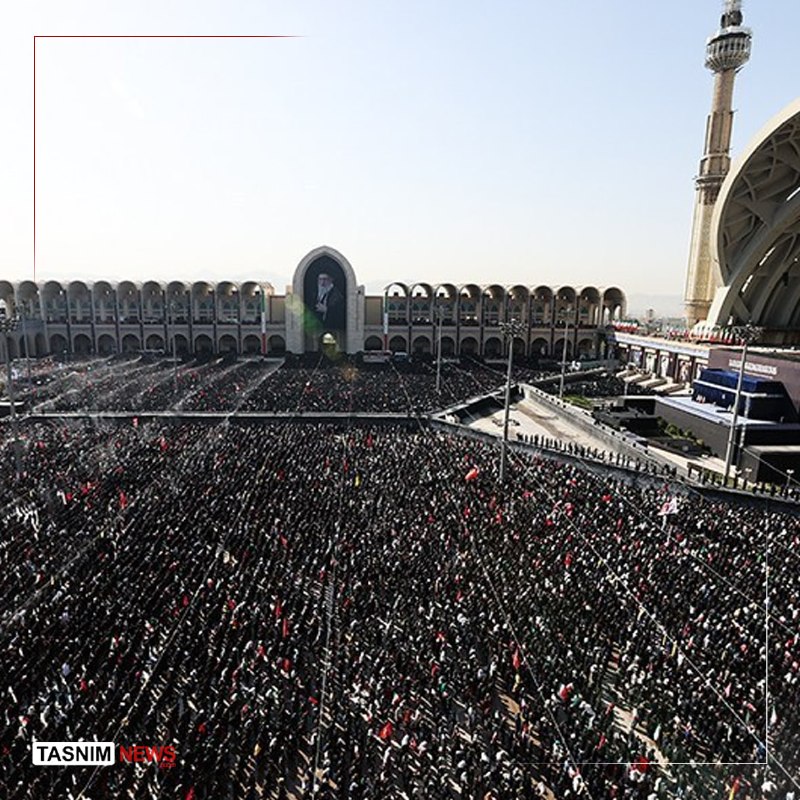
The dispatch landed on Sunday morning, Eastern time, and the lede was not the death, nor the succession struggle, nor the regional balance of power. It was the prayer. The Associated Press, reporting on 5 July 2026 from Tehran, centred its account on the prayer ceremony held over the body of Ayatollah Ali Khamenei, framing the scene in language — "holy body of the martyred leader" — borrowed almost verbatim from Iranian state media.
The lede tells you the story. When a Western wire opens a dispatch from Tehran with the religious register used by the host government, something has shifted in the room. This publication has argued for some time that Western coverage of the Islamic Republic relies on a small, very deferential vocabulary: "the Supreme Leader," "the Islamic Republic," "the clerical establishment." On 5 July that vocabulary acquired a new verb.
A wire that reads like a Tasnim caption
The phrasing flagged by Iranian outlets Tasnim and JahanTasnim in their 5 July Telegram coverage is not idle translation. Tasnim's English wire carried the same scaffolding — "the prayer ceremony on the holy body of the martyred leader" — and so did JahanTasnim's parallel post, which lifted the quote from a separate Israeli source. When AP's lede tracks Tasnim's framing word for word, the question is not whether AP was briefed by Iranian state media — every foreign correspondent in Tehran is — but whether the editorial layer between briefing and published copy collapsed.
There is a useful precedent. In 2020, after the killing of Quds Force commander Qassem Soleimani, several US outlets ran effusive biographical ledes on the general that read as if cut-and-pasted from Iranian state homage. The pattern is familiar: a foreign correspondent files colour, a desk files it under a slow news day, and the moral economy of the copy disappears on the way to the homepage. The Khamenei dispatch is a longer-form version of the same effect, made more visible because the subject is the entire state, not a single operative.
The Israeli ex-officer who said the quiet part out loud
Also on 5 July, two Telegram channels — Tasnim English and JahanTasnim — carried a striking quote from Amit Asa, a former senior official of Israel's Shin Bet, given to i24 News. Asa's framing, as transmitted by both outlets, was that "Trump does not know whose side he is on," and that the size and solemnity of the funeral in Tehran had laid bare a basic confusion in Washington's Middle East posture.
This is the part of the day that the Western wires will under-coverage. An Israeli security veteran publicly arguing that the US president cannot locate himself in the regional alignment is news by any definition. It is also the part of the day that most directly indicts the wires' own framing choices: a deference-coded lede in Tehran, a shrugged-off warning from Tel Aviv. The two pieces of copy are about the same event and they tell contradictory stories about who is in charge of regional narrative.
Why the framing mattered before the funeral started
Khamenei's death does not just remove a man; it removes the predictable. For thirty-seven years the Islamic Republic's external posture has been readable through one man's office. Now it is not. The internal succession — already being choreographed by the Assembly of Experts, the Guardian Council, and the Islamic Revolutionary Guard Corps' political arm — is the story, and it is a story the wires are institutionally allergic to covering at speed. The reason is structural: Western bureaus in Tehran are small, visas are gatekept, and the editorial cost of getting Iran's internal politics wrong is high. The cheaper journalistic move is colour, ceremony, "martyred leader" — and that is the move AP made.
The Iranian press is aware of the gap. Tasnim's decision to flag the AP lede, and to pair that flag with Asa's i24 interview, is itself an editorial choice: it tells the Iranian reader both that the Western press is reading correctly and that the Israeli security class is publicly split with Washington. Both legs of that triangle are useful to the Iranian state.
Stakes, and what remains uncertain
The stakes of this particular coverage choice are not abstract. If the wires normalise a religious-state vocabulary for covering Iran, foreign-desk editors will inherit a thicker wall between descriptive and analytical copy for years. If they do not, this dispatch becomes a footnote. The contest is being fought at the level of lede grammar.
Three things remain genuinely uncertain as of this publication. First, succession: the source materials do not specify where the Assembly of Experts stands on timing, and Iranian succession has historically defied Western timelines. Second, regional posture: Asa's quote is one retired official's read, not an Israeli government position, and i24 News is partisan-owned. It should be cited, not amplified. Third, the wire behaviour itself: AP has not, in the materials available to this publication, commented on its lede choices for this story. The pattern is real; the question is whether it survives the next dispatch from Tehran.
This article was framed using only Telegram-sourced Iranian and Israeli channel reporting and direct wire references; Monexus did not rely on third-party summaries of the AP dispatch.
Wire provenance
This editorial synthesis draws on the following public wire/social posts:
- https://t.me/tasnimnews_en/
- https://t.me/tasnimnews_en/
- https://t.me/JahanTasnim/