A helicopter falls in the Sahel, and the Wagner succession story sharpens
Tuareg separatists say they downed a Russian Africa Corps Mi-24 over Mali and killed the crew. The claim cuts to a deeper question: who is actually holding the Sahel after the Wagner rebranding.
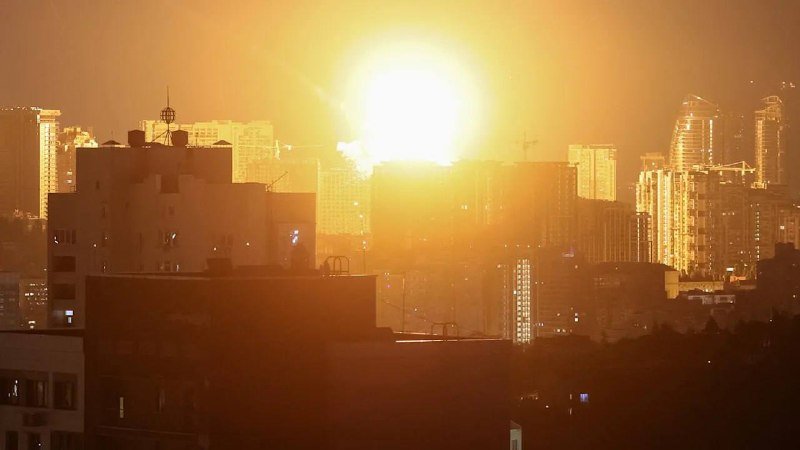
On 5 July 2026, the Azawad Liberation Front (FLA) said its fighters had shot down a Russian Africa Corps Mi-24 helicopter in northern Mali. The separatist movement claimed the aircraft was providing air cover for a ground convoy travelling from Gao toward Anéfis, a town in the Kidal region that has been under sustained assault in recent weeks. Within hours of the claim, the open-source channel Clash Report posted footage purporting to show the wreck and the bodies of the Russian crew, and the war-monitoring feed Intelslava confirmed the basic outline of the ambush: convoy on the Gao–Anéfis axis, helicopter called in, helicopter brought down, crew killed. The Russian Ministry of Defence has not, as of this writing, acknowledged the loss.
The story is more than a single helicopter. It is the latest data point on whether the post-Wagner Russian footprint in the Sahel can hold ground it does not fully understand, against insurgents who have been fighting the Malian state for more than a decade.
What the FLA actually claims
According to the FLA statement carried by Intelslava, fighters from the movement laid an ambush for a Russian Africa Corps convoy as it left Gao on 5 July 2026, heading for Anéfis to reinforce the garrison there. During the engagement, the separatists say, a Mi-24 attack helicopter was called up to support the convoy. It was shot down. The crew died at the scene. The Azawad Liberation Front is one of several Tuareg armed formations operating in northern Mali; it emerged from a reorganisation of older movements after the 2015 Algiers accord collapsed and Mali's military government in Bamako tilted toward Moscow.
The claim is partisan, and that matters. The FLA has every incentive to overstate a battlefield success against foreign mercenaries it is trying to expel. The footage circulated by Clash Report is consistent with a rotary-wing loss but does not independently confirm either the operator or the unit identity. What is harder to dismiss is the pattern of recent weeks: Anéfis has been besieged, the Malian army and its Russian partners have been sending resupply columns north, and at least one previous ambush along the same axis produced prisoners and equipment captured on camera by the attackers.
The Africa Corps succession problem
The Africa Corps is the umbrella brand that Russian defence structures have used since 2024 to absorb the Wagner networks operating across the continent after the death of Yevgeny Prigozhin. The rebrand was sold, both in Bamako and in Moscow, as a professionalisation: clearer chains of command, formal defence-ministry integration, official status for personnel who had previously been contractors with murky legal cover. On paper, that should produce more capable operations than the paramilitary model that preceded it. On the ground in the Sahel, the early returns are mixed.
Northern Mali is not Syria, and it is not Ukraine. The airspace is uncontested by any peer air force; the insurgents have no integrated air defences; the helicopter is the decisive tactical asset in a fight where the Wagner-era model relied on a small fleet of rotary-wing gunships and armed convoys to project force across vast, roadless desert. When that model works — as it largely did in 2021 and 2022 against jihadist columns around Mopti and Ménaka — it works because the helicopters keep their heads up and the convoys roll without being ambushed. The moment the ambush calculus flips, the helicopter becomes the most expensive, most visible target on the battlefield, and the crews are a finite, non-replenishable asset.
What the FLA has shown, across a series of incidents this year, is that the ambush calculus can flip. A road-bound column in the open desert, with a helicopter overhead, is a problem insurgents have spent two decades learning to solve — first against the Malian army, then against French Operation Barkhane, now against Russian successors.
What Mali's junta is not saying
The military government in Bamako, which came to power in 2021 and has since turned decisively away from France and toward Russia, has built its domestic legitimacy on two propositions: that the French failed to defeat the insurgents, and that Russian partnership will. Neither proposition has been publicly tested against hard data. The junta restricts independent press access to combat zones, criminalises contact with separatist spokespeople under counter-terrorism legislation, and has expelled or suspended major international broadcasters. The result is a tightly managed information environment in which battlefield setbacks are slow to surface, and acknowledged slowly when they do.
That information control is itself a story. A government that controls the narrative can absorb the loss of one helicopter. It cannot absorb a pattern of helicopter losses, or a pattern of convoys that fail to relieve besieged garrisons, without the domestic political cost starting to compound. Anéfis has been under pressure for weeks. If the FLA's framing of this incident is broadly accurate, then the Moscow-backed model in Mali is now facing the same operational problem that broke Barkhane: insurgents who refuse to hold ground long enough to be destroyed, and a road network that is too long for too few helicopters to dominate.
Stakes, and what to watch
The Sahel is no longer a fringe of the global order; it is one of its fault lines. Three military governments — Mali, Burkina Faso, Niger — have formally quit the French-led security architecture, expelled Western troops, and aligned with Moscow. Their pitch to their publics is that sovereignty and security can be purchased together from a non-Western patron. If that pitch keeps producing ambush videos rather than decisive victories, the political arithmetic in Bamako, Ouagadougou and Niamey changes quickly, and Russia's standing as an alternative patron is recalibrated in real time.
Watch three things in the weeks ahead. First, whether Moscow publicly acknowledges the Mi-24 loss and how — denial, silence, and confirmation are all signals about how exposed the Africa Corps brand is willing to appear. Second, whether Anéfis falls or holds; a successful FLA siege would convert a helicopter loss into a strategic reversal. Third, whether Bamako reaches for a familiar instrument — an information clampdown, an arrest of journalists, a terror-charge against separatist spokespeople — to manage the optics at home. The pattern in the Sahel is that the information war starts before the ground war is conceded.
The thread that prompted this piece was carried by Sprinter Press on X, Clash Report on Telegram, and Intelslava on Telegram. None of the three is a neutral party: the FLA has reason to overstate, the war-monitoring channels have reason to amplify insurgent footage, and the Russian Ministry of Defence has not yet spoken. Monexus treats the helicopter loss as a credible but unverified claim, and reads the larger story through the operational pattern around Anéfis rather than through any single frame.
Wire provenance
This editorial synthesis draws on the following public wire/social posts:
- https://x.com/sprinterpress/status/2073849267731509248
- https://t.me/ClashReport
- https://t.me/intelslava