Reese Witherspoon's 'Elle' Lands on Prime Video. The Retro Wardrobe Is the Point.
Amazon's 'Legally Blonde' prequel dresses its Harvard undergrads in vintage, not new. Director Jason Moore tells Variety the constraint is a feature, not a budget workaround.
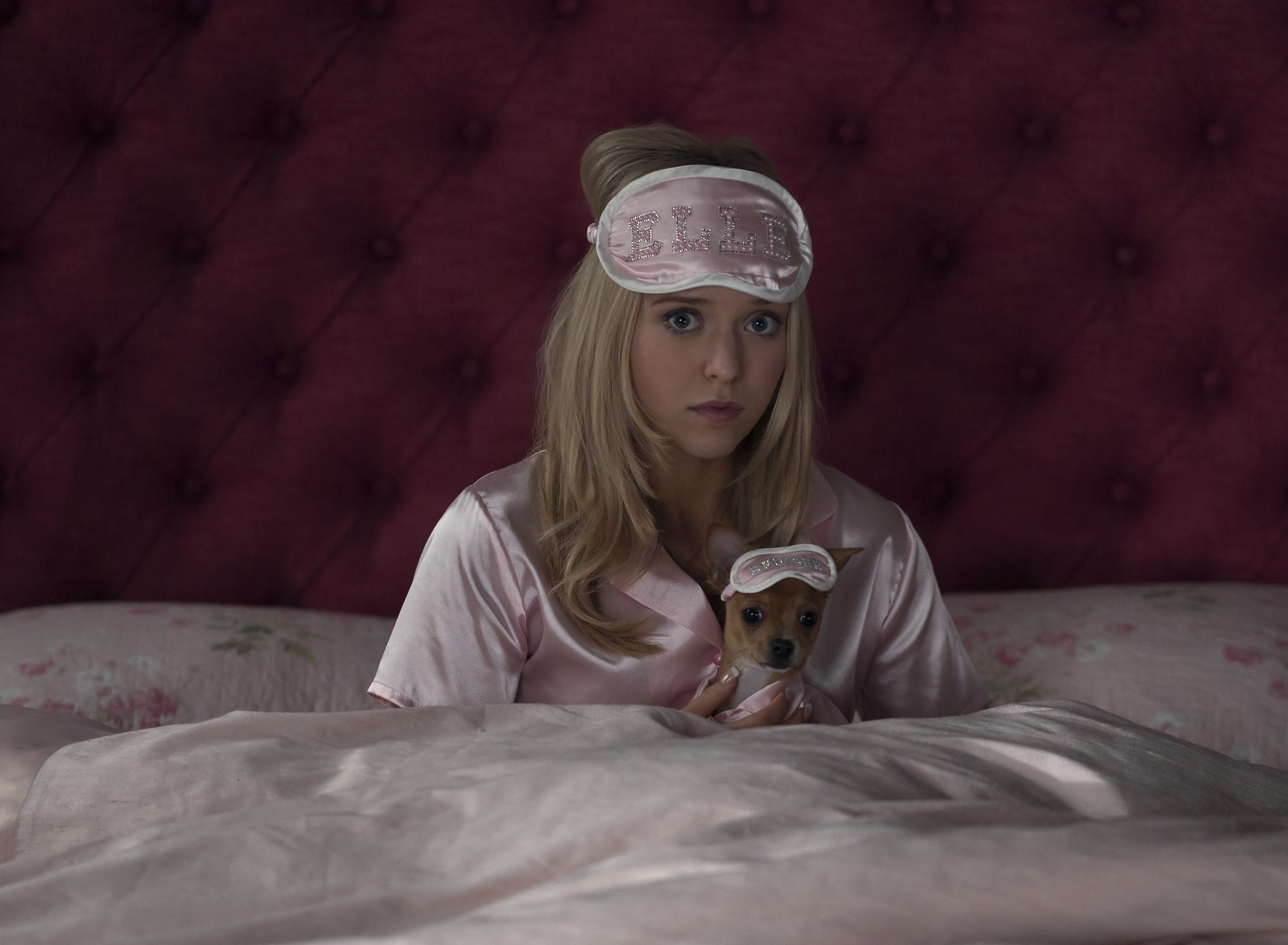
LOS ANGELES — When Prime Video drops its "Legally Blonde" prequel "Elle" on 5 July 2026, viewers will see a sorority-house set in 1990s Cambridge, Massachusetts, outfitted head-to-toe in archival clothing. No new garments were made for the principal cast. That decision, set out by director Jason Moore in conversation with Variety, is a deliberate constraint, not a budget concession, and it is now the central creative gamble of Amazon's most expensive prestige-TV play of the summer.
The bet is simple: that a show about a young Elle Woods can sell itself to a generation that never queued for a VHS copy of "Legally Blonde." The production's answer — pull the wardrobe out of the same decade the character is meant to inhabit, and let the authenticity do the marketing — has implications for how streamers court nostalgia in a saturated market.
A prequel built around provenance
Moore, the Tony-nominated director of "Shrek The Musical" and episodes of "Pitch Perfect," told Variety he shot the first two episodes of "Elle." The series follows a high-school-age Elle Woods, the character Reese Witherspoon made famous across two MGM films beginning in 2001, as she prepares to apply to Harvard. Witherspoon herself visited the set; her involvement is treated as both an endorsement and a complication, since any new lead steps into an icon built around one performer's posture, breath and pep.
The wardrobe stack is, in production-design terms, the headline. Vintage sourcing, by definition, means no off-the-rack 2020s cuts leak into the frame. For a property whose visual signature — the pink jackets, the chihuahua accessories, the exact shade of legal pad — has been meme-ified for two decades, the bar is unforgiving.
What 'archival-only' actually costs a show
An archival-only wardrobe pipeline is not free. Each garment has to be rented, purchased, or borrowed from dealers who have to be convinced that a TV shoot will return the piece intact. Continuity becomes harder; substitutes have to age right. Insurance balloons. The schedule slips when an heirloom belt buckle fails to arrive.
The trade-off is that the screen reads as genuine. For a prequel, that matters more than it would for a contemporary drama. A contemporary drama can buy new clothes from a brand and call it product placement; a period piece cannot fake 1994. If "Elle" looks like a costume drama rather than a kids-in-college show, the marketing writes itself: viewers under 30 get a mood board, viewers over 35 get a memory.
This is also where Amazon's commercial logic shows. Prime Video is not selling one season of "Elle"; it is selling a re-entry point into the entire Witherspoon catalogue and the broader "Legally Blonde" IP, which has lived on as a West End musical, a touring production, and a near-constant TikTok trend cycle. A show that feels like 2001 in 2026 keeps those revenue streams interchangeable.
The structural read: streaming is now a nostalgia business
The bigger pattern sitting under this greenlight is that subscription video-on-demand in 2026 is, increasingly, a prequel and remake economy. Netflix's "Wednesday" run, HBO's treatment of vintage DC Comics, Paramount's "Yellowstone" universe expansions — every major platform is monetising brand equity that exists in viewers' heads rather than on screens. "Elle" is Amazon's answer to the same arithmetic.
The risk is that the market can absorb only so much canon at once. Each prequel cannibalises a sequel; each remake dilutes the original's scarcity value. The reason "Elle" can plausibly work where other prequels have faltered is that "Legally Blonde" is a brand whose core demographic has aged into streaming subscriptions exactly now. The show is not trying to cross over from broadcast; it is showing up where its inherited audience already pays.
That structural frame also explains the wardrobe stance. Vintage sourcing is a way of saying, to that audience, that the creators treated the source material with the seriousness they would treat a museum exhibit. It is a trust signal dressed up as an aesthetic choice.
Stakes for the rest of the season
If "Elle" holds, expect Amazon to fast-track extensions, special episodes tied to the 25th anniversary of the original film, and adjacent development around other Witherspoon-associated IP. If it underperforms against the production's obvious cost basis, the read is that nostalgic prequels have a ceiling, and the platform will pivot toward original IP pitched as event television rather than recycled brand-equity plays.
The unresolved question — and the one Moore does not settle in his Variety interview — is whether the archival-wardrobe policy can be maintained across a full multi-season run, or whether the constraint gives way to the economics of a still-shooting production. The first two episodes set the visual thesis; the back half of season one will test whether the show can hold it without the cushion of a director whose name anchors the press cycle.
This piece was framed around Variety's set-visit reporting on 'Elle'; the principal-sourcing line runs through that outlet, with the production's own marketing positioning read against the broader SVOD catalogue. Where Variety's reporting stops — at wardrobe sourcing mechanics, at comparative streaming performance — this publication's structural read takes over.