Germany's borrowing binge and the bill coming due
A €203 billion draft budget, a defiant chancellor, and 20,000 protesters outside an AfD conference: Germany's fiscal turn is now the central fact of European politics.
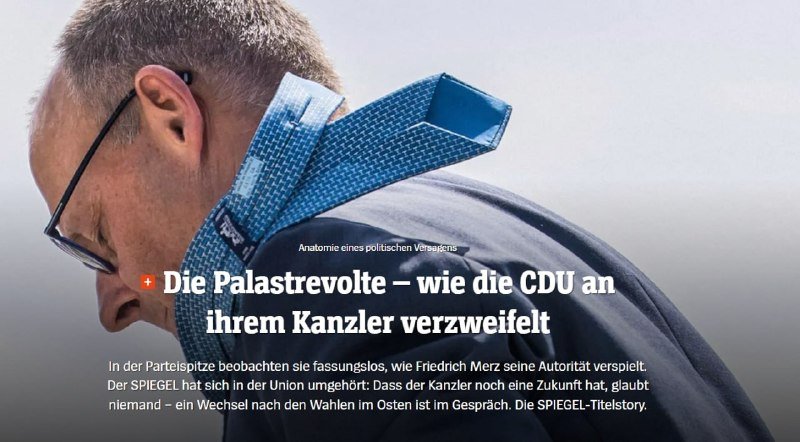
At 06:34 UTC on 5 July 2026, Polymarket's newswire carried a single line: Germany's cabinet is reportedly set to approve a draft budget with more than €203 billion in borrowing. Hours earlier, at 04:32 UTC, Chancellor Friedrich Merz had already declared that Germany has "no reason to shy away" from defending its military spending push. By 07:19 UTC, the same wire logged roughly 20,000 protesters gathered in Germany as the Alternative für Deutschland held its annual conference. Three data points, one country, one weekend — and the political geometry of Europe's largest economy has shifted in plain view.
The Merz government's draft budget is not an austerity document. It is a borrowing document. A net new credit envelope north of €200 billion is, by historical German standards, extraordinary. For decades, Berlin's fiscal identity rested on the schwarze Null — the black zero, the symbolic refusal to take on new debt. That posture was always partly performative; Germany ran deficits during the pandemic and the energy crisis. What has changed under Merz is the rhetoric. The chancellor is no longer apologising for red ink. He is pre-empting the criticism, framing the spending as a generational necessity tied to defence and infrastructure.
The substance behind the headline figure
The €203 billion figure should be read carefully. It is a gross new-authorisation number, not necessarily a single-year deficit. German federal budgeting distinguishes between the regular budget, special funds (Sondervermögen), and off-balance-sheet credit authorisations. The headline-grabbing figure typically aggregates borrowing across vehicles, including the €100 billion defence special fund established after Russia's full-scale invasion of Ukraine and a separate infrastructure special fund. The political signal is still unambiguous: Berlin is choosing debt over austerity, and is doing so while German GDP growth has been sluggish and the export model is under sustained pressure from Chinese competition in autos, chemicals, and machinery.
The counter-narrative from the fiscal-conservative wing of German politics — and from economists who view the schwarze Null as more than theatre — is straightforward. Borrowing at this scale, at a moment when demographic headwinds are about to compress the workforce, risks locking in a higher interest burden precisely when the country's tax base is set to narrow. The argument has merit. But it underweights a harder truth: under-investment in defence, rail, digital infrastructure, and the energy transition has its own cost, and that cost has been accumulating for at least a decade. Merz is not inventing a problem. He is choosing which bill to pay.
The street, and what it tells us
The protest count — around 20,000 outside the AfD's annual conference — is itself a piece of evidence about the state of German public life. The AfD has been classified by the federal domestic intelligence agency, the Bundesamt für Verfassungsschutz, as a suspected extremist organisation. Its conferences are now surrounded by sustained, well-organised counter-mobilisation. That this happens at all is a marker of how far the party has moved from the centre-right Eurosceptic outfit it was a decade ago. The protesters are not just disagreeing with AfD policy; they are treating the gathering as a public-health event for the constitutional order.
There is a second, less comfortable reading. The AfD's electoral strength has not collapsed under the weight of protest, surveillance designations, or mainstream-party cordon sanitaire. It has, in several eastern German states, become the largest single party. The street-level resistance and the polling-station reality are diverging — and a borrowing binge financed to fund defence and infrastructure will not, on its own, close that gap. If anything, fiscal expansion pursued without a visible improvement in living standards in the eastern Länder risks reinforcing the grievance politics that has propelled the AfD in the first place.
A Europe-wide reckoning
Germany's turn matters far beyond Berlin. France is running its own fiscal stress; Italy's debt-to-GDP ratio remains the structural worry of the eurozone; the European Central Bank is operating in a credibility-tight environment where any one member's over-borrowing has implications for the single currency. Berlin's decision to lead by borrowing rather than by austerity effectively gives political cover to other capitals facing similar pressure. That is, depending on one's priors, either a welcome end to German fiscal self-righteousness or a worrying drift toward a softer fiscal union by stealth. Both can be true.
The structural pattern is plain. Across the Atlantic, Washington is running peacetime deficits at wartime levels and using tariff policy as a fiscal substitute. Across the Channel, the United Kingdom is rebuilding its armed forces while operating a tax base stretched by an ageing population. The era of the rich-world fiscal peacemaker — the country that lectured the rest on balanced budgets — is closing. What replaces it is not yet clear, but Germany has just announced which side of the argument it intends to be on.
What remains contested
The draft budget has not yet been passed into law at the time of writing; cabinet approval is the first of several stages, and the Bundestag will have to navigate coalition arithmetic and likely Bundesrat friction. The exact composition of the €203 billion — how much is genuinely new debt versus rollover and reauthorisation — has not been fully disaggregated in public reporting. And Merz's framing of the spending as a military-led effort depends on delivery: if the Sondervermögen does not translate into deployable capability on a visible timeline, the political argument collapses under the weight of its own ambition. The wire reports give the shape of the moment. The substance will be settled, or not, over the next several quarters.
This publication frames Germany's borrowing turn as a structural break with the post-2009 fiscal consensus, not as a one-off response to crisis. The wire reporting carries the figures; the framing is Monexus's own.
Wire provenance
This editorial synthesis draws on the following public wire/social posts:
- https://x.com/polymarket/status/2026-07-05T09:26
- https://x.com/polymarket/status/2026-07-05T07:19
- https://x.com/polymarket/status/2026-07-05T06:34
- https://x.com/polymarket/status/2026-07-05T04:32
- https://x.com/polymarket/status/2026-07-04T18:44
- https://x.com/polymarket/status/2026-07-04T15:07
- https://x.com/polymarket/status/2026-07-04T06:44