Hamas Signals a Gaza Withdrawal — and Asks Who Picks Up the Pieces
Hamas is reportedly preparing to dissolve its Gaza administration to make room for a Cairo-anchored committee. The move raises a harder question than the one it solves.
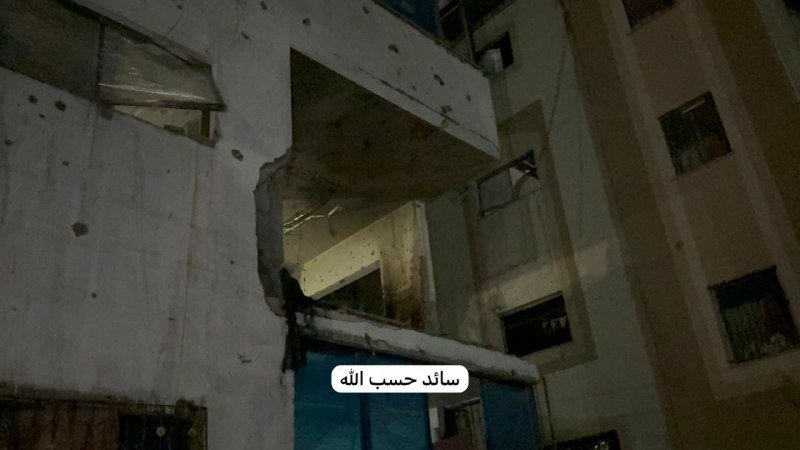
Hamas is preparing to dismantle the governing apparatus it has run in Gaza since 2007, according to reporting carried by Asharq Al-Awsat on 5 July 2026 and relayed across Arabic-language Telegram channels that morning. The movement, the London-based pan-Arab newspaper reported, is inclined to announce the dissolution of its government in the Strip in the coming days in order to make room for a "Committee for the Administration of the Strip," a body established in the post-war framework.
Read plainly, that is the most consequential political signal from Hamas in almost two decades — and it is being sent at a moment when no one in the region has clean answers about who runs Gaza on 6 July 2026, let alone on 6 July 2027.
What Hamas is reportedly offering
The mechanism, as described in the Asharq Al-Awsat line carried by the englishabuali and abualiexpress channels at 18:53, 19:27 and 20:19 UTC on 5 July, is administrative, not ideological. Hamas would not be surrendering its weapons, its foreign relationships or its role as a political movement; it would be stepping out of the day-to-day business of running ministries, payrolls and policing in a territory of more than two million people. The vacated space is meant to be filled by the committee referenced in the reporting — a transitional body whose composition the sources describe only by its function.
That distinction matters. A dissolution of government, if confirmed, lowers the temperature of one specific argument: that no Palestinian faction other than Hamas can credibly administer the Strip during the recovery period. It does not settle the larger argument over who ultimately authorises that administration — Israel, Egypt, the Palestinian Authority in Ramallah, or some technocratic arrangement under international cover.
What this does not solve
Three questions survive the announcement, whichever form it takes.
First, security. The committee described in the Asharq Al-Awsat line is a civilian construct. Nothing in the reporting suggests Hamas is being asked, or is offering, to disarm. A civilian administration sitting on top of an intact militant infrastructure is not a transfer of authority; it is a layer of authority. Israel, which has consistently demanded demilitarisation as a precondition for any post-war arrangement, has no obvious reason to treat the move as sufficient. Cairo, which has invested significant diplomatic capital in the committee concept, will press for it to be enough anyway.
Second, legitimacy inside Palestine. The Palestinian Authority was not named in the englishabuali summaries as the inheritor of the vacated role. If the committee is a Ramallah-friendly body, it will be read in Gaza as a quiet reoccupation by the West Bank faction that lost the Strip in 2007. If it is technocratic and PA-adjacent without being PA-controlled, it will be read as a foreign-imposed caretaker. Either reading has a constituency prepared to reject it.
Third, reconstruction financing. No donor government has committed serious money to a Gaza recovery plan whose administering body is undefined. Gulf states have signalled willingness, European donors have signalled conditions, and the United States has signalled scepticism. A clearer Hamas position on administrative handover marginally helps, but only marginally: the cheque-writers want to see who signs the receipt.
Why the timing is suspicious — and the timing is the news
What makes the reporting worth taking seriously is not the substance of the proposal, which is preliminary, but the moment at which it surfaces. Hamas has held the governance file in Gaza through wars, isolation and the slow attrition of its external patron network. Volunteering to set it down now, when the cost of holding it has never been higher and the political return has never been lower, is a rational move for a movement that wants to remain relevant in whatever political order emerges.
The structural read is straightforward. The post-war order in Gaza is being negotiated in corridors Hamas does not control — Cairo, Doha, Washington, Ramallah, and to a lesser extent Ankara and Riyadh. A movement that refuses to vacate the administrative stool is a movement that will be bypassed; a movement that vacates it on its own terms keeps a seat at the table where the new arrangement is drawn. That is the bet.
The honest unknowns
It is worth marking what the reporting does not establish. Asharq Al-Awsat's line describes an inclination, not a decision. The committee's membership, mandate and relationship to the Palestinian Authority have not been disclosed in the materials currently in circulation. The position of the Israeli government, which retains the dominant military lever inside the Strip, is not reflected in the Telegram traffic at all. And the position of armed factions inside Gaza other than Hamas — the constellation of clans and smaller militias that have grown in influence during the war — is, on the available evidence, simply absent from the conversation.
What can be said is that the diplomatic vocabulary around Gaza has shifted inside a week. The question is no longer whether Hamas will leave government in the Strip. The question, now openly on the table, is who walks in afterwards — and on whose authority.
Desk note: Monexus is treating the Asharq Al-Awsat report as a primary indicator of movement, not as a confirmed policy. Where the underlying committee framework has not been independently detailed, this article says so. Wire confirmation from Reuters or AFP would harden the timeline; until then, the framing here is calibrated accordingly.
Wire provenance
This editorial synthesis draws on the following public wire/social posts:
- https://t.me/englishabuali/10320
- https://t.me/abualiexpress/9412