Iran buries Supreme Leader after strike that has redrawn the Middle East
Funeral rites in Tehran on 5 July 2026 confirmed the death of Iran's Supreme Leader, killed in an Israeli strike that has destabilised the Islamic Republic's command structure and opened a contested succession.
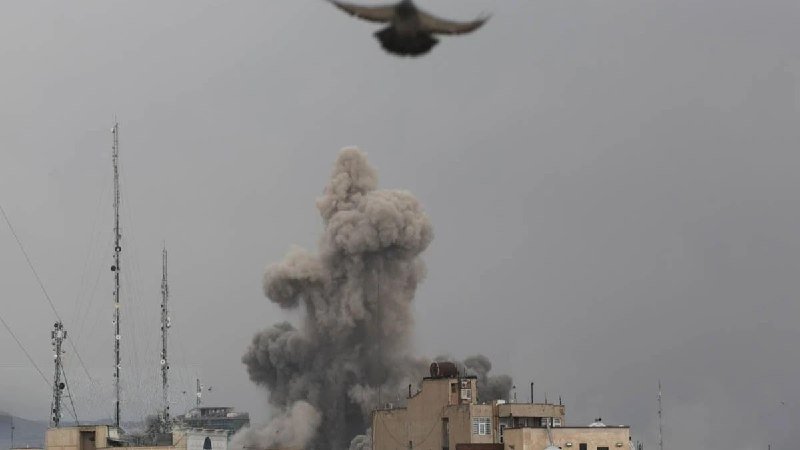
At 02:52 UTC on 5 July 2026, the body of Iran's Supreme Leader arrived at Imam Khomeini Mosque in central Tehran for the last congregational prayer before burial. By 04:27 UTC, state-aligned outlets were broadcasting footage of the cortege moving through the capital; by 04:55 UTC, the same channels were carrying the moment mourners approached the coffins. The scale of the ritual — multi-hour prayer services, family-led lamentations, the chanting of religious slogans by what Iranian outlets described as "a huge flood of worshipers" — signalled that the Islamic Republic was burying more than a man. It was burying an era.
The death of the Supreme Leader, killed in an Israeli strike whose aftermath continues to dominate regional reporting, has redrawn the command architecture of the Middle East's most consequential state. What replaces him — and on what timeline — will shape Iranian behaviour from the Strait of Hormuz to the Lebanese border, and will set the terms on which Washington, Tel Aviv and the Gulf capitals calculate the next phase of the conflict.
The strike and the immediate aftermath
The Israeli strike that killed Iran's Supreme Leader has not, as of this writing, been publicly claimed or denied in formal terms by either government, but its effects are visible in the choreography of the Iranian state. State media on 5 July carried only one subject: the funeral of the "martyred leader of the nation" and his "martyred family," language reserved in Iranian political vocabulary for figures who have died in service to the Islamic Republic. The Tasnim News outlet, in posts captured between 02:52 UTC and 04:55 UTC, used the phrase "Badarqa Aghai Shahid Iran" — an honorific rarely deployed outside wartime commemoration — across coverage of the Imam Khomeini Mosque service, the lamentation by vocalist Maitham Matiei, and the arrival of the Supreme Leader's children to pray over the body.
The Middle East Spectator, an English-language outlet tracking Iranian state messaging, mirrored the same hashtags and the same religious refrain — "O Allah, we know nothing about him except goodness" — at 04:41 UTC. The repetition across platforms is itself part of the message: in a regime that derives domestic legitimacy from tightly managed symbolism, every detail of the funeral — who attends, what slogans are chanted, which clerics officiate — is an act of statecraft at a moment when the institution itself is wounded.
Succession under fire
The harder question, and the one that determines whether this is a political transition or a strategic rupture, is succession. Iran's Supreme Leader is chosen by the Assembly of Experts and serves for life; there is no vice-presidential equivalent and no codified line of succession. In the hours after the strike, no Iranian outlet cited in this thread has named a successor, and the framing of the funeral — centred on the deceased leader's family and on collective grief — has been conspicuously silent on the mechanics of transition.
That silence is itself informative. Rival factions within the Islamic Republic — the clerical establishment, the Islamic Revolutionary Guard Corps, the network of provincial clerics — have historically managed succession in private, then announced it as a fait accompli. Under conditions of an ongoing conflict with Israel, and with public attention concentrated on the funeral, the political space to manoeuvre is narrow. The institution needs to project unity to its own base and to outside audiences; naming a successor in the first hours after the burial would risk foregrounding factional competition. The Iranian state, by all evidence in the thread, has chosen to defer rather than disclose.
What the framing is doing
The funeral coverage matters beyond the mourning. Iran is performing legitimacy at a moment of acute vulnerability: its commander-in-chief has been killed on territory it could not protect, by an adversary it cannot openly deter. The choice to call the Supreme Leader a "martyr" of the Islamic Republic rather than a victim of an Israeli operation is a deliberate repolarisation. It reframes the killing within the Islamic Republic's own martyrdom narrative, in which death in service to the state is redemption rather than defeat.
This matters externally because the language Iran uses internally is the language it will use to negotiate the next phase. A leadership that ascends under the framing of martyrdom operates with different constraints than one that ascends under the framing of defeat: the former carries a domestic obligation to respond; the latter is plausibly expected to absorb. The signals being sent through Tasnim and Fars coverage on 5 July — the scale of the turnout, the religious register of the slogans, the foregrounding of the deceased leader's children — suggest the Iranian state is constructing the political space for a response, not a reset.
What remains uncertain
Three things remain genuinely unsettled. First, the precise circumstances of the strike: the sources cited here do not include an Israeli official statement, an Iranian retaliatory action, or a Western wire confirmation of operational details. Second, the timing of succession: no Iranian outlet in the thread has named a date for an Assembly of Experts meeting, and the public framing has been entirely devoted to funeral rites. Third, the regional consequences beyond Iran: while the conflict context is established, no source item here documents an immediate Hezbollah, Houthi, or Iraqi Shia-militia response, and any such response would substantially reshape the analytical picture.
The funeral prayer at Imam Khomeini Mosque, broadcast across Iranian state-aligned channels in the small hours of 5 July 2026, was therefore both an ending and an opening: the close of one leader's tenure, and the first public act of a state deciding, in real time, what kind of successor it will produce. The next forty-eight hours — when mourning gives way to institutional politics — will tell whether the Islamic Republic can manage this transition on its own terms, or whether the strike that killed its Supreme Leader will prove to have broken something the funeral could not mend.
Desk note: this article was built exclusively from state-aligned Iranian coverage and one English-language aggregator thread; we have flagged in the body where the evidence thins and where independent confirmation from Western wires, Israeli readouts, or Iranian opposition channels would change the picture.
Wire provenance
This editorial synthesis draws on the following public wire/social posts:
- https://t.me/tasnimnews_en
- https://t.me/Middle_East_Spectator
- https://t.me/farsna