The funeral Monexus won't translate for you
A Mexican memorial for Iran's late Supreme Leader, narrated through Tasnim's wire — what the framing choices reveal about how this story will travel in non-Western outlets.
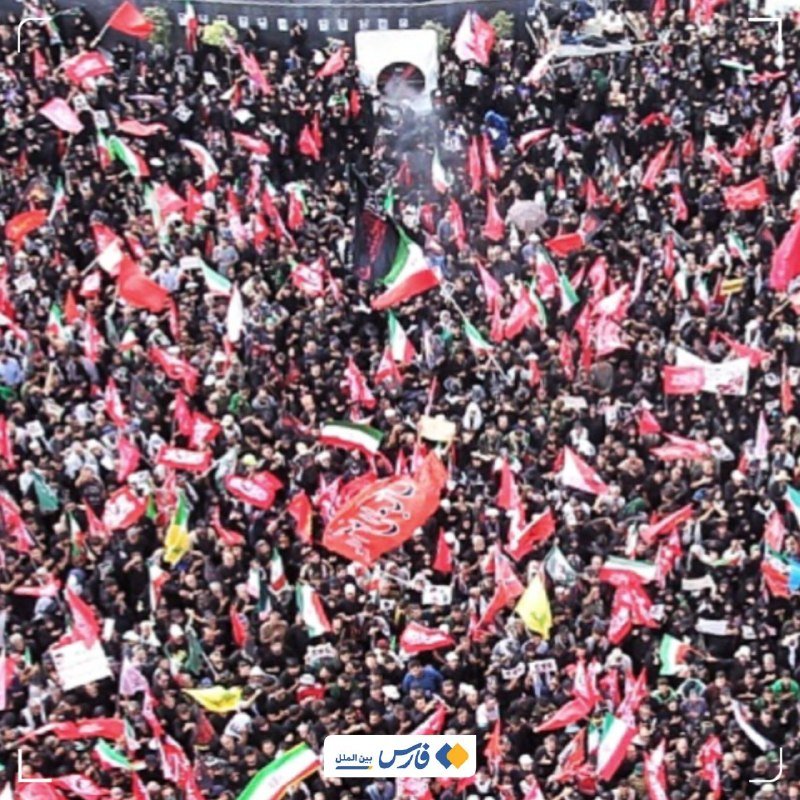
On 5 July 2026, at 08:12 UTC, Iran's state-aligned Tasnim News Agency pushed a Telegram bulletin headlined Honoring the memory of the martyred leader of Iran in Mexico. The Persian-language sister feed, Jahan Tasnim, re-issued the same item three minutes later. The English and Farsi versions moved in lockstep — same photographs, same lede, same Madrid-of-the-south geography recast as a continental homage. The story concerns a memorial in Mexico, run in parallel with a funeral procession in Tehran, for Iran's late Supreme Leader. What is worth slowing down over is not the event. It is the choreography of the wire itself.
What the wire actually says
The Tasnim bulletin frames the Mexico gathering as a simultaneous act of homage, in the same sentence as a magnificent funeral ceremony in Tehran. The grammar is deliberate. The Mexican ceremony is positioned as participation in a national Iranian rite rather than as a diaspora event with its own internal politics. Tasnim's English desk chooses "martyred leader of the Islamic Revolution"; the Farsi desk uses the same loaded lexicon — shaheed for a head of state is a constructed equivalence between clerical authority and revolutionary martyrdom that English wire readers will not recognise as a translation choice. The repetition across Tasnim's English- and Farsi-language channels, three minutes apart, is itself the editorial fingerprint: internal amplification that creates the volume Western readers would otherwise associate with Reuters or AFP distribution.
The Japan Times clause
Two hours earlier, at 06:18 UTC, the same Tasnim desk circulated a second bulletin attributing reporting to the Japan Times: "Iranian people have come to Mossali [Mosalla] with red flags." Again the Farsi desk matches the English. Attribution to the Japan Times is doing a specific kind of work. It borrows the credibility of a Tokyo-based English-language daily to validate a highly choreographed scene. The Japan Times's own editorial line on Iran is more sceptical than this prose suggests; Tasnim's brief citation lets the agency quote a foreign masthead without granting the foreign masthead the right to frame the event. This is laundering, softly executed, and it is worth naming plainly.
Why the Mexico venue matters
A memorial service in Mexico City for a head of state who died abroad is normal diplomatic practice. The interesting question is why Tasnim's editors chose to lead their morning English-language package on it. Mexico is not Tehran's traditional diplomatic strongpoint; Brazil, Venezuela, Bolivia, and Nicaragua have carried more Latin American weight for the Islamic Republic over the past decade. Promoting a Mexico event into English-language lede position signals something about audience targeting: an outreach to Spanish-language readers who consume Middle East news through Iranian state-adjacent channels rather than via Al Jazeera English or Reuters. The coverage is rhetorical infrastructure, not newsgathering.
The structural frame
Coverage of Iranian leadership transitions has long travelled through two pipelines: the Western wire complex, which tends to lead with sanctions exposure, succession politics and nuclear-file implications, and the Iranian state-aligned ecosystem of Tasnim, PressTV, IRNA and Mehr, which leads with reverence, mobilisation and martyrdom. The wire items on 5 July show the second pipeline operating at full capacity, with one notable refinement — the consistent three-minute cross-posting between English and Persian Telegram feeds, suggesting a fully integrated bilingual desk rather than translation lag. The Japan Times attribution is the giveaway: the desk is exporting a foreign-byline seal of approval into a domestic messaging product. Readers who arrive at the bulletin through Telegram links in Latin American or African channels will encounter a sourced, grave, solemn account of a foreign head of state's rites — and almost none of the contestation that a Reuters or AP wire on the same subject would carry by default.
What we still don't know
The Tasnim items name the Mexican city as the venue for the memorial but do not specify the organising body, attendance figures, or whether the gathering was held in a state facility, an embassy reception room, or a community centre. The Japan Times attribution in the 06:18 UTC item is presented without a link to the underlying article, leaving open whether the citation is to a same-day report, a recent editorial line, or a journalistic convention. The Mexican government's own read on the gathering is not in the wire. These gaps matter because the story's load-bearing claim — that Iranians in Mexico are participating in a national funeral — depends on scale and setting the bulletins do not document.
The honest version of this story is small: a memorial was held in Mexico, state-aligned Iranian media reported it, and a foreign masthead was cited in passing. The newsroom-curious version is larger: state media packages are increasingly engineered with English-language sophistication and Western-byline laundering, and the result travels further than the underlying event warrants. Monexus is publishing the smaller story and flagging the larger one — quietly, with timestamps.
Desk note: Monexus is publishing this as a media-literacy item rather than a politics item because the underlying event is thinly documented, while the editorial mechanics of how Tasnim packaged it are unusually legible. We cite the wire as wire, not as co-bylines.
Wire provenance
This editorial synthesis draws on the following public wire/social posts:
- https://t.me/tasnimnews_en/1
- https://t.me/JahanTasnim/1
- https://t.me/tasnimnews_en/2
- https://t.me/JahanTasnim/2