Iran buries a 'martyr' the state spent years preparing to mourn
State-aligned coverage of a 'Mr. Martyr of Iran' points to a managed succession moment — and to the apparatus that will narrate whatever comes next.
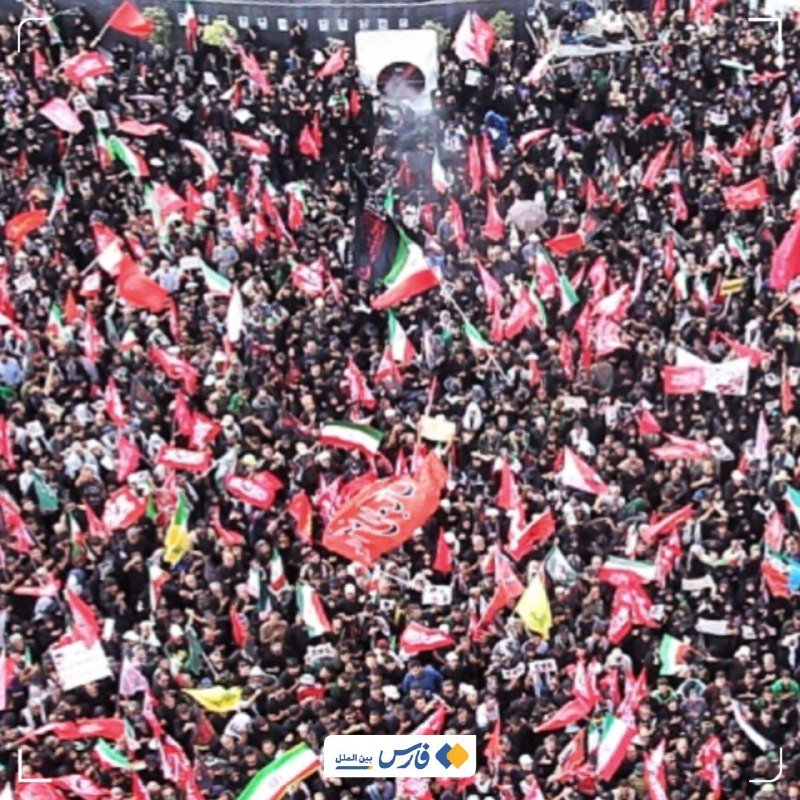
The body has left the stage. By 18:48 UTC on 5 July 2026, Iran's state-aligned Tasnim News Agency reported that the curtains had been closed on the farewell ceremony and the corpse of the man its channels are calling Sayyid al-Shahid Iran — "Mr. Martyr of Iran" — had been carried out. Processions were already crossing Tehran by 18:03 UTC. By 18:56 UTC, Qom was being prepared as the burial site for what Tasnim explicitly framed as a historical interment.
Read the apparatus, not the man. The breathless hashtags, the coordinated lamentations, the flood of elegiac clips from Karbala-style reciters — these are not organic. They are the production values of a state that has spent years rehearsing the choreography of its own grief, and that is now executing it in real time.
A title earned in advance
The phrase Tasnim's editors keep repeating — Sayyid al-Shahid Iran — does not arrive spontaneously. It is bestowed, not discovered. In Shia political vocabulary, sayyid al-shuhada is reserved for the highest tier of martyrdom: Husayn at Karbala, in the canonical telling, is sayyid al-shuhada of the Muslim community full stop. To prefix "Iran" onto the formula is to claim that the deceased now occupies a comparable position inside the national story.
That is a political claim, not a theological footnote. It says: this man is the central sacrificial figure of the Islamic Republic's self-mythology, and the mourning should be calibrated accordingly.
The credentialing work has been underway for years. Tasnim's own archive has spent a decade promoting the "martyr" framing around the Islamic Revolutionary Guard Corps' regional operations, particularly the Quds Force network assassinated on Washington's orders in early 2025 and the longer-running casualty ledger from Syria, Lebanon, Iraq and Iran itself. To position a senior figure inside that canon is to bind his memory to every martyrdom operation the state has ever claimed, and to every one it intends to claim next.
The sound of managed mourning
Three signals from Tasnim's afternoon feed are worth taking seriously, precisely because they are so mundane.
First, the geographic staging. Tehran fills first, then Qom — the seminary capital, the ideological heart, the place where the clerical credentials of the deceased will be ratified by the establishment that mattered most. Burial there is not a family decision; it is an institutional one.
Second, the layering of voices. Tasnim highlighted a lamentation from Haj Amir Kermanshahi — a recognised reciter with state-aligned profile — in the closing hours of the public farewell. The choice of maddah matters. It signals that this is a public-state event, not a quiet clerical burial; the religious-aesthetic register is being curated from above.
Third, the framing of the survivors. Tasnim's caption about "the martyrs of his family" indicates that the mourners being centred on state media are not just relatives but political-military cadres. The grief being televised is kinship plus cadre, fused.
What the framing hides
There are at least three things the dominant Tasnim narrative is engineered not to surface.
The first is succession. The Islamic Republic is 47 years old and has spent most of that time avoiding an open conversation about what happens after Ali Khamenei. A state-managed martyrdom of a figure of this stature is, among other things, a way of reshaping the succession field — promoting some claimants, foreclosing others, and tying the next chapter to a martyrdom register rather than to a routine administrative handover.
The second is the family business dimension. Iranian state media has rarely foregrounded the wealth, factional alignment, and commercial interests of clerical-military dynasties. A canonising frame keeps the conversation on sacrifice and away from inheritance.
The third is the regional bill. Every martyrdom frame inside Iran is also, implicitly, an external posture. It tells Tehran's partners in Baghdad, Beirut, Sanaa and Damascus that the Islamic Republic will keep paying the price its allies cannot afford to pay themselves — and that the ledger is not closing.
What we don't know, and why it matters
The sources available to this publication at the time of writing are five Tasnim dispatches between 17:29 and 18:56 UTC on 5 July 2026, plus the photographs Tasnim selected to accompany them. They tell us how the Iranian state wants this day remembered. They do not tell us — because Tasnim is structurally incapable of telling us — how many Iranians are mourning from conviction rather than coercion, how the clerical hierarchy in Qom is internally dividing over the framing, or how the regional axis is recalibrating around the event. Western wire coverage will fill some of those gaps in the coming days; some will only become legible months later, when memoirs surface and archives open.
The safest prediction is the one that does not require new information: the apparatus that produced today's coverage is the same apparatus that will narrate whatever comes next. The tears are real; the choreography is not.
Wire provenance
This editorial synthesis draws on the following public wire/social posts:
- https://t.me/tasnimnews_en
- https://t.me/tasnimnews_en
- https://t.me/tasnimnews_en
- https://t.me/tasnimnews_en
- https://t.me/tasnimnews_en