Iran's succession crisis plays out in absentia: the Mojtaba Khamenei mystery
The man tipped to inherit Iran's Supreme Leader position is missing from his own father's funeral. That absence is doing more political work than any speech.
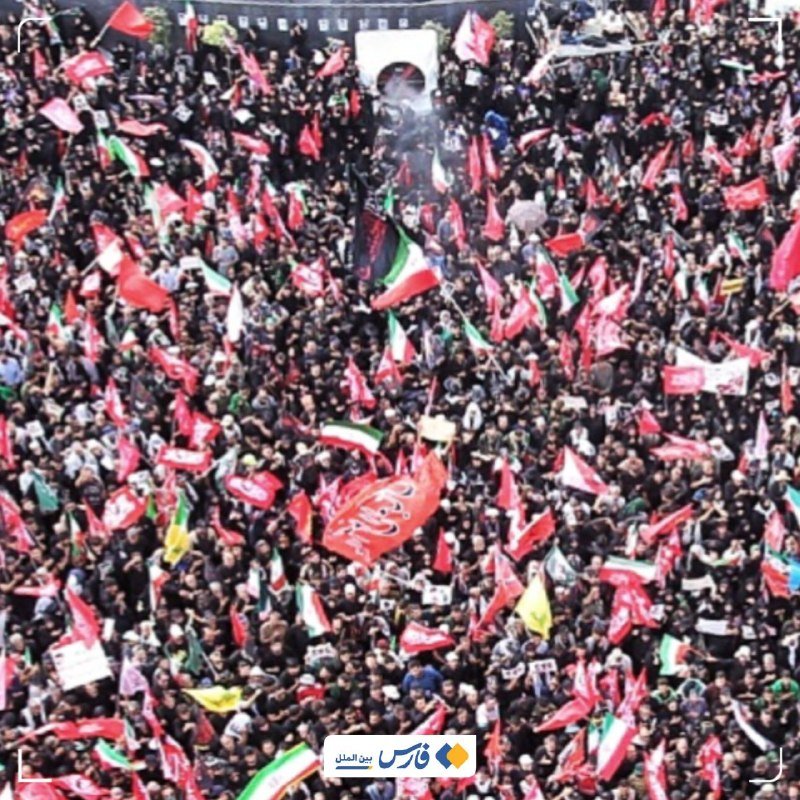
When Ali Khamenei's sons filed into view at their father's funeral procession on 4 July 2026, the cameras saw three of them and conspicuously did not see a fourth. Mojtaba Khamenei — long described in Iranian political reporting as the favoured candidate to inherit the Supreme Leadership — was absent, with no official photograph released to confirm his whereabouts. On the same day, the Iranian routing of the funeral was itself a piece of statecraft: a five-city procession touching cities across both Iran and Iraq, designed to dramatise the regime's axis-of-resistance geography at exactly the moment the line of succession is being negotiated behind closed doors.
Here is the political problem wearing a ritual costume. Iran's succession is not a normal hereditary handover; it is a clerical council vote filtered through four decades of factional settlement. Yet the public-facing script — who appears, who is kept offstage — is doing real work. If Mojtaba is wounded and recovering, his absence reads as vulnerability. If he has been sidelined by rivals within the Assembly of Experts and the Revolutionary Guards' patronage networks, his absence reads as a managed retreat. The same photograph can be made to carry two opposite stories, depending on what gets confirmed in the next seventy-two hours.
A funeral, not a coronation
Khamenei's death closes the longest single-leader tenure of the Islamic Republic. For the better part of four decades, every internal faction fight — the 2009 disputed election, the JCPOA negotiations, the suppression of the 2019 protests, the post-Mahsa reckoning with the morality police — resolved, ultimately, at his desk. The machinery built to ratify his choices was enormous but personalist: the Assembly of Experts, the Guardian Council, the Supreme National Security Council and the coordinating role of the Islamic Revolutionary Guard Corps all derived their routine authority from his standing as jurist-in-chief and commander.
That machinery now has to choose his successor by clerical deliberation, not by charismatic inheritance. The Council's membership skews toward Khamenei's age cohort of 86-year-olds, with much of its institutional memory tied to him specifically. Analysts who watch the body have long argued that a contested succession could be decided less by fatwa than by the IRGC's tolerance for the eventual winner — a counterweight that sits awkwardly with the constitution's text and quite comfortably with the constitution's practice.
Three sons on camera, one kept off
The public-facing fact is stark. Per Telegram channel ourwarstoday on 5 July 2026 at 22:24 UTC: "Three sons of Iran's slain leader Khamenei appear at funeral, not his successor. There have been no public sighting or image released of Mojtaba Khamenei, said to have been injured in the attack that k[illed]…" The post left the sentence broken, but the substance is unambiguous — the family's public-facing optics included three brothers and excluded the one observers have spent months identifying as the heir-apparent. That framing was echoed by an X post from @Polymarket on 5 July 2026 at 13:08 UTC: "Mojtaba Khamenei was reportedly absent from Ali Khamenei's funeral as Iran's top officials attended."
The structural interpretation is the news, not the medical detail. In a system where political capital is partly photographic — where Iranian state media runs carefully curated angles of who stands where at which funeral — exclusion from the family shot is itself a signal. Either the regime wanted Mojtaba offstage to deprive rivals of a martyrdom image of an injured son, or rivals inside the regime wanted him offstage to deprive him of the visual legitimacy of mourning alongside senior officials. Both readings are politically plausible. The next forty-eight hours will probably make the choice for us.
The choreography of regionalisation
The decision to route the funeral procession through five cities spanning Iran and Iraq is the other half of the message. Per the same @Polymarket account on 4 July 2026 at 15:57 UTC: "Ayatollah Khamenei's funeral procession will travel through five cities across Iran & Iraq." Iraqi participation in an Iranian Supreme Leader's funeral rites is extraordinary by the standards of the Islamic Republic's first forty years. It is the visual assertion that the land bridge from Tehran through Baghdad to Damascus to Beirut — the geography the US spent the last decade trying to sever — is not a slogan but a working political unit.
For a Western audience that has tracked Iran primarily through sanctions and the nuclear file, the procession is also a reminder that Iran's regional position outlasts any single Supreme Leader. The clerical state's external architecture — the IRGC-Quds Force liaison network, the Iraqi Shia militias, the Lebanese corridor, the Houthi relationship — was built to survive precisely the kind of irregular handover now underway. Whether the next Supreme Leader can hold all of it together is the open question.
What the absence does not yet prove
Two things are worth holding open. First, the medical narrative — that Mojtaba was injured — is currently sourced to a single Telegram report and a Polymarket social-media echo, neither of which is independently verifiable from outside Iran. State-aligned outlets have not, as of this writing, confirmed the injury. Second, the absence could just as easily read as a security precaution during a vulnerable transition moment; Iran's political elite have a long memory of the 1981 Republic bombing, which killed President Rajai and Prime Minister Bahonar, and a successor-attack scenario is exactly the kind of contingency the new security detail around any aspirant would be calibrated to prevent. Absent corroborated reporting on the cause, both readings have to stay on the table.
The contest is not rhetorical. The succession will determine whether the Islamic Republic's second generation consolidates around a Khamenei family continuation project — informal, dynastic in practice even if clerical in form — or whether the IRGC's coordinating role hardens into something the 1979 constitution did not anticipate. Either outcome is contestable inside the system. Neither is settled by the optics of one funeral. But the optics are how the first move is being telegraphed, and right now the move Mojtaba's absence is signalling is ambiguous by design.
Desk note: Monexus is leaning on Telegram and X-sourced reporting from the wire layer for this piece; mainstream Iranian state media has not yet published independent confirmation of Mojtaba's condition. We will update as primary-source confirmation becomes available.
Wire provenance
This editorial synthesis draws on the following public wire/social posts:
- https://t.me/ourwarstoday