Iran's state-aligned press turns a martyrdom into a mobilisation test
Tasnim's feed on 5 July 2026 reads less like news and more like an assignment: turn a single funeral into a turnout number, and a martyrdom into a political obligation.
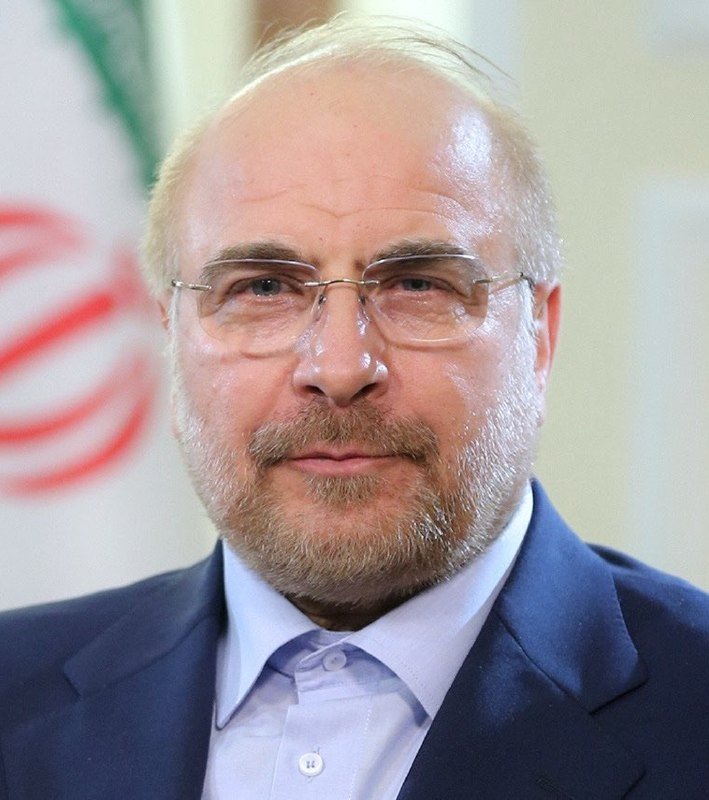
By 19:07 UTC on 5 July 2026, Iran's Tasnim News Agency was no longer covering a death. It was organising one. A cascade of posts in English on its Telegram channel, beginning roughly eighteen hours earlier and accelerating through the evening, urged readers to attend a farewell ceremony for a man the outlet calls a "martyred leader of the Revolution," urged them to read his biography, and insisted that "the first requirement for the blood of our martyr is to participate in this funeral." A separate message set the practical terms: the farewell would run only "until 10:00 PM" local time so that "better services" could be arranged for the funeral day itself, scheduled for the following morning.
The editorial posture that produced those messages is the story. Tasnim is not a marginal outlet — it is the media arm closely associated with the Islamic Revolutionary Guard Corps, and its output carries both the institutional weight and the performative obligations of a state-aligned press in a system that treats mass mobilisation as a measurable output. When an outlet of this kind issues a turnout instruction under the vocabulary of martyrdom, the instruction and the news are the same product.
The grammar of obligation
The threads posted by Tasnim on 5 July do not describe an assassination, name a perpetrator, or concede any operational uncertainty. They move, with almost liturgical efficiency, from grief to duty: read the biography, mark the hashtags (#Badarqa_Aghai_Shahid_Iran, #must_rise), show up. The framing collapses the distance between the reader's emotional response and a prescribed political act. The phrases are short and imperative. The theological scaffolding — martyrdom, blood, the Revolution — does the rhetorical work that an editorial would normally do in a less disciplined press environment.
What stands out to a reader outside that ecosystem is the consolidation of news, exhortation, and logistical instruction into a single feed. A line setting the farewell's closing hour sits next to a hashtag exhorting readers to "rise." An instruction to read a biography sits next to a religious invocation. The funeral itself, as Tasnim presents it, is both an event to be mourned and a test to be passed.
Counter-reads, and why they do not displace the dominant one
Two counter-reads are worth registering before settling on the dominant interpretation. The first is that Tasnim's tone on this day is unremarkable inside Iranian state-aligned media: the formal vocabulary of martyrdom has been a stable register of IRGC-adjacent communication for decades, and an English-language editor at Tasnim reaching for that vocabulary in a moment of grief is not necessarily producing propaganda so much as performing a familiar ritual. The second is that the funnel of attention is doing exactly what mainstream Western outlets do in crisis moments — clearing the front page for the story and giving it the weight it commands inside the institution.
Neither counter-read displaces the dominant one. The "ritual" reading assumes the audience is already inside the ritual; the "news" reading treats the institutional grammar as incidental. The decisive feature of Tasnim's feed on 5 July is that the editorial is openly the editorial — the publication is not pretending to be neutral, and is not asking its readers to pretend either. That openness is what makes the posts a usable primary source for analysts, and what makes them, at the same time, a piece of mobilisation infrastructure rather than reportage.
What this pattern looks like from outside
The structural lesson is portable. State-aligned media in a closed or semi-closed information environment does not only tell its readers what to think about an event; it tells them what to do about it, and it provides the operational detail — times, places, hashtags — to make that instruction executable. Western wire reporting on Iran tends to focus on the content of the underlying event (who was killed, by whom, on whose orders) and to treat the surrounding media environment as atmosphere. Tasnim's 5 July output is a useful corrective: the surrounding media environment is, in this case, the event's principal political output. The funeral's turnout is the verdict the outlet is asking its audience to deliver before the coffin is even lowered.
This is also why external analysis of Iranian state media tends to lag the material it studies. Outside readers look for what the outlet claims happened. The more revealing object of study is what the outlet asks its readers to do next.
What remains uncertain
The available thread does not name the slain figure, the date or circumstances of his death, or the institution — beyond "the Revolution" — to which he belonged. It does not record casualty figures, the route of the procession, or the size of any gathering. It does not state whether attendance at the farewell was open to the public without coordination, or whether the institutional call was directed at specific constituencies (basij units, veterans' associations, civil-society affiliates). On the policy substance of any retaliatory or diplomatic response, the thread is silent. Until those gaps are filled by independent reporting — and the practical first stop is Tasnim's own Persian-language feed, cross-checked against Reuters, BBC Persian, and the established Western wires — readers should treat the English-language feed as a faithful record of mobilisation intent, not as a complete account of what is being mobilised for.
Desk note: Tasnim is a state-aligned outlet and is cited here as the primary source of the texts being analysed. Monexus does not treat its framing as neutral; the point of the piece is precisely the framing. Where facts beyond the thread become load-bearing in a future version of this article, they will be cross-checked against Reuters and the BBC before publication.
Wire provenance
This editorial synthesis draws on the following public wire/social posts:
- https://t.me/tasnimnews_en/1807
- https://t.me/tasnimnews_en/1806
- https://t.me/tasnimnews_en/1805
- https://t.me/tasnimnews_en/1804