Pune's monsoon and the infrastructure that wasn't
Two collapses in a single July evening exposed the gap between Pune's tech-capital ambitions and the civic ground truth — and tested the limits of a familiar Indian excuse.
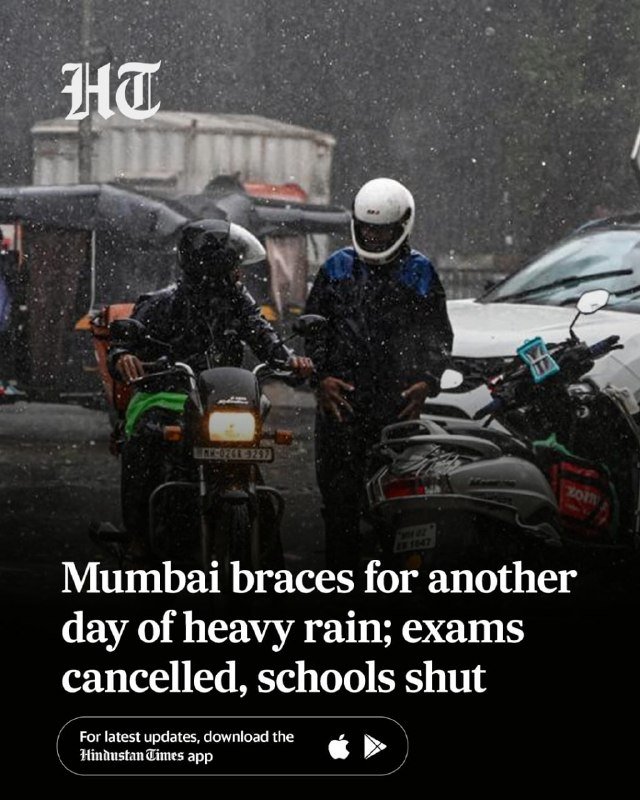
The rain came down in sheets over Pune on the evening of 5 July 2026, and the city's infrastructure answered in the only language it knows: collapse. By the time the downpour eased, 18 vehicles had been damaged after a fence gave way in the city, according to a wire report logged at 17:52 UTC by The Indian Express [https://ift.tt/P93awAj]. Hours earlier — 24 hours apart on the same news cycle — a road had caved in elsewhere in the metropolitan area, and the administration offered an explanation that, charitably, raised more questions than it settled: that the subsidence was part of "planned testing" [https://ift.tt/P1T4UAO]. The two incidents, reported within minutes of each other by the same outlet, share a city but little else — one is a meteorological inevitability, the other is a confession dressed as a press release.
The pattern is familiar to anyone who has spent a July in a fast-growing Indian metropolis. Civic authorities routinely face the same choice after a road collapse: blame the rain, blame the contractor, blame the geology, or — and this is the newer, more interesting option — claim jurisdiction over the failure itself. Pune's administration reached for that last register this week, recasting a sinkhole as a deliberate diagnostic. If the framing holds, the city owns the timeline. If it doesn't, it owns the crater.
What the wire actually reported
The Indian Express dispatched two near-simultaneous items on the evening of 5 July. The first described the cave-in of a road near Pune and quoted local officials describing the event as a planned exercise [https://ift.tt/P1T4UAO]. The second, logged at the same 17:52 UTC stamp, recorded rainfall-triggered damage to 18 vehicles after a fence collapse in another part of the city [https://ift.tt/P93awAj]. A third item that day, unrelated to either incident, featured actor Kajol reflecting on a strict upbringing [https://ift.tt/35pad7b]. The two infrastructure dispatches are the load-bearing material here; the third illustrates only that The Indian Express's newsroom runs on parallel clocks.
Why "planned testing" is a load-bearing alibi
When a road subsides without a utilities strike, a construction accident, or a visible water main break, administrators typically face three unappealing choices: concede the asset was old, concede the supervision was weak, or concede the underlying ground was poorly understood. Each carries a cost — repair budgets, contractor blacklisting, or geo-technical surveys that delay ribbon-cuttings. "Planned testing" is a fourth register: it reframes the collapse as an output, not a defect, of the same administrative system that approved and operated the road. The alibi is convenient because it converts a failure into a process and a process into proof of competence.
But the alibi has a structural problem. If the collapse was genuinely planned, residents deserve to know what was being tested, by whom, with what safety perimeter, and at what cost. If it was not planned, the original explanation was a lie dressed in present-tense vocabulary. There is no comfortable middle reading here, and the sources do not adjudicate between them.
Where monsoon meets a fast-growing urban perimeter
Pune is the textbook case study of a city whose economic gravity has outrun its civic one. The IT corridor east of the old city, the auto and engineering belts along the Mumbai-Pune axis, and the rapid vertical growth along the western suburbs have all been absorbed into a municipal footprint whose storm-water systems were last comprehensively planned for a smaller settlement. When the monsoon breaks, the mismatch becomes visible within hours. The fence collapse that damaged 18 vehicles in the second incident sits inside that pattern almost mechanically — boundary infrastructure rated for ordinary rainfall tested by something else entirely [https://ift.tt/P93awAj].
The right reading is not that Indian cities cannot build. India's national highway programme, its metro build-outs across multiple Tier-1 cities, and its rural road networks all demonstrate that public works at scale are possible when the political economy lines up. The harder reading is that municipal-level drainage, footpaths, fencing, and sub-grade utilities occupy a poorly governed category — funded, contracted, and supervised across multiple agencies whose lines of accountability terminate in nobody's office specifically. Pune's two incidents, on two different assets, in the same news cycle, are a tidy illustration.
What it would take, and why it probably won't
A serious response would require the sort of unbundling that journalism can describe but rarely produces: a published municipal asset register, a public map of storm-water capacity by ward, and a contract-level accounting for the road and fence implicated in these incidents. None of that is on offer in the Indian Express dispatches, and no municipal authority in India has volunteered that level of disclosure voluntarily in recent memory. The likelier near-term outcome is that the cave-in road is filled, the fence is replaced, the vehicles are disputed through insurance, and "planned testing" settles into the official record as the administration's preferred description of an event it would rather not have to defend later.
What remains uncertain
The dispatches do not name the location of the cave-in beyond "near Pune," nor do they identify the department responsible for the road in question. The 18-vehicle figure is given without an itemised account of which vehicles sustained what damage, and the "planned testing" framing is presented without a direct quotation from the official who used it. There is, in other words, a familiar gap between the headline and the underlying record — and that gap is where Indian urban governance has lived, more or less comfortably, for some time.
The Indian Express dispatched two items on Pune on 5 July within minutes of each other; Monexus read them as a single story about the gap between a tech-capital pitch and a civic reality.