Tehran's Grand Mosalla and the choreography of a funeral that doubles as a verdict
Mourners at Tehran's Grand Mosalla on 5 July 2026 weren't only burying a leader. They were staging the political verdict his death will trigger — and Iran-watchers in Washington, Riyadh, and Tel Aviv are taking notes.
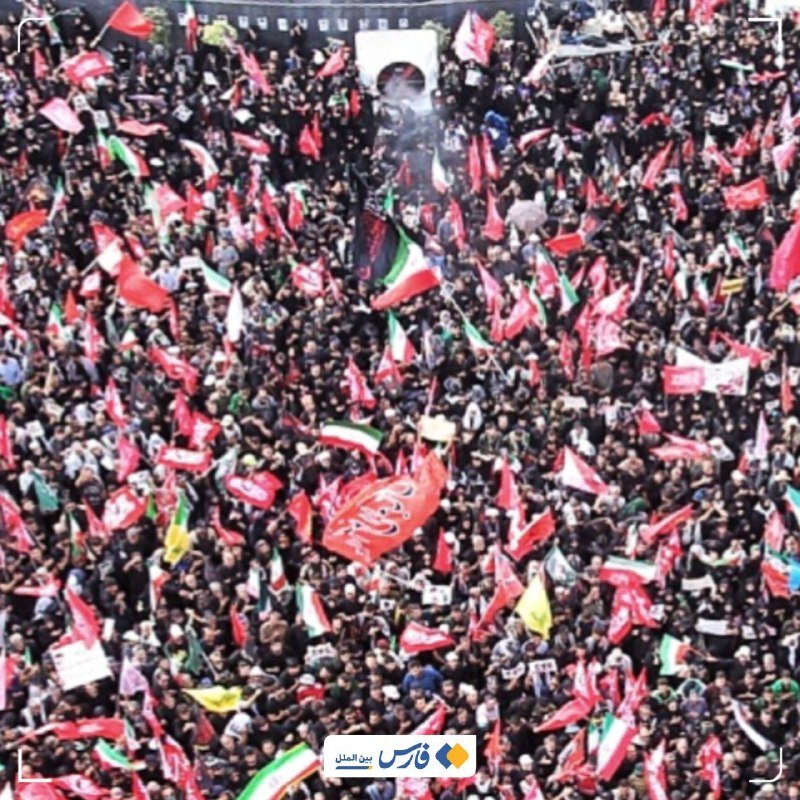
By 08:30 UTC on 5 July 2026, the crowds pressed into Tehran's Grand Mosalla were no longer a private grief. Aerial footage distributed by Press TV showed the courtyards filled to their limits; a time-lapse released minutes later by IRNA English showed the same space emptying in slow, organised columns as the funeral prayer concluded. State-aligned outlets used a single word repeatedly — "martyred" — and the framing was deliberate. In the Iranian political vocabulary, martyrdom is not consolation. It is a claim on legitimacy.
The scenes matter beyond theology. A Supreme Leader's funeral in the Islamic Republic is a constitutional moment disguised as a mourning rite. It is the one occasion on which the regime's factions, security services, and clerical hierarchy appear, in public, in a single legible choreography. The choreography on 5 July tells the foreign-policy reader less about the dead leader than about the coalition that intends to outlive him — and about the message that coalition wants to send to capitals still calibrating their response.
A crowd as a constitutional document
The Grand Mosalla was built for moments exactly like this one. Iranian state media's choice to publish both wide aerial shots and slow-departure time-lapses is itself a piece of political communication: the first establishes scale, the second establishes order. Mourners were shown leaving the prayer in formation rather than as a dispersing mass. In a country where street turnout has been contested since 2009, 2017, and 2022, the visual grammar of orderly departure is a deliberate counter-argument to the regime's critics. It says: the public square is ours, and it is calm.
The same footage also performs a foreign-policy function. Foreign ministries in Washington, Riyadh, Tel Aviv, Ankara, and the Gulf capitals do not read Iranian state media for facts; they read it for mood. The Press TV framing — sorrow, sacrifice, and martyrdom — tells those ministries that Tehran intends to read the transition as a continuation, not a rupture.
What the Western wire isn't quite saying
English-language coverage of Iranian leadership transitions has long leaned on a stock script: ruthless factional struggle, IRGC deepening, the clerical establishment fighting for its life. That script is not wrong, but it is incomplete. It treats the Iranian state as a monolith in crisis, when much of the evidence — including the carefully staged public mourning of 5 July — points to a state that has spent four decades institutionalising exactly this kind of transition. The institutional infrastructure for a Supreme Leader's death was not improvised in the last week. It was designed.
A more honest read sits between two poles. The succession will not be frictionless; coalitions inside the Islamic Republic never are. But the public face being presented at the Grand Mosalla suggests the leadership intends the world to read continuity, not vulnerability. The risk for Western analysts is to confuse the absence of liberal pluralism with the absence of state capacity. Iran has the second in abundance.
The structural frame, in plain prose
What is on display in Tehran is a recurring pattern in the politics of established revolutionary states: a leadership transition used as an occasion to consolidate, not to deliberate. The new leader's authority is not derived from the ballot in the liberal-democratic sense; it is derived from the visible endorsement of the institutions that mattered on the day of the funeral — the security services in attendance, the clerical hierarchy standing in their assigned positions, the public crowding the courtyard in numbers the state itself curated through its broadcasting choices. Legitimacy, in this register, is performed rather than polled.
That is a foreign-policy problem for governments that have built their Iran strategy around the expectation of either collapse or reformist breakthrough. Both readings have been wrong for a generation, and the funeral footage from 5 July offers no reason to update toward either of them. The more durable expectation is managed continuity under pressure: external sanctions, regional attritional conflicts with Israel and the United States, and a domestic economy that has absorbed shocks before.
Stakes, and what remains uncertain
For Israel and the United States, the immediate question is whether the transition produces a leadership more constrained by hardliners — or one that treats continuity as a negotiating asset. The funeral scenes do not answer that question; they only narrow the range of plausible answers. For the Gulf states and Turkey, the calculus runs through energy markets and through the future of the regional security architecture Iran has helped shape, from Syria's residual posture to the Hezbollah and Houthi corridors. For the Iranian public, the funeral is also a quiet referendum on rationing, inflation, and the social contract the new leader will inherit.
The sources do not specify the cause of death, the identity of the successor, or the order of the funeral procession. They show a public square, a time-lapse, and a vocabulary. In Iranian politics, that vocabulary is rarely accidental.
This article was framed by Monexus as a reading of state-choreographed mourning rather than a wire recap of the funeral itself; the Press TV and IRNA releases on 5 July 2026 are treated as primary mood-signals, not as neutral fact-records.
Wire provenance
This editorial synthesis draws on the following public wire/social posts:
- https://t.me/presstv/1300
- https://t.me/Irna_en/2100
- https://t.me/presstv/1298
- https://t.me/presstv/1295