Tehran's farewell to Khamenei: a state funeral as political signalling
Iranian state media on 5 July 2026 broadcast funeral rites for Ayatollah Ali Khamenei at Tehran's Imam Khomeini Mosque — a choreographed display whose reading depends on whether the audience trusts the producer.
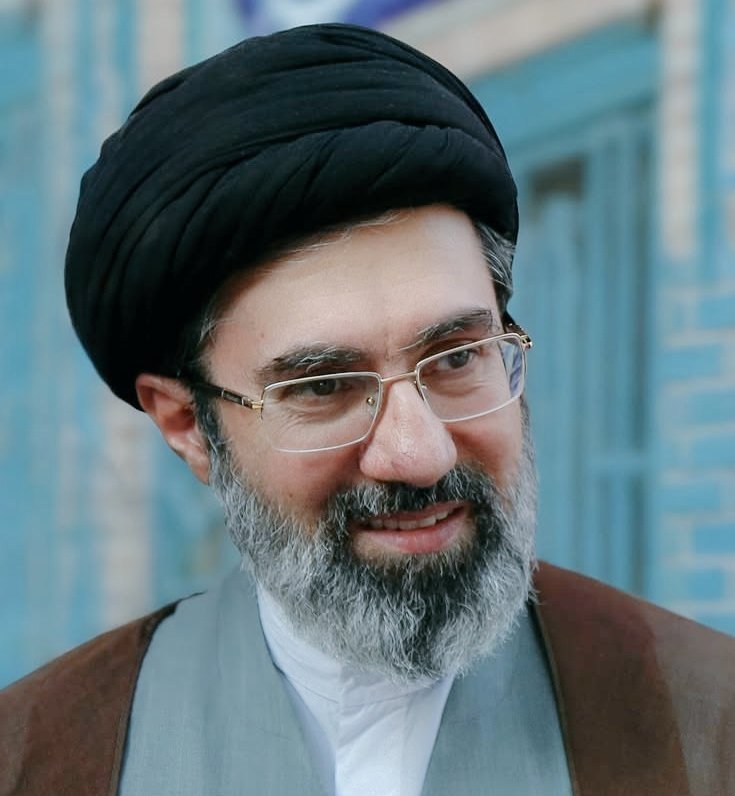
At 02:52 UTC on 5 July 2026, Iran's Fars News Agency began streaming footage of mourners filing into the Imam Khomeini Mosque in southern Tehran. By 04:57 UTC, the English-language service of Tasnim News was broadcasting live scenes of congregational prayer over the body of Ayatollah Ali Khamenei, Supreme Leader of the Islamic Republic since 1989. The fixed points are unusually clear for a story arriving almost entirely through Iranian state-aligned channels: a state funeral is in progress, the supreme leader is dead, and the country's institutions are performing the rituals that follow.
What is far less clear is what those rituals signal — to the street, to the IRGC, to the Gulf monarchies, and to a White House that has spent the past eighteen months calculating on the assumption that Khamenei's system would outlive its helmsman. The choreography on display is designed to do two things at once: demonstrate institutional continuity in real time, and foreclose the open question of succession before rivals can coordinate an alternative. Reading it correctly requires holding both ends of that rope.
The staging
The visual grammar is familiar from Iranian state funerals past — rows of mourners, the cleric-led prayer, the black-banners-and-tulips palette, the weeping reciters. Tasnim and Fars between them have pushed at least nine separate video items into Telegram channels in the pre-dawn UTC window alone, including extended lamentation by Maitham Matiei in the mosque's prayer hall. Al-Alam Arabic, the IRGC-linked satellite channel, aired what it framed as a national anthem and a military salute to "the martyr Imam Mujahid #Khamenei" inside the hall "minutes before the funeral prayer."
The repetition is the point. A state-aligned media ecosystem that has spent decades perfecting the optics of martyrdom is not broadcasting this once; it is broadcasting it until the image is the only one available. Foreign wire services have limited access inside the prayer hall and are largely repackaging Iranian state footage with credit. The result is a coverage environment in which almost every frame a Western reader sees between now and the interment originates with the institution that benefited from the death being framed in a particular way.
What Iranian sources are actually saying
It is worth being precise about what the Iranian outlets are claiming, because some of the language is doing heavier work than it appears. The Tasnim English wire refers to the deceased as "Mr. Martyr of Iran." Al-Alam Arabic reaches for "martyr Imam Mujahid" — a formulation that places Khamenei in the lineage of the Shia Imams rather than the more conventional marja'iyya register. Fars, more disciplined, sticks to "the martyred leader of the revolution."
None of these outlets has, in the material reviewed here, named a successor. That silence is itself informative. Under Iran's constitution, succession passes through the Assembly of Experts — a body that has been quietly re-stacked over the past two years to reduce the influence of figures associated with the pragmatist-pricier-faction and to elevate those aligned with the IRGC and the supreme leader's own office. The choreography now is built to make the announcement feel inevitable rather than contested.
What the framing leaves out
Two things are conspicuously absent from the footage and the captions. First, the scale. Iranian state media has a long history of inflating turnout figures for its own ritual occasions; independent verification of how many people are actually inside the mosque and the surrounding streets will only become possible once satellite imagery and external press are allowed to circulate. The official number, when it is published, should be treated as a political claim.
Second, and more substantively, the regional reactions. The Saudi, Emirati, and Israeli foreign ministries have not, in the material reviewed, been given room inside the Iranian-curated frame. Gulf states spent the previous decade building quiet channels to Tehran specifically because they expected this moment; their absence from the official footage tells the reader less about their position than about who is allowed to hold the camera.
A Western reader will default to reading this as a routine authoritarian performance, and that reading is not wrong. But it is incomplete. The same institutions that are now broadcasting from the prayer hall also run elections, manage subsidy programmes, and negotiate — sometimes very effectively — with adversaries who do not share the regime's ideology. The funeral is not a substitute for the state; it is the state performing itself on camera, and the audience is expected to take the performance as evidence of capability.
Stakes and what to watch
Three near-term markers will determine whether the funeral's messaging holds. The first is the identity of the successor when it is announced — and whether the announcement comes from the Assembly of Experts, the supreme leader's office, or the IRGC, since each carries a different implication for the balance of power inside the system. The second is the question of foreign attendance: high-level Gulf or Chinese delegations at the funeral would suggest Tehran intends to communicate continuity outward; their absence would suggest the opposite. The third is the response from the street in the seventy-two hours after the interment — whether mourning consolidates around the successor, or whether grievances that were frozen under Khamenei begin to thaw.
For now, the only certainty is the footage. Tasnim and Fars are broadcasting the funeral as proof that the Islamic Republic knows how to mark its own transitions. Whether that proof travels outside the prayer hall depends on audiences that have been trained, over forty years, to be sceptical of exactly this kind of image.
Desk note: Monexus relies on Iranian state-aligned sources for primary footage of the funeral, with their institutional affiliation noted on first reference. The line between the state funeral as event and the state funeral as broadcast product is itself part of the story; readers should treat the framing as a data point about the institution rather than as a neutral window onto it.
Wire provenance
This editorial synthesis draws on the following public wire/social posts:
- https://t.me/tasnimnews_en
- https://t.me/tasnimnews_en
- https://t.me/tasnimplus
- https://t.me/farsna
- https://t.me/farsna
- https://t.me/farsna
- https://t.me/alalamarabic