A Lion at Her Back: Tonia Mishiali Brings Cyprus’s Migrant Reckoning to Karlovy Vary
Cypriot director Tonia Mishiali’s “The Lion at My Back” enters the Crystal Globe competition at Karlovy Vary with a story that refuses to separate the violence men do to women from the violence states do to the people who arrive on their shores.
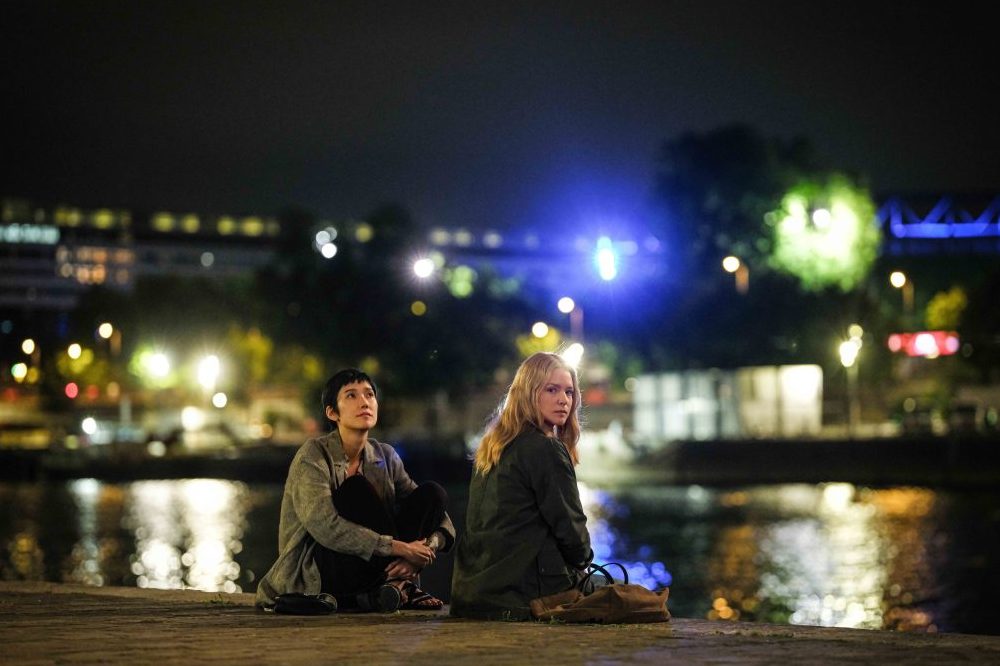
Tonia Mishiali’s "The Lion at My Back" premieres in competition at the Karlovy Vary International Film Festival on 5 July 2026, carrying the awkward, unglamorous subjects that European art-house programmers tend to honour with a Crystal Globe nod and then forget by autumn: the woman who arrives in a country that does not want her, the man who believes ownership is a birthright, and the household in which both truths collide without either one yielding.
The film, written and directed by the Cypriot filmmaker, slots into the festival’s Crystal Globe competition — the main international feature slot — according to a 5 July 2026 Variety profile. Mishiali has framed the project as an attempt to braid three threads that European cinema usually handles in separate pictures: the experience of a migrant woman, the slow violence of patriarchal control, and the particular resilience that women develop not as inspiration but as survival mechanics. "The Lion at My Back" is the result.
A film built from the seams
Mishiali has spent the last decade working on the fault lines of Cypriot and Mediterranean life. Her earlier features — "Pause" (2018) and "God's Wife" — earned her a reputation for putting female interiority under a long, unflinching lens, and for refusing the tidy uplift that festival juries tend to reward. The new film extends that method into a subject that European policy discussion treats almost entirely in the abstract: what happens inside a domestic space when the woman inside it is also a woman who has crossed a border, and when the man who controls the house treats both facts as forms of trespass.
The premise, as Variety describes it, places a migrant woman at the centre of a household governed by a patriarchal figure whose authority is both intimate and structural. Mishiali’s stated interest is not in documenting the migration system as such, nor in producing an allegory. It is in the texture of resistance — the small refusals, the private economy of endurance, the relationships women build with one another inside an enclosure designed to isolate them.
The result is a film that takes the migration question out of the policy briefing and puts it back where most of it is actually lived: in kitchens, in bedrooms, in the geometry of who is allowed to leave a room first.
The counter-narrative Europe would rather not programme
European art cinema has spent two decades treating migration as either a tragedy to be witnessed from a safe distance or a sociological condition to be catalogued. The films that travel — the ones that win the big prizes, the ones that platform at Cannes and Berlin and then screen at your local independent cinema for a fortnight — have tended to centre the European protagonist. The migrant is the occasion; the European consciousness is the subject.
Mishiali’s film, by Variety’s account, inverts that arrangement. The migrant woman is not the object of the European gaze; the patriarchal household is. The country that receives her is implicated rather than absolved, and the men who run that household are not redeemable by their suffering. This is a structural choice with consequences for how the film will be read, and it places "The Lion at My Back" inside a longer argument about whose interiority European cinema is willing to take seriously.
There is a counter-reading, and it deserves air. A film that makes the European household the antagonist risks producing its own form of abstraction — turning Cypriot men into a metonym for a continent, the way earlier decades turned migrants into a metonym for suffering. Mishiali’s prior work suggests she is alert to this trap; whether the new film negotiates it cleanly is a question that even a sympathetic reading cannot answer from a still and a profile alone.
What the festival slot signals
Karlovy Vary’s Crystal Globe competition is not Cannes. It is, however, a serious stage — the festival’s main international feature track, with a jury whose preferences have shifted in recent editions toward films that combine formal rigour with explicit political address. Programming a film about migrant women’s domestic resistance into that competition is a statement, even if the programmers would describe it as routine.
For Cyprus, the selection carries its own weight. The country sits at the southeastern edge of the European migration route, and its cinema has been chronically under-represented at the major festival circuit. A Cypriot director in the Crystal Globe competition is, in the small economy of European art-house attention, a material event.
For Mishiali personally, it consolidates a career that has been steady rather than spectacular — the kind of body of work that festival programmers come to trust precisely because it does not chase the zeitgeist. The Variety profile frames her as a director interested in "the particular resilience that women develop not as inspiration but as survival mechanics," which is a useful description of the project and of the wider body of work it extends.
What the film is actually arguing
The structural argument underneath "The Lion at My Back" is one that does not need a theorist to articulate it. Across Europe, the political conversation about migration has been deliberately separated from the political conversation about gender, as if the two were independent variables. They are not. The same political formations that promise to harden borders have, in country after country, also promised to restore a particular kind of household order — one in which women’s autonomy is treated as a casualty of national recovery.
Mishiali’s film, by the Variety account, refuses that separation. It insists that the violence done to a migrant woman inside a private home is not a private matter, and that the systems that make her vulnerable to that violence are continuous with the systems that made her cross a border in the first place. This is not a thesis imposed from outside the narrative; it is the structure the narrative inhabits.
The stakes of that argument are not abstract. They are being litigated right now, in courtrooms and parliamentary committees across the European Union, in the drafting of the next iteration of the Pact on Migration and Asylum, in the domestic-violence legislation that is being amended or rolled back in member states. A film that puts both subjects in the same frame, and refuses to let either one soften the other, is contributing to that litigation whether or not it intends to.
Desk note: Monexus treats this as a cultural-desk story about a European art-cinema premiere, with the migration frame drawn from the Variety profile rather than from policy wire reporting. The article does not adjudicate the film’s quality — that is the jury’s job — but it does situate the project inside the longer argument about whose interiority European cinema is willing to take seriously, and about the structural continuity between border policy and household control.