"Nobody can be like us": Trump's America-First monologue and the gap between rhetoric and reach
Two sentences — "All over the world they try and be like us. Nobody can be like us." — captured in four Telegram channels on 5 July 2026 say more about the gap between presidential theatre and structural power than any policy memo.
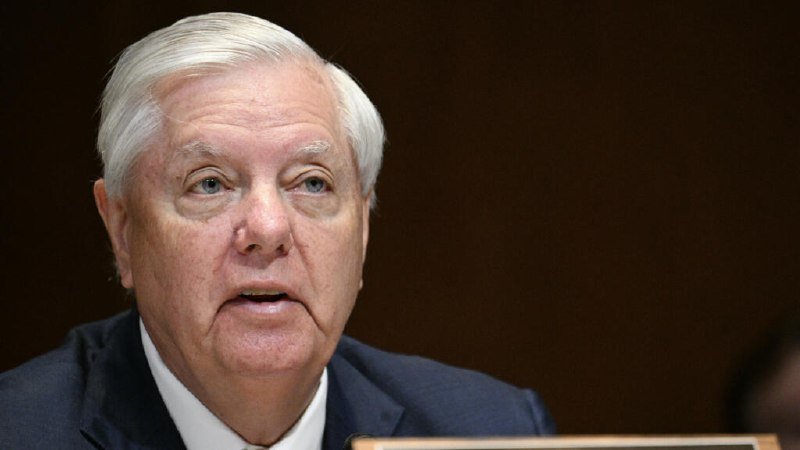
At 03:20 UTC on 5 July 2026, the Telegram channel Clash Report posted a six-second clip: Donald Trump, at a podium, telling an audience that "all over the world they try and be like us. Nobody can be like us." Fourteen minutes later, the same channel carried a second clip in which the president observed that "we have equal justice under the law, although I wasn't treated that well, but we won't get into that." By 04:34 UTC the line had migrated to DDGeopolitics, accompanied by a one-line rejoinder from a follower: "Sir, it's not the 90ies anymore." A presidential riff, in other words, that started on a campaign-adjacent channel, was amplified by a geopolitics feed, and was already being openly second-guessed by readers — all before dawn on the American east coast.
The clips are short, the rhetoric is familiar, and the temptation is to file them under "Trump being Trump." That filing is convenient, and wrong. The monologue lands at a moment when the structural claim underneath it — that the United States remains the only country the rest of the world is trying to imitate — is becoming harder to defend on its own terms, and easier to defend only if "being like us" is redefined down to mean something it did not used to mean.
What Trump actually said, and where
The two Clash Report items and the parallel DDGeopolitics post are the only primary records of the remarks this article draws on. They show Trump speaking at a rally-style event on 4 July 2026, the U.S. national holiday, framing American constitutional government as the object of global envy. "All over the world they try and be like us. Nobody can be like us," the president says in the first clip; in the second he praises equal justice under law while conceding, with a half-smile, that "I wasn't treated that well." The juxtaposition is the point: the rally stage functions as both a constitutional celebration and a vehicle for personal grievance, with the two fused into a single argument about American exceptionalism.
The DDGeopolitics repost — "🇺🇸 All over the world they try and be like us. Nobody can be like us - Trump🐻 Sir, it's not the 90ies anymore🔴" — is worth dwelling on because it is the version of the remark that actually travelled. Telegram channels do not have editors; they have curators. DDGeopolitics chose to keep the line and add a counter-punch from a reader. The "bear" emoji is a Trump-channel signature; the "Sir, it's not the 90ies anymore" is the editorialising tell. Whoever runs that feed is signalling, in real time, that the boast reads differently in 2026 than it would have in 1996.
The structural counter-read
The 1990s reading is straightforward. The United States ended the Cold War as the sole superpower, ran the institutions the rest of the world joined rather than defied, and set the technological and financial standards that other economies adopted by choice. In that context, "nobody can be like us" is a description of a condition, not a boast.
The 2026 reading is more complicated, and the DDGeopolitics reader's "it's not the 90ies anymore" captures the reason. Three structural shifts have eaten into the implied monopoly on imitation. First, China's industrial-policy state has produced a development template — long-horizon state capital, sovereign lending, infrastructure-first diplomacy — that a growing list of governments in the Global South now treat as at least as relevant as the Washington Consensus ever was. Second, the European Union has consolidated around a regulatory model (the carbon border adjustment mechanism, the Digital Markets Act, the AI Act) that exports not by military or financial coercion but by market access, and that other jurisdictions increasingly pre-emptively adopt. Third, the dollar system that underwrote American centrality is being partially rerouted — settlement in non-dollar currencies between a defined set of trading partners, gold buying at central-bank pace not seen since the Bretton Woods era — without yet breaking, but visibly thinning at the edges. The Telegram reader's one-liner is a compressed version of all three points.
None of this means American constitutional government has stopped being admired. It means the field of what other countries are trying to "be like" has widened. That distinction matters because the rally rhetoric depends on a singular referent: there is one model, it is American, and the rest of the world is in the position of imitator. Once two or three serious alternatives exist, the boast starts to describe a desire rather than a fact.
The justice line and what it reveals
The second Clash Report clip is the more analytically interesting one. "We have equal justice under the law, although I wasn't treated that well, but we won't get into that" reads on its face as boilerplate. It is not. It is the president using the constitutional text — equal justice — as a launching pad for a claim about himself, and using the resulting fusion to imply that any criticism of him is, by extension, a criticism of equal justice itself.
This is a recognisable rhetorical move, and it cuts in two directions at once. To supporters, the line is evidence that the president has survived what they regard as lawfare and is still standing; to critics, it is the marker of a constitutional order in which the head of state has begun to treat his own legal exposure as a synonym for the health of the republic. Both readings are present in the political ecosystem the clip travelled through, and the channel ecosystem around it shows both. The point for an outside observer is not to adjudicate which reading is correct, but to note that the rally itself was structured to make adjudication impossible.
That matters for foreign audiences because the structural export "all over the world they try and be like us" depends on is the constitutional claim, not the cultural one. The dollar, the reserve-currency status, the dollar-denominated commodities trade, the centrality of U.S. Treasury markets — all of these rest on a perception of U.S. institutional reliability that the second clip, however unintentionally, complicates. The line "equal justice under the law" is doing real diplomatic work in 2026 whether or not the speaker intends it to.
Stakes, and what the sources do not show
If the rally framing holds — singular American model, the world as imitator — the policy implications are clear: Washington can continue to set conditionalities on trade, finance, and security access because there is no alternative arrangement worth joining. If the framing is breaking, as the Telegram counter-read suggests, the implications are different. Allies hedge; rivals build parallel rails; multilateral institutions that the U.S. once led become venues the U.S. once led.
The reader deserves an honest ledger on what the record shows and what it does not. The four Telegram items in this article's source pack establish that Trump made both remarks in a rally-style setting on or around 4 July 2026, that the clips travelled quickly through channels with overlapping but distinct audiences, and that at least one curator felt the need to annotate the first remark with a pushback. They do not establish the specific venue, the audience size, or whether the remarks were scripted or improvised; they do not establish how the rally was covered by U.S. domestic press in real time; and they do not establish whether the constitutional-justice line was a reaction to a contemporaneous legal development or a recycled applause line. The Iran-adjacent Tasnim item in the source pack is from the same day and is included only to show that the broader regional media ecosystem was active in the same window; it does not bear on the Trump clips directly.
What can be said with confidence is narrower than the rally would like, and that gap is the story. The president is selling a 1990s monologue at a 2026 audience, and at least some of the people passing the clips along are already editing it as they go. That is not a foreign-policy position. It is the sound a position makes when it is starting to slip.
This publication's framing note: the wire services this weekend will mostly run the clips as colour; we have read them as a window onto the gap between the rhetoric of singular American centrality and the structural reality of a wider, more contested field of models. The Telegram reader who wrote "it's not the 90ies anymore" is, on the evidence of a single line, doing the more accurate structural analysis.
Wire provenance
This editorial synthesis draws on the following public wire/social posts:
- https://t.me/ClashReport
- https://t.me/ClashReport
- https://t.me/DDGeopolitics
- https://t.me/tasnimplus