Trump's July 4th pageant and the new shape of NATO diplomacy
A Mount Rushmore speech warning of a "communist menace" and a meeting with Syria's new president at The Hague sit awkwardly alongside warm Oval Office calls with Kyiv — and reveal how the administration is reframing both its foreign policy and its domestic pitch.
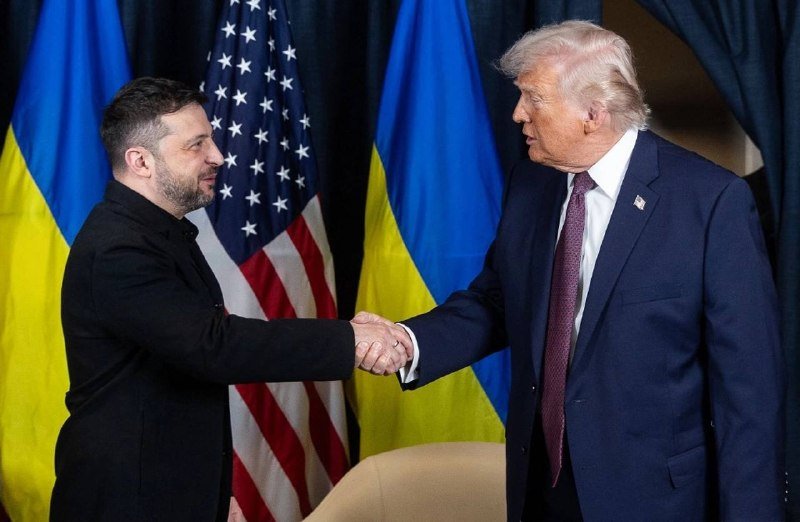
The pageantry of American Independence Day collided with the working week of European alliance politics over the weekend, and the collision was not accidental. On 4 July 2026, President Donald Trump used a Mount Rushmore address — staged in South Dakota despite severe hail storms in the area, according to a 4 July wire report at 01:05 UTC — to frame the United States as a civilisation under siege from a "communist menace." The next day, 5 July 2026, his schedule moved to a NATO summit, with a planned bilateral meeting alongside Ukraine's Volodymyr Zelensky and the president of Syria. The pairing is unusual enough to be worth examining on its own terms, before any commentator reaches for the familiar framing of "isolationist" or "interventionist" Trump.
The Mount Rushmore speech did two things at once. Domestically, it gave the administration a clean Fourth of July set piece: a critique of socialism delivered with the language of moral decline. A 5 July report at 16:05 UTC quoted Trump warning that socialism would turn American cities into "ghettos and slums," and a 4 July report at 15:23 UTC carried his "communist menace" formulation. The audience was the Republican base of mid-term year, not the NATO foreign ministers waiting in The Hague. Internationally, the speech signalled something more interesting: an American executive willing to use the vocabulary of ideological threat at a moment when the alliance is being asked, again, to underwrite the security of Ukraine and to normalise relations with a Syrian government that, two years ago, the same administration would not have considered a partner.
The Zelensky channel
The Ukraine track moved fast. On 4 July 2026 at 22:18 UTC, Zelensky told reporters he had a "very good" call with Trump and urged "American resolve" to help end the war. Twelve hours earlier, at 10:18 UTC the same day, the Ukrainian leader marked America's 250th anniversary with a message praising the "American spirit." The sequence — flattery, then a substantive request, then a planned in-person meeting at The Hague summit — is the diplomatic script Kyiv has run before, but the timing is not. It lands one day after the Mount Rushmore speech that named a "communist menace." Ukraine's request for resolve, made by a leader whose country is fighting an invasion the same week that NATO is gathering, is the part of this story that does the quiet work. Kyiv is asking the United States to remain the security guarantor of last resort precisely when the administration is also performing an ideological anti-left rally on prime-time television.
The Syria channel
The planned meeting with the Syrian president is the less covered of the two items, and the one that will travel further. A 5 July 2026 wire at 18:22 UTC carried the report that Trump would meet both Zelensky and his Syrian counterpart alongside the NATO summit. The official reasons given for the normalisation track — counter-terrorism, the return of refugees, the management of Iranian and Russian residual presence — are real and have been articulated by successive administrations. The harder question, which the wire cycle has not yet answered in detail, is what the Syrian government has offered in return, and whether that offer sits inside a durable settlement or a transactional one. The mainstream Israeli and Gulf press have largely welcomed the thaw; Syrian opposition voices and several European chancelleries are more cautious, partly on the question of accountability for the past decade and partly on the question of what happens when external funding decisions are made in Washington rather than Brussels or Geneva.
What the framing is doing
Stripped of its theatre, the week's messaging reveals a particular political project. The Mount Rushmore speech reframes the domestic left as a civilisational threat; the Zelensky call and the planned Syria meeting reframe the United States as the indispensable broker between incompatible partners. These are not contradictory positions, but they are coherent ones, and the coherence is worth naming. An administration that paints its opponents as a "communist menace" at home will find it easier to discipline its allies abroad, because the cost of dissent inside the alliance becomes framed as collaboration with the menace. The same logic, run in reverse, lets the White House present any deal — including one with a Syrian government still contested by significant parts of its own population and by European partners — as a victory over that menace.
The risk is structural. When the language of existential threat is used at home, it becomes harder to read sober signals abroad. A NATO summit that headlines a bilateral with a Syrian leader the alliance has spent years sanctioning is not, on its own, a policy failure. It is a recognition that the region has changed. But a NATO summit that headlines a bilateral with a Syrian leader while the United States is simultaneously telling its own cities they are one election away from "ghettos and slums" is something else. It tells partner governments, and partner publics, that Washington is operating from a script in which domestic polarisation and alliance management are run from the same emotional register. That script has a track record, and the track record is mixed.
Stakes and what remains uncertain
If the trajectory holds, the second half of 2026 will see a United States that is more willing to convene incompatible parties — Russia-adjacent governments, transitional Syrian authorities, Kyiv — and more willing to use the language of ideological emergency at home to manage the politics of doing so. The winners, in the short run, are the deal-makers in the administration and any government willing to be photographed at the table. The losers are the parts of the American left the Mount Rushmore speech was designed to dehumanise, the European partners who will be told to fall in line behind summits they did not design, and the Syrian and Ukrainian publics whose futures will be discussed in rooms they cannot enter.
Several pieces are genuinely uncertain. The wire cycle has not specified what Syria is offering in return for normalisation, or whether the meeting will produce a written communiqué rather than a photo opportunity. The Russia–Ukraine track remains, as it has for months, dependent on a sequence of phone calls and planned summits whose content is not in the public record. And the domestic reception of the Mount Rushmore framing — whether the "communist menace" line travels as a rallying cry or as a liability — will depend on polling and on the response of state-level Democratic actors whose reaction is not yet visible in the sources reviewed here. What the sources do show, with consistency, is a White House that is comfortable running both registers in the same news cycle, and an alliance that is being asked to keep pace.
This publication reviewed six wire items from the 4–5 July 2026 cycle, all attributed to the same distribution feed. Where the cycle reports a planned meeting rather than a concluded one, the language above reflects that distinction.
Wire provenance
This editorial synthesis draws on the following public wire/social posts:
- https://t.me/polymarket/12481
- https://t.me/polymarket/12477
- https://t.me/polymarket/12469
- https://t.me/polymarket/12464
- https://t.me/polymarket/12461
- https://t.me/polymarket/12455