Kyiv's long-range drone campaign is doing what sanctions couldn't — hitting Russia's fuel
A Financial Times dispatch describes Russia's worst fuel crisis in years as Ukrainian drones hit refineries. The campaign is rewriting the logic of economic pressure on Moscow.
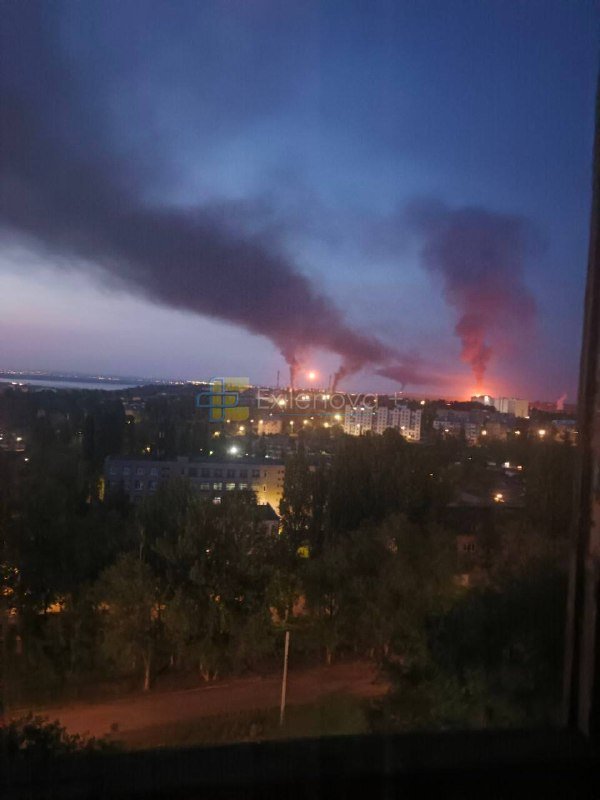
On 5 July 2026 the Financial Times reported that a sustained campaign of Ukrainian long-range drone strikes has driven Russia into what it called the country's worst fuel crisis of the war. The same day, Russian-aligned Telegram channels catalogued near-real-time wave reports, including an admission — relayed by milbloggers and amplified by propagandists — that even the debris of Ukrainian kamikaze drones has begun igniting Russian infrastructure on impact. Whether that last claim holds up to independent verification matters less than the underlying fact the FT has now put on the wire: Ukraine has found a way to put sustained pressure on Russian petroleum output without crossing the political tripwires that Western governments have spent four years trying to avoid.
The thesis is plain. Sanctions were meant to squeeze Russian oil revenues; instead, Russia found buyers in Asia, built a shadow fleet, and kept the Urals discount at a manageable level. What sanctions could not do, low-cost drones launched from Ukrainian territory are now doing — disrupting refining capacity inside Russia, week after week, at a tempo the Kremlin's air defences struggle to match. It is industrial warfare of an unusually asymmetric kind: a country under invasion degrading the war-making capacity of the larger army attacking it, with hardware that costs a fraction of what the target is worth.
The campaign as reported
The FT's framing — surfaced in a Telegram headline at 21:14 UTC on 5 July — describes the present squeeze on Russian fuel supply as the worst of the war. That is a comparative claim worth taking seriously: Russia entered 2026 with a refining sector already running close to capacity and a domestic price-subsidy regime that has historically masked shortages from the Russian public. Independent Russian-language channels catalogued drone trajectories through the early evening on 5 July, with one post at 20:33 UTC noting "Ukrainian drones are en route to strike Russia's energy infrastructure," and a follow-up at 20:32 UTC reframing the strikes as a campaign in which even falling debris, by Russian blogger accounts, is causing secondary fires. The pattern across the night is consistent: waves, often launched across several oblasts simultaneously, designed not to penetrate hardened targets but to keep refinery crews on perpetual restart duty.
The counter-narrative, given its weight
Russia's defence and energy ministries have, in past reporting not included in this thread, framed individual strikes as successfully intercepted and the resulting damage as cosmetic. The Russian counter-line worth taking seriously is that the FT piece aggregates localised incidents into a national narrative — and that Russian refining has been hammered before, including during Soviet-era accidents and the 1990s privatisations, without the regime falling. That is a fair point about Russian system resilience. The harder counter-line, from pro-war commentators quoted in the same Telegram streams, is that the strikes themselves will not decide the war: they impose pain, but the pace of the ground offensive in the Donbas has not visibly slowed, and Russian oil export volumes have continued to find Asian buyers at discounts the Kremlin treats as politically acceptable.
The reason that counter-narrative does not overturn the FT's read is timing. A refining squeeze is seasonal: Russia fuels its own agricultural and military logistics through summer and autumn with stockpiles built during quieter months. Sustained pressure over a full warm-weather campaign is the variable that historically breaks domestic fuel markets, because the storage buffers are not infinite. The FT's "worst" is not a single-event superlative; it is a tempo claim about the year so far.
The structural frame, in plain prose
What is happening is a re-balancing of the economic pressure on Moscow. The Western sanctions architecture of 2022 was designed around the choke points the United States and Europe controlled: correspondent banking, insurance, refining technology, G7 price caps. Russia routed around each one at a known cost — discount, distance, new flag registries, new shipping insurance mutuals. The lever that remained difficult to evade was volumetric disruption inside Russian territory itself, because that requires physical action, not paperwork. Ukrainian drones are now supplying that action at a price Russia cannot afford to match dollar-for-dollar. Coverage of the war has tended to treat "strikes deep inside Russia" as episodic — a tabloid story every few weeks — when the more accurate frame is that they have become a continuous industrial attritional campaign. The interesting question is no longer whether the drones can reach; the FT and the Telegram record together suggest the question now is whether Russian refining can absorb the tempo.
The pattern is also the one that the broader sanctions debate has conspicuously avoided: instruments that operate above the threshold of war but below the threshold of direct Western kinetic involvement. Ukrainian drones are Ukrainian. They are not NATO air power. But the intelligence, satellite-imagery, and targeting databases that make long-range strikes accurate are increasingly shared with Kyiv by Western partners. The political discomfort of 2022 — over HIMARS, over ATACMS, over F-16s — is now repeating itself, more quietly, over deep-strike data.
Stakes for the rest of 2026
Three readers should be paying attention. First, the Kremlin. A domestic fuel shocklight, even a localised one, lands differently from an export-revenue squeeze. The Russian public accepts higher prices in exchange for prestige. It does not, on past evidence, accept long petrol-station queues without political consequence; the 2022 single-engine-aircraft fuel episode is the most recent reminder. Second, Kyiv's Western partners. The campaign does not need to be authorised in real time, which is its political genius: it scales within the existing envelope of permissible aid and forces Moscow to defend a wider perimeter with a finite interceptor budget. Third, Asian energy buyers. A real Russian refining shortfall translates into more Urals looking for a home, at steeper discounts, which is good news for India and China on price and bad news for the long-arc Western theory that the sanctions regime would eventually break the war's economics without battlefield action.
What remains contested
The sources available for this piece do not include independent confirmation of the volume of Russian refining capacity currently offline, nor of the share of recent Russian gasoline and diesel output that has been lost specifically to drone strikes as distinct from maintenance and accident cycles. The FT's superlative ("worst") is a comparative judgement it has made; verifying it would require Russian ministry data that has not, in this thread, been produced. The Russian-aligned claim that even falling drone debris is causing secondary fires is, on its face, suggestive of unburned fuel inventory or volatile storage, but the same channels are also the venues in which morale-shaping exaggeration is most expected. Where the evidence thins, the prudent conclusion is that the campaign is meaningfully degrading Russian petroleum output, and that the precise scale is not yet knowable from open sources alone.
Wire provenance
This editorial synthesis draws on the following public wire/social posts:
- https://t.me/TSN_ua
- https://t.me/osintlive
- https://t.me/osintlive
- https://t.me/osintlive