A retired four-star wants US air power out of the Gulf and into Israel. The reasoning is older than the argument lets on.
A former CENTCOM commander argues the United States should shift its air wings out of the Gulf and into Israeli bases. The proposal reopens a long-running argument about what the US is actually defending in the Middle East.
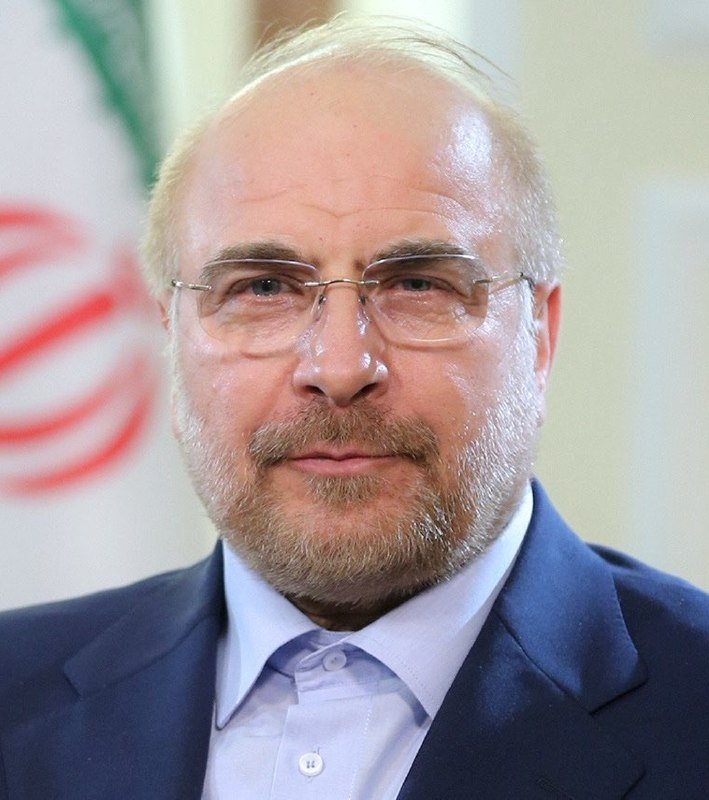
A retired American four-star has called for the United States to begin moving its combat aviation out of the Gulf and onto Israeli airfields, framing the shift as overdue recognition of where the region's real air war now lives. The argument, carried on 6 July 2026 by Middle East Eye, is not a leak or a policy document. It is the public view of a former CENTCOM commander. That distinction matters: the proposal is floating precisely because no sitting US officer will attach his name to it.
The substance is straightforward and the geography is older than the argument lets on. American air power in the Gulf was built for a 1990s problem set: Iraq, Iran containment, the rapid reinforcement of Kuwait and Saudi Arabia, and the maritime chokepoints of Hormuz and Bab el-Mandeb. Twenty-six years after the invasion of Iraq, the platforms are still there, the host governments are still being paid in basing fees and foreign military financing, and the mission statement has drifted. A former operational commander is now saying, in effect, that the mission is somewhere else.
What the proposal actually says
The retired officer's case, as Middle East Eye reported it on 6 July 2026, rests on three claims stacked on top of each other. First, that Israeli air bases are now the most operationally relevant piece of real estate in the Eastern Mediterranean and the Levant, both for any contingency involving Iran and for the day-to-day task of deterring Hezbollah and intercepting missile and drone threats. Second, that the Gulf airfields, however large and well-financed, are no longer where the centre of gravity sits. Third, that consolidating US air power in Israel would force a single, integrated command arrangement rather than the current patchwork of bilateral basing agreements that the Gulf monarchies each negotiate separately.
The first two claims are defensible on operational grounds. Israeli air bases sit closer to the Iranian airspace a US commander would actually need to penetrate, and the Israeli air force operates F-35I Adir aircraft on the same ramp as US Air Force F-35A Lighting IIs — interoperability that does not exist with the Gulf air wings, which still fly a mix of F-15s, F-16s, Eurofighter Typhoons and, in the case of the UAE, Dassault Rafales. The third claim is the politically loaded one, because it effectively says the Gulf's leverage over US force posture is up for renegotiation.
Why the Gulf reading matters
The Gulf state perspective on this argument rarely makes it into the wire. From Abu Dhabi, Riyadh and Doha, US air bases are not merely platforms. They are sovereign assets: a guarantee, a tax, a signal to Iran, and a bargaining chip inside the US relationship all at once. Al Udeid in Qatar hosts the forward headquarters of CENTCOM itself. Al Dhafra in the UAE hosts American fighters and tankers. Prince Sultan in Saudi Arabia is a major aerial-refuelling hub. The Gulf states have paid for the privilege of hosting those bases, in cash and in diplomatic alignment, and they expect a return: overflight rights, intelligence sharing, the implicit American tripwire that a strike on a Gulf airfield is a strike on a US asset.
A proposal to move that air power into Israel does not abolish the Gulf basing system. It devalues it. The retired officer's argument implicitly downgrades the Gulf states from co-architects of the regional air order to landlords with tenants who have found a better address. That is the subtext the Middle East Eye piece is reporting, and it is the part the Gulf foreign ministries will read first.
What Israel gains, what Israel gives up
Israel would, on paper, gain a more integrated air picture, a deeper American presence at a moment of acute tension with Iranian proxies, and a more durable US footprint than the one it currently has through periodic deployments and storage of US equipment in Israeli facilities. The political cost is non-trivial. A standing US air-wing presence on Israeli soil would be read across the region, and in the West Bank and Gaza, as a formalisation of the US–Israeli security relationship that currently operates through equipment transfers, joint exercises and periodic deployments rather than permanent garrisons. Domestic Israeli politics would also have to absorb the visibility that comes with hosting thousands of US service members and their families.
For the United States, the calculus is more austere. The dollar cost is comparable. The political cost in the Gulf is real but probably manageable, especially if the move is staged over several years and paired with continued intelligence and missile-defence cooperation. The strategic cost — signalling that the US is prepared to dilute its Gulf posture in exchange for deeper integration with a single regional partner — is the part that has traditionally been taboo. A retired four-star can say it precisely because the taboo still binds the serving ones.
The structural frame, in plain language
The debate the retired officer is joining is not really about airfields. It is about whether the US defence posture in the Middle East should be organised around a network of bilateral relationships with Arab monarchies, or around a single anchor relationship with Israel supplemented by expeditionary reach. The first model built the architecture the region has lived under since 1990. The second model has been a slow drift for two decades, accelerating after the 2020 Abraham Accords and again after October 2023. The retired officer is, in effect, asking Washington to stop pretending the drift is not happening.
There is a counter-read worth taking seriously. The Gulf air wings have steadily become more capable, and the Gulf states have invested in their own fifth-generation fleets. Their airspace, their radar coverage and their tanker capacity are themselves strategic assets that the US consumes, not just hosts. Pulling US air power out of the Gulf does not just relocate capability; it withdraws a layer of US oversight over how those national fleets are postured. A more autonomous Gulf air order, in which Saudi, Emirati and Qatari aircraft operate alongside US expeditionary forces rather than under the same roof, is a different regional balance than the one the current basing system produces. The retired officer's argument does not engage that consequence. The Gulf states will.
What remains uncertain
The sources are thin. The Middle East Eye piece is the single public airing of the proposal, and it identifies the former commander by rank and service rather than by name. No serving US officer, no Pentagon spokesperson and no Israeli defence official has been quoted on the record. The Gulf foreign ministries have not, as of 6 July 2026, issued a public response, which is itself a kind of response: a formal rebuttal would dignify the proposal, silence treats it as commentary. The framing will harden one way or the other only if a second retired general endorses it, or if a think tank with Pentagon access publishes a more formal version of the same argument. Until then, this is a single retired officer's view, reported on the record but not yet on the agenda.
The bigger question — whether the US is prepared to reorganise its Middle East posture around Israel as the primary anchor — is unlikely to be answered in public. But arguments like this one have a habit of becoming policy documents a year or two later, attributed to no one. That is the lane the proposal is floating in, and the Gulf states know it.
This piece was framed by Monexus as a regional base-politics story, not as a security alarm. The retired officer's argument is presented in its strongest form, alongside the Gulf state and structural counter-reads, and the proposal is treated as commentary rather than policy until official sources contradict that read.
Wire provenance
This editorial synthesis draws on the following public wire/social posts:
- https://t.me/TSN_ua