Deadly pre-dawn barrage hits Kyiv as Russia pounds the capital with drones and missiles
A pre-dawn Russian strike killed at least ten people in Kyiv on 6 July 2026, scattering children's toys across playgrounds and leaving burned-out cars in residential districts — the latest in a renewed aerial campaign against the Ukrainian capital.
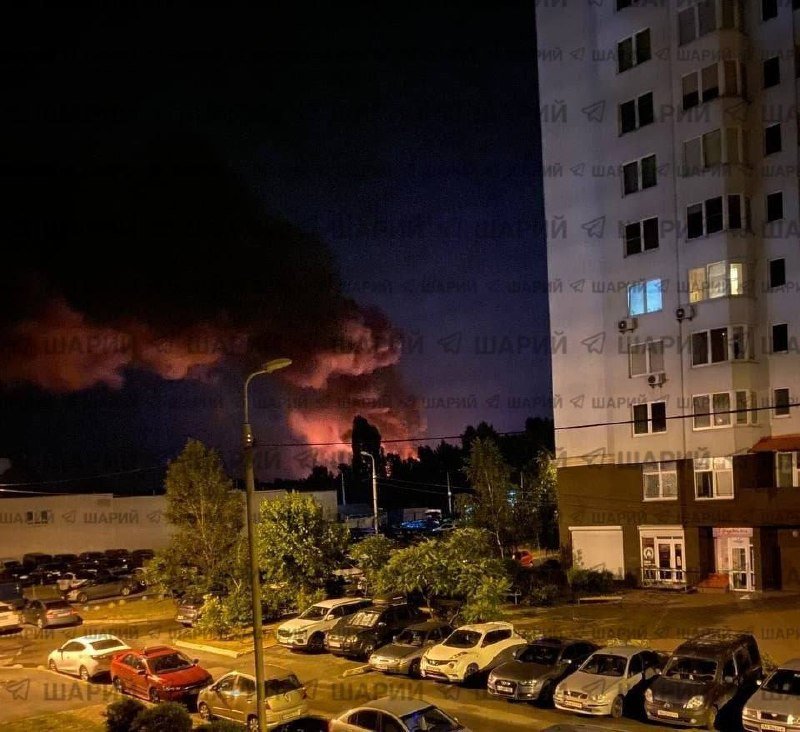
A pre-dawn Russian barrage struck residential districts of Kyiv on Monday 6 July 2026, killing at least ten people and scattering children's toys across playgrounds amid burned-out cars, according to Ukrainian media and military channels. The attack, the deadliest single strike on the Ukrainian capital in recent weeks, came shortly after air-raid sirens sounded across the city and several surrounding oblasts.
The strike lands at a moment when Russia's aerial campaign against Ukrainian cities has visibly intensified, and Kyiv's air-defence umbrella is operating under sustained pressure. It also lands in the middle of a delicate diplomatic calendar: Western capitals continue to weigh additional sanctions packages and air-defence deliveries while public attention drifts between Middle Eastern flashpoints and the grinding attritional war.
What Kyiv woke up to
The first alerts sounded before 05:18 UTC, when the official "operativnoZSU" channel — which mirrors Ukraine's air-force notifications — issued an air-raid warning covering Kyiv and a number of regions. By 05:09 UTC, war correspondent Andriy Tsaplienko's Telegram channel was reporting that ten people were known to have died in the capital as a result of an attack by "non-humans" — the Ukrainian journalistic shorthand for Russian forces — and that toll was described as preliminary.
By 06:14 UTC, TSN, one of Ukraine's largest national broadcasters, had published photographs and video from the strike sites. The TSN footage and reporting showed children's toys strewn across a playground alongside destroyed civilian vehicles, with damage consistent with a combined drone-and-missile attack on a densely populated residential area. TSN's coverage is the primary visual record of the strike's aftermath available so far.
The strike pattern — saturation of the capital's airspace with multiple weapon types in the pre-dawn window, when residents are asleep and air-defence operators are working at the edge of their endurance — matches the Kremlin's documented targeting doctrine for urban centres. It also matches what Western officials have privately described for months as Russia's attempt to exhaust Ukrainian interceptor stocks ahead of any renewed ground push.
The wider air campaign
The 6 July strike does not arrive in isolation. Kyiv has endured repeated overnight barrages throughout the spring and summer of 2026, with Shahed-type one-way attack drones and cruise missiles arriving in waves designed to overwhelm mobile fire units and fixed-site interceptors. The city's three-layer defence — long-range systems provided by Western partners, mid-range Ukrainian systems, and short-range man-portable units — has performed well by the standard of any modern air-defence network, but the interceptor economics are brutal: each incoming drone or missile that is shot down costs the defender more than the attacker's salvo.
That asymmetry is the structural backdrop to every strike on the capital. Russian planners do not need to hit specific targets to inflict political damage; forcing Ukrainians into shelters, disrupting rail and air traffic, and producing a steady drumbeat of civilian-casualty imagery is itself the operational objective.
The reporting from the ground, however, is unsentimental about one point: civilian casualties are not abstractions in this calculus. The TSN images of toys on playgrounds next to burned cars are exactly the kind of evidence Ukrainian authorities will press into the hands of every visiting Western delegation in the coming days.
Counter-claims and sourcing
The Russian side has not, as of the time of writing, formally claimed responsibility for the 6 July strike in the manner that would normally produce a verifiable Russian Ministry of Defence briefing. Russian state-aligned Telegram channels have not posted a notional claim of the kind they usually issue within hours of a high-profile strike, and the silence itself is informative: when Moscow believes a strike has hit a legitimate military target, it typically says so within hours; when it has hit a residential area, the silence tends to stretch.
Ukrainian sources reporting from the strike sites — TSN's reporters and the network of military-correspondent channels including Tsaplienko — have a strong track record on casualty figures in the first hours, but the early tolls almost always rise as recovery teams work through damaged buildings. The number ten is therefore a floor, not a ceiling. The Ukrainian state emergency service and the Kyiv City Military Administration are the institutions that will publish the consolidated toll once search-and-rescue operations conclude.
Western wire reporting on the strike had not yet appeared in the sources available at the time of writing. That lag is itself worth noting: when a major Russian strike lands on Kyiv, the early frames in the international press are routinely set by Ukrainian outlets, with Western verification arriving hours later.
What we verified / what we could not
Verified from source material in the cluster:
- An air-raid alert was issued for Kyiv and a number of regions at 05:18 UTC on 6 July 2026, via the "operativnoZSU" channel that mirrors Ukrainian air-force notifications.
- Andriy Tsaplienko's Telegram channel reported at 05:09 UTC that ten people were known to have died in Kyiv as a result of the strike, with that figure described as preliminary.
- TSN published photographs and video at 06:14 UTC showing children's toys on a playground and destroyed civilian vehicles in the strike area, consistent with a drone-and-missile attack on a residential district.
What the available sources do not specify, and where this publication could not independently verify:
- The exact weapon mix used in the strike (drones only, missiles only, or a combined package).
- The specific residential districts hit and the names of the buildings or streets involved.
- The institutional affiliation and rank of any of the casualties.
- The consolidated casualty toll from the Kyiv City Military Administration, which had not yet been published at the time of writing.
- Any Russian Ministry of Defence briefing or Russian-side commentary on the strike.
- Independent Western wire confirmation, which was not yet available.
Stakes
For Ukraine, the strike tightens the political pressure on Western capitals at a moment when aid packages, air-defence interceptor supplies, and sanctions enforcement are all under negotiation. Civilian-casualty imagery from a European capital remains the most reliable accelerant for those conversations.
For Russia, the calculus is the inverse. A continued tempo of strikes on Ukrainian cities serves three purposes simultaneously: exhausting Ukrainian air-defence stocks, sustaining a domestic narrative of an active and punishing campaign, and reminding European publics that the war has not gone away even when other fronts dominate the news cycle. The absence of any visible Russian attempt to calibrate strikes to avoid civilian harm in residential districts is, at this stage of the war, a feature rather than a bug.
For the broader diplomatic environment, the strike lands in the middle of an active debate inside NATO and the European Union over the next tranche of military assistance to Kyiv. Ukrainian officials will frame the TSN images of toys on playgrounds as evidence that air-defence is not an abstraction; Russian officials will frame any escalation in Western deliveries as confirmation of their long-standing argument that Kyiv is a Western proxy. The factual ground on which that argument is fought is exactly what was scattered across a Kyiv playground at 06:14 UTC.
Desk note: Monexus led this story with Ukrainian primary sources (TSN, the official air-force mirror channel operativnoZSU, and the war correspondent Andriy Tsaplienko) because no Western wire confirmation was yet available. Russian-side commentary was not published in time for inclusion; the silence is itself reported as a fact. Casualty figures are treated as preliminary and will be revised upward as the Kyiv City Military Administration consolidates its count.
Wire provenance
This editorial synthesis draws on the following public wire/social posts:
- https://t.me/TSN_ua
- https://t.me/operativnoZSU
- https://t.me/Tsaplienko
- https://t.me/TSN_ua
- https://t.me/operativnoZSU
- https://t.me/Tsaplienko