Kyiv comes under massive overnight bombardment as air defences engage multiple incoming waves
Monitors logged roughly 20 explosions across the capital in a 15-minute window late on 5 July, the latest in a grinding aerial campaign against Ukrainian cities.
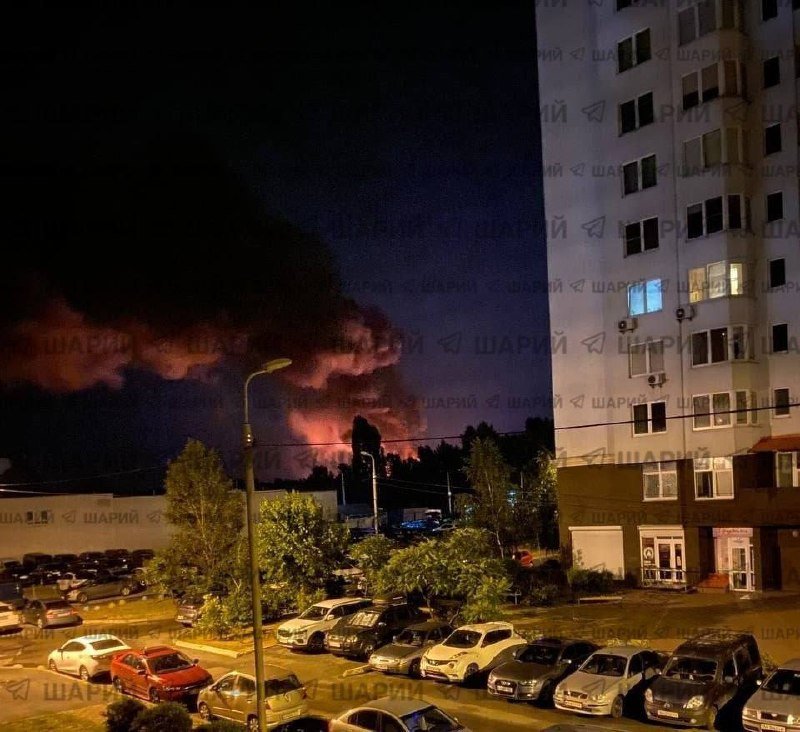
Residents of Kyiv were sent into shelters late on 5 July 2026 as a multi-wave aerial attack triggered roughly 20 audible explosions across the capital within a 15-minute window, according to independent monitors cited by the Ukrainian journalist Andriy Tsaplienko. Air-defence units were active overhead, and municipal authorities urged civilians to remain in covered spaces. The strike pattern — repeated volleys over a compressed timeframe — is consistent with the saturation tactics Ukraine's urban centres have absorbed repeatedly since Russia's full-scale invasion, in which barrages of long-range drones and missiles are calibrated less to destroy specific targets than to exhaust interceptor stocks, fragment civic life, and force a population to spend nights in basements.
The attacks arrive against the broader backdrop of an air war that has become the central operational story of the conflict. Each major wave drains Ukrainian interceptors, exposes gaps in Western-supplied air-defence systems, and creates the conditions for a deeper strike to land. What the wire frames as "another night of blasts" is, structurally, a slow-moving attrition campaign aimed at the country's ability to keep its largest cities functioning. That distinction matters for how Western capitals and aid planners read the trajectory.
What the night looked like
Monitoring channels began logging strike activity on Kyiv shortly before 23:00 UTC on 5 July 2026. The Telegram channel of journalist Andriy Tsaplienko recorded roughly 20 explosions in a 15-minute window at 22:53 UTC; the Ukrainian network TSN reported air-defence engagement and urged residents to remain in shelters at 23:14 UTC; and the war_monitor channel confirmed that "threats continue" at 22:49 UTC. A subsequent Tsaplienko post carried footage described as showing a residential house destroyed by what the post called "non-humans" — a circumlocution routinely used in Ukrainian wartime reporting to refer to incoming Russian missiles and drones without naming the launcher.
The reporting captures the texture of a single night in Kyiv but also the central experience of urban Ukraine in 2026: alerts, shelter runs, detonations heard from above, and a frontline of the war that sits above the city rather than along the country's east. Residents have learned to read the cadence of detonations — a deep thud suggesting interceptor work, a sharper crack suggesting a warhead falling closer.
What the pattern signals
Individually, any one of these attacks is a tactical event. Aggregated, they form a campaign aimed at exhausting Ukraine's air-defence magazine. Long-range munitions — including the variants repeatedly named in previous Ukrainian general-staff briefings — are fired in volleys of mixed type, forcing defenders to commit interceptors to assess each contact rather than ration them. Kyiv has been the focal target throughout 2026 because the capital concentrates the political, financial and human capital whose persistence most undermines the invasion's strategic logic. Hitting the city does not need to destroy a specific ministry or military node to register: it needs to make running the country, in ordinary hours, harder than it already is.
The night also exposes the limits of any clean narrative. Coverage routinely presents these barrages as random or retaliatory, when the consistent feature is the target set: dense civilian areas, energy infrastructure on the margins, and airfields. Reading the targets in aggregate is where the analytical work lies. Reading them as isolated incidents produces reporting that treats the war as a sequence of nights rather than a designed pressure system.
The frame Western audiences receive
Western wire copy on these nights tends to flatten two things. First, it underplays the cumulative cost of nightly shelter orders on a city of several million, treating each episode as discrete. Second, it frames Russian strikes as responses to Ukrainian action rather than as the sustained operational baseline of the invasion. Ukrainian strikes inside Russian territory are a legitimate response to invasion by an aggressor; the aerial bombardment of Ukrainian cities is not a reciprocal move but the standing tempo of a war begun by Russia.
There is also a quieter distortion in how interception is reported. A successful interceptions story — engines and fragments falling across a district — registers as a near-miss drama. The more consequential metric, however, is what is left in the magazine the next morning, since that is what determines whether the next wave can be intercepted at all. Reporting that anchored on civilian survival without addressing stocks tends to underplay the long-term vulnerability of the system.
What remains uncertain
The overnight thread does not specify which munitions were used, which districts absorbed impacts, or whether any residential structure beyond the one captured on Tsaplienko's footage was destroyed. Casualty figures and infrastructure damage from the strike had not been published at the time of the reported activity; the assessment that follows will depend on consolidated figures released by the Kyiv City Military Administration and the Ukrainian Air Force in subsequent morning briefings. Claimed interception rates in this stage of the war typically drift downward as investigators examine debris patterns, and the gap between the monitored count of audible explosions and the actual launched-versus-intercepted ratio will only become legible the following day.
What the record does support, on the basis of the night's reporting, is a familiar pattern: multiple inbound waves, sustained shelter orders, residential damage, and a country absorbing the cost of a contest that its cities did not invite.
Desk note: Wire copy will likely lead this story on the count of explosions and the air-defence response. Monexus has chosen to frame it inside the cumulative attrition logic that defines the air war in 2026 — the structural story the wires tend to flatten into nightly incident reports.
Wire provenance
This editorial synthesis draws on the following public wire/social posts:
- https://t.me/Tsaplienko/57310
- https://t.me/TSN_ua
- https://t.me/Tsaplienko
- https://t.me/war_monitor
- https://t.me/Tsaplienko/57310