Margo Price's Surprise 'Days of Unrest' Lands on a July 4 Weekend When the National Mood Is Already Split
Margo Price released a protest 'mixtape' over the July 4 weekend, with Joan Baez among the guests. The release lands on a holiday that has become less a celebration than a culture-war flashpoint.
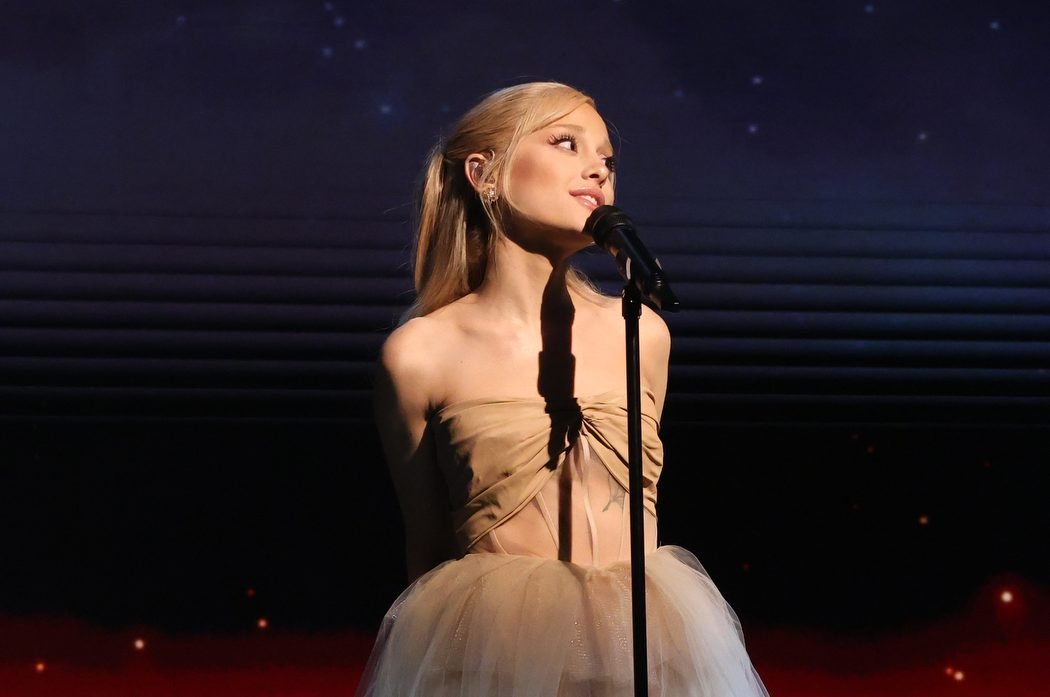
On the evening of July 3, 2026, Margo Price dropped a surprise record into the streaming ecosystem without the usual multi-week press cycle. The project, titled Days of Unrest, was framed by her label and Pitchfork's same-day write-up as a July 4 weekend "mixtape" — a deliberately informal label for a release built around covers, with a guest appearance from Joan Baez, the folk singer whose own career has long served as a benchmark for American protest music. The timing was unmistakable: a politically charged album arriving on the holiday that has, in recent years, become less a celebration than a flashpoint in the country's recurring argument with itself.
The record's existence is the news; its strategy is the story. A surprise release, on a holiday weekend, built from covers and guest appearances rather than original material, asks the audience to treat the project as a civic gesture rather than a commercial one. Price is betting that the gesture lands.
The release, and what it contains
According to Pitchfork's July 3 write-up, Days of Unrest was framed as a "mixtape" — a release format that signals intentional roughness, assembled rather than sculpted, intended to feel like a transmission rather than a product. The format is well-suited to protest material: covers remove the question of authorship and put the lyrics back at the center. The album features a guest appearance from Baez, who at 85 remains the most cited reference point in American protest music, a singer whose 1970s catalog helped define what political folk sounded like when folk still had a national audience.
The specific songs on the record are not detailed in the source material available to this publication; Pitchfork's initial report identifies the project as "a series of rallying covers" without listing individual tracks. This publication is therefore reporting the album as a project defined by its format, its timing, and its collaborator, rather than as a track-by-track statement. That is, in any case, the frame Price and her team appear to have chosen.
Why July 4, and why now
The decision to drop protest material on Independence Day weekend is not new — country and folk artists have used the date to make political statements for decades — but the calculus has shifted. The Fourth of July, once a relatively uncontested civic setpiece, has in recent cycles been claimed by competing readings of the country. Coverage of July 4 in 2026 has emphasized division: competing public events, divergent readings of national identity, and the holiday functioning as a stage for arguments the country is having with itself about what the United States is for.
Price, a Nashville-based artist who has spent the last several years writing explicitly about economic precarity, family, and the rural American experience, is one of the more visible country artists willing to make explicit political statements from inside a genre that has, in its commercial center, drifted toward a different set of affiliations. The choice of Baez as a collaborator is itself a statement about lineage: a signal that Price sees her work as continuous with the folk-protest tradition rather than as a departure from it.
Counterpoint: the gesture as event
The cynical read is that surprise releases on holiday weekends are now standard industry practice for artists whose commercial position is mature enough that the catalog does the marketing. Surprise drops have become a recognizable tactic for established acts who want press coverage without an album campaign's cost.
That reading is not wrong, but it is incomplete. Surprise releases also lower the commercial risk of a project whose commercial upside is uncertain — a protest album in the country market in 2026 is, on paper, a narrow proposition. By sidestepping the standard press cycle, Price reduces the surface area for the kind of pre-release backlash that has, in recent memory, accompanied country artists who step outside the genre's commercial center. The Baez appearance insures the project against the most predictable objection: that it is performative. Baez's career is the receipt for the project's seriousness.
Stakes, and what to watch
The commercial question is whether Days of Unrest moves the needle for Price in a way that justifies the political positioning. The cultural question is whether the country's country-music audience, in its current configuration, will hear an explicitly protest-oriented project from a Nashville artist as belonging to them or as an intervention from outside.
The thing to watch over the next several weeks is the streaming data and the live dates. A surprise release is a soft launch; the real test is whether the project gets played live, and in front of which audiences. A protest record that does not tour is a statement; one that does is a campaign. This publication will be tracking the tour announcement cycle as it develops.
What remains uncertain
The source material available at the time of writing does not include the full tracklist, the label's own framing memo, or independent comment from either Price's camp or Baez's representatives. It also does not include early sales or streaming data. The album's reach and reception over the next several weeks will determine whether the project is read, in retrospect, as a sharp intervention or as a holiday-weekend footnote. The framing of it, for now, is price's to set — and she has chosen to set it on her own terms, on a date when the country is paying attention.
— Monexus framed this as a release event with a politics-of-format angle, rather than as a track-by-track review; the source material available at press time did not support a review-driven piece.