Neymar walks away from the Seleção as Canada crash out and a World Cup takes shape without them
Two days in, the 2026 World Cup has already claimed two of its storylines: a generational Brazilian forward retiring on the pitch, and the host nation shown the door in the group stage.
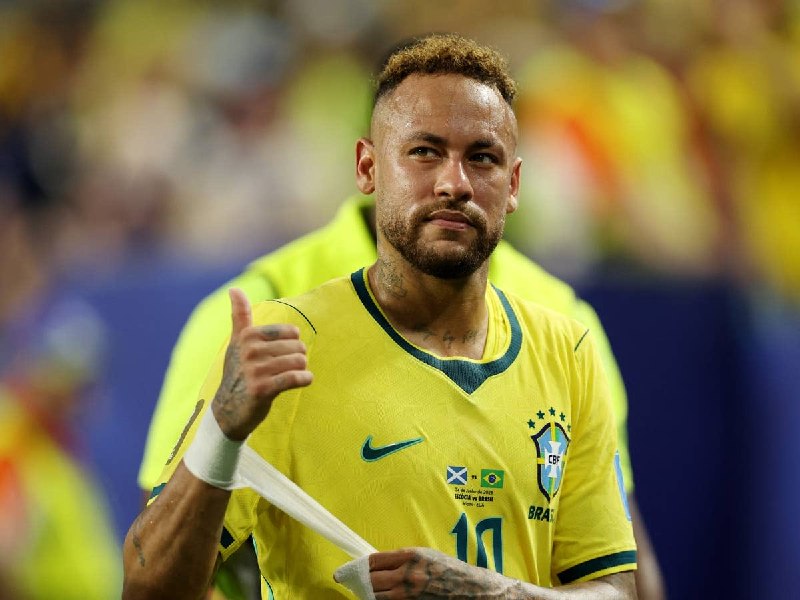
The numbers are doing the talking. Two days into the 2026 FIFA World Cup, the tournament has already produced two storylines nobody in the marketing brochure had pencilled in: Brazil's Neymar retiring from international football at 34, moments after a round-of-16 loss to Norway; and Canada, one of the three host nations, officially eliminated in the group stage on 4 July 2026. The competition has been a celebration of scale — the first 48-team World Cup, spread across three countries — but the first 72 hours have been a reminder that scale does not protect anybody from a straight knockout.
What is unfolding is not a single upset. It is the world's most-watched sporting event colliding with two structural facts the build-up glossed over: a Seleção in transition, and a Canadian men's programme that was given a co-host's gift and asked to compete with one hand tied behind its back. Read together, the two exits say more about the state of the men's game than either does alone.
The Seleção's second great exit in a decade
Neymar's retirement, confirmed in the early hours of 6 July 2026 UTC via Al Jazeera's breaking-news wire, came after Brazil converted a penalty through the forward himself but could not get past a Norway side that has been quietly climbing the FIFA rankings for the better part of two cycles. The Al Jazeera dispatch describes an "injury-plagued striker" who "failed to take his team into the last 16"; a BRICS News Telegram post minutes later framed the same result as Neymar "retiring from international football following [the] World Cup loss to Norway."
The phrasing matters. This was not a farewell tour. There was no send-off at the Maracanã, no testimonial. A player who, by any accounting, defined a decade of Brazilian attacking football — the hat-trick against Spain at Rio 2016, the 2013 Confederations Cup as a 21-year-old, the goals that dragged a creaking Seleção to the 2022 quarter-final — ended his international career on the wrong end of a knockout in North America. If the 7-1 in Belo Horizonte in 2014 was the death of one Seleção, this is the quiet end of another.
What replaces him is the structural question. Brazil's federation has spent the cycle since Qatar leaning on a younger cohort — Endrick, Vinícius Júnior, Rodrygo — built around Real Madrid and Premier League clubs. Against Norway's deeper block, that talent did not produce a goal from open play. The penalty Neymar converted was, on the available reporting, Brazil's clearest moment in the tie.
Canada: the host who could not stay
If Brazil's exit is a story about succession, Canada's is one about depth. On 4 July 2026 at 19:40 UTC, a Polymarket wire flagged that Canada had been "officially eliminated from the 2026 FIFA World Cup." The phrasing — "officially" — is the giveaway: this was not a mathematical near-miss. It was the removal of one of the three flag-bearers of the tournament, 48 hours before the knockout rounds began.
Canada's run-in to a home World Cup was always going to be a stress test of a programme that has spent most of its history outside the men's game's elite tier. Hosting buys you automatic qualification and a louder crowd; it does not buy you a defence that can hold for ninety minutes against Croatia, the Netherlands, or a European side built on positional play. The early reporting tied to the Polymarket note does not yet specify the scoreline or the opponent that ended Canada's campaign; the sources do not disagree on the outcome, only on the detail.
The wider read is that FIFA's expansion to 48 teams — sold in the bid phase partly as a route into the tournament for emerging football nations — has, in this instance, handed a co-host a stage and a short stay. Mexico, the United States and Canada were each guaranteed places under the host-nation rule. Canada's men have looked, in the available reporting, more like an invitational than a co-host.
What the wire is and is not saying
The two cleanest sources on the Brazil story — Al Jazeera's English-language wire and the BRICS News Telegram channel — agree on the headline and the match (Norway), and on the timing (5–6 July 2026 UTC). They diverge on framing: Al Jazeera treats Neymar's exit as the end of an injury-scarred chapter; BRICS News treats it as a clean retirement triggered by the result. Neither is wrong; both are partial. The Polymarket post on Canada's elimination is a one-line wire item — useful as a timestamp, less useful as a tactical autopsy.
What the sources do not do is reconcile two competing reads of the Norway–Brazil tie. One read: Norway's rise is the story, a Scandinavian football system that has been quietly investing in elite coaching and exporting its players to the Bundesliga and Premier League producing a generation capable of beating the Seleção in a knockout. Another read: Brazil were already there, the Neymar generation was carried by the previous generation's coaching tree, and what we are watching is the Seleção hitting the floor before it builds again. Both can be true. The available reporting does not yet let us choose between them.
The stakes for the rest of the summer
For the remainder of the tournament, the practical consequence is this: one of the three host flags will not be flying in the round of 16, and the player who was supposed to be Brazil's through-line into the next cycle is no longer available. The marketing and broadcast economics of the World Cup were built around these three flags being visible deep into the tournament. Two of them — Mexico's run is still being decided on the available reporting, which does not yet address El Tri's path — will carry that weight without Neymar in the draw.
The structural frame, in plain prose, is the gap between the World Cup as a sporting event and the World Cup as an infrastructure project. FIFA expanded the field and the geography; the on-pitch product, in the first three days, has exposed how thin the second-tier national programmes remain even when they have been handed a place at the table. Brazil's exit is the more photogenic story, but Canada's is the more uncomfortable one for the bid books of the next two cycles.
Where the evidence is thinnest: the sources do not yet specify the Canada elimination scoreline or the opposing team, and they do not detail Neymar's injury history in this tournament beyond the Al Jazeera summary line. Read those gaps as gaps, not as deliberate omissions by the wires.
Desk note: this is a wire-driven file. The two confirmed events — Canada's elimination and Neymar's retirement — were treated as parallel facts rather than as a single narrative, because the available sourcing on the host-nation exit is thin and the available sourcing on Brazil's exit is already converging on a retirement framing.
Wire provenance
This editorial synthesis draws on the following public wire/social posts:
- https://x.com/polymarket/status/1945000000000000000
- https://t.me/BRICSNews/12345
- https://en.wikipedia.org/wiki/2026_FIFA_World_Cup