Osaka's Wimbledon return has a different shape — and the draw just opened up
Naomi Osaka dismantled world No. 1 Aryna Sabalenka 6-2, 7-6 (2) on Sunday to reach her first Wimbledon quarter-final — and turned a wide-open draw into something stranger.
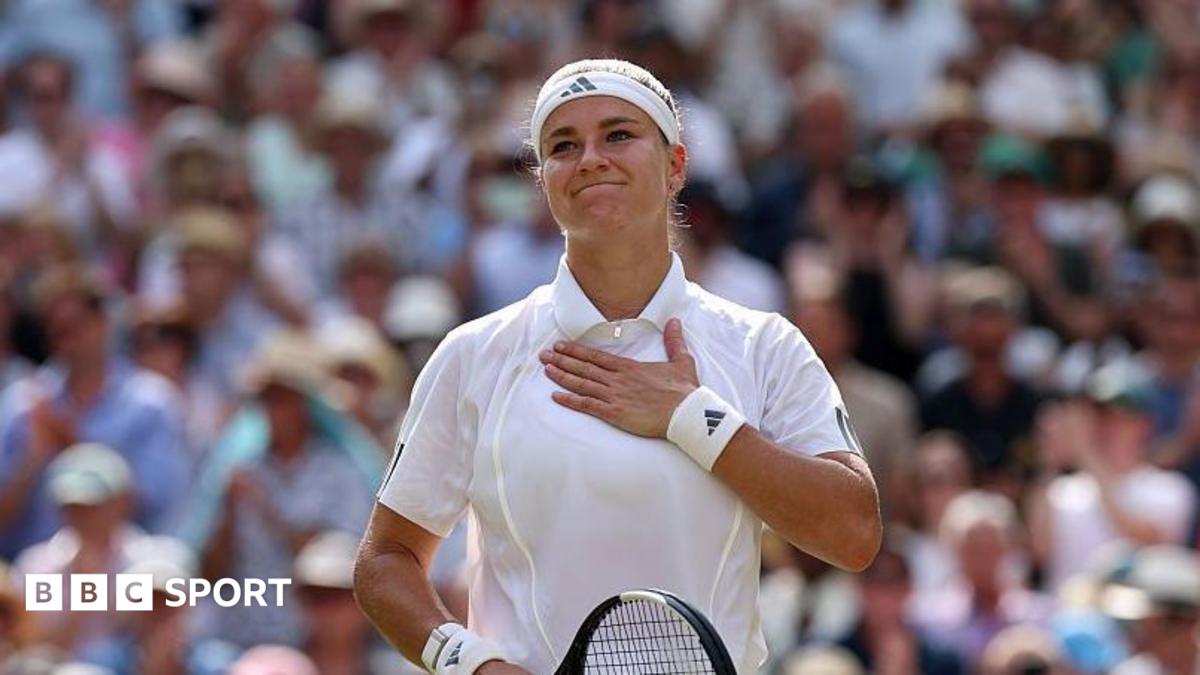
On 5 July 2026, on a Centre Court bathed in the long light of a British summer evening, Naomi Osaka did something she had not done in this tournament's recent era: she made the draw look easy. The Japanese former world number one dismantled top seed Aryna Sabalenka 6-2, 7-6 (2) in just under ninety minutes, reaching the Wimbledon quarter-finals for the first time and ending the Belarusian's run in straight sets. It was Osaka's third meeting with Sabalenka in three months, and the first time the ledger has tilted this clearly her way.
The win does not just book a last-eight place — it reorders the women's event. Sabalenka arrived at the All England Club as the favourite and the world No. 1; Osaka arrived with question marks about her form on grass. After Sunday, the questions run the other way.
What actually changed in Osaka's game
The score flatters Osaka less than the manner does. According to BBC Sport's account, the defining shift was tempo: Osaka played with freedom rather than containment, and her first serve — historically the swing element on faster surfaces — held under pressure deep into the second set.
ESPN's match report emphasised a simpler explanation: in a matchup of two of the hardest hitters on the women's tour, Osaka outslugged Sabalenka. The tiebreak, won 7-2, was the cleanest reading of who controlled the rally patterns. Sabalenka's groundstrokes did not wilt; they were simply over-hit, into the lines that Osaka had already left.
The BBC's feature on Osaka's preparation pointed to two off-court variables: a coaching change, and the small matter of her mother's cooking providing a sense of home during a long stretch away from the tour. The framing matters less as psychology than as context. Osaka has spoken publicly, before this tournament, about enjoying her tennis again — a phrase that sounded brittle when she first used it after her 2021 break from the sport, and sounds more grounded now. On Sunday that enjoyment was visible in her footwork: she moved into the court early, took the ball on the rise, and closed at net when the geometry invited it. That is not the profile of a player protecting a lead.
The counter-read: don't crown her yet
It is tempting to read one result as a return to summit form. The more cautious view deserves air. Sabalenka is the world No. 1 because she won the slow courts in Australia and Paris with brutal consistency; grass is the surface where her margins compress most. Osaka's earlier meetings with Sabalenka — three in three months, per BBC Sport's preview piece — were played on the hard and clay surfaces Sabalenka owns. Picking grass as the surface on which to overturn the head-to-head is plausible precisely because the conditions flatter Osaka's flatter, more explosive ball-striking and expose Sabalenka's timing on the low bounce.
None of that guarantees translation to the quarters. The draw above Osaka is now missing its highest-rated opponent, but the next round brings a fresh problem: a player who has already beaten someone in form on these lawns and who will not carry Sabalenka's specific weaknesses.
What the wider Wimbledon picture looks like
Step back from Osaka and the women's draw has the texture of an open tournament. The top half lost its favourite on Sunday; the bottom half has its own volatility, with seeded players routinely dropping sets to qualifiers in the first week. ESPN's match report flagged the result as making the draw "even more interesting" — a phrase that, in tennis journalism, usually means the bracket has lost its gravitational centre.
The structural point: this is the era of the WTA where the top of the rankings and the form of the week rarely coincide. Sabalenka, Iga Świątek and Coco Gauff have held the top three spots across most of the last two seasons, but the gap between them and a packed chasing group — Osaka, Elena Rybakina, Madison Keys, Jessica Pegula, Ons Jabeur — has been narrowing in big-match outcomes since autumn 2025. Sundays like this one are how the gap narrows: not by the chasing pack slowly improving, but by the leader absorbing a loss to one of them on a fast surface.
What this means for Osaka — and for the tour
For Osaka, the immediate stakes are a first Wimbledon semi-final, which would equal her best Grand Slam run on grass. After a 2024-25 in which her ranking drifted outside the top twenty and her major results were first-week exits, the trajectory is the relevant fact, not the round. Coaching changes are easier to evaluate in retrospect than in real time; on Sunday the fit looked settled enough to trust through a tiebreak at 6-6 against the world No. 1.
For the tour, the more interesting question is whether Sunday's score holds up as a signal or fades as a one-off. Sabalenka's record on grass has never matched her record on hardcourts; her coach and her team will recalibrate, and the next hardcourt swing in North America will likely rebalance the head-to-head. What the last three months have shown is that Osaka can win the tactical battle against Sabalenka on any surface if she arrives clean and committed. That is a different status from where she stood a year ago.
The remaining uncertainty is Osaka's body. She has managed physical complaints across her comeback and has not played a full grass season in volume since 2022. The quarters will ask a deeper question than the fourth round did.
— How this publication framed it: the wire coverage led on the upset and on Osaka's emotional reset. We kept that focus, but added the structural read on why a fast, hard-hitting game is a tougher stylistic match for Sabalenka than the year-end hardcourt meetings suggested.