Ivan Ostrochovský Returns to Karlovy Vary With a Sterilization Drama — and a Plan for a U.S. Remake
Slovak director Ivan Ostrochovský premieres 'Only Beautiful Things to Look At' at Karlovy Vary, a 1980s-set drama about coerced sterilisation, and signals a U.S. remake is in development.
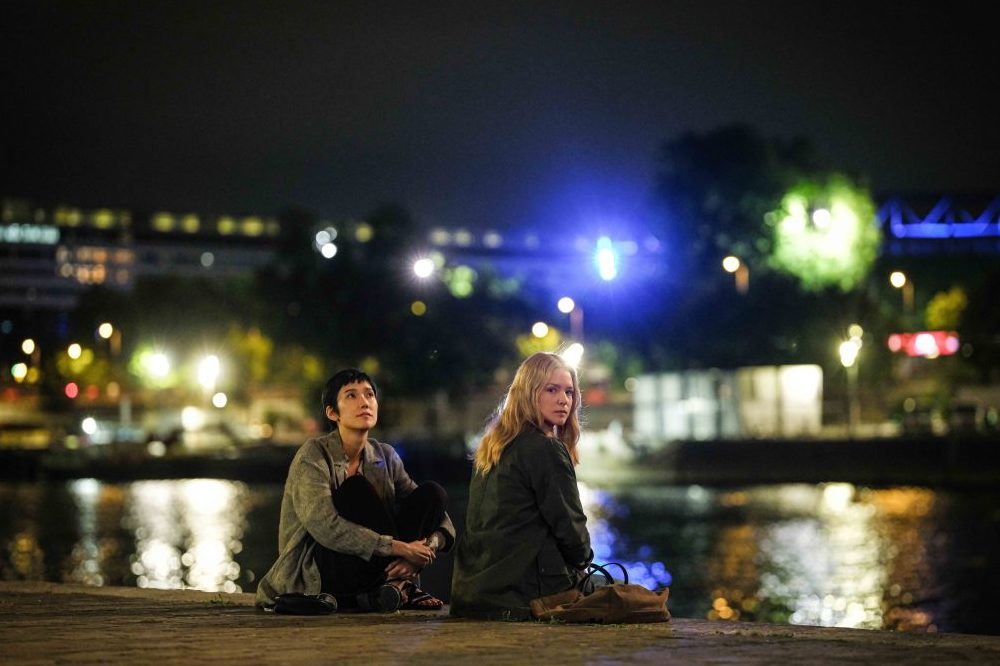
On 6 July 2026, at the Karlovy Vary International Film Festival in the Czech Republic, Slovak director Ivan Ostrochovský presented his latest feature, Only Beautiful Things to Look At, a drama set in the 1980s that follows a documentary filmmaker confronting the systematic coerced sterilisation of Romani women in then-Czechoslovakia. The screening anchors a festival week that has, as so often at Karlovy Vary, doubled as a European launchpad: the film arrives with international sales already moving and a separate, fully scoped U.S. remake in development.
The premiere lands at a moment when Central European cinema is unusually comfortable handling its own unfinished history. Ostrochovský's pitch — that the sterilisation campaign "was happening all around the world," not only in the country where his drama is set — frames the project as a regional story with global reach, and the remake as the mechanism for proving it.
A story the Slovak state has been slow to confront
Only Beautiful Things to Look At centres on a protagonist working inside the apparatus of 1980s Czechoslovakia who turns a camera on the surgical sterilisation of Romani women — a programme that, in Slovakia and the wider former Czechoslovakia, ran through state clinics and was documented in detail by NGOs and the Council of Europe in the years after the Velvet Divorce. The film's dramatic hinge is documentary: the protagonist's footage is the evidence that ultimately indicts the system that employed him.
Ostrochovský, whose earlier features include Servants (2020) and the documentary Koza (2015), has built a reputation for slow, austere reconstructions of mid- and late-twentieth-century European moral compromise. Servants, set in a 1980s Bratislava seminary caught between Moscow-aligned state security and the Vatican, established the visual grammar he returns to here: long takes, muted interiors, institutional architecture used as a moral stage.
The screening in Karlovy Vary — a festival traditionally weighted toward Czech and Slovak premieres before opening to broader European competition — positions the film for a domestic conversation that has been politically awkward for decades. Slovakia's reparations process for the surviving victims of coerced sterilisation has been stop-start under successive governments, and cultural works addressing the practice have tended to come from outside the country rather than from within the industry.
A U.S. remake is already in motion
The most concrete piece of news to emerge from the Karlovy Vary press conference is the confirmed development of an American remake. Ostrochovský has stated that a U.S.-set adaptation is being prepared — a notable structural inversion in which a story about Central European state violence against a Roma minority travels west as a template rather than arriving in the Anglosphere already localised. The implicit claim is that the system, not the country, is the subject.
This is a different commercial architecture from the usual European-to-American remake pipeline. Most adaptations cross the Atlantic carrying a director's brand and a toned-down version of their thesis. Here, the structure — institutional silence, documentary evidence, belated reckoning — is being ported as a method, not merely as a setting swap. The American version would presumably graft the same skeleton onto a U.S. case history, of which there are several documented ones from the twentieth century, including the sterilisations carried out under state eugenics programmes that were only formally repudiated decades later.
The risk is familiar: the U.S. version risks reading as a parable about American moral failure alone, severing the film from its Central European spine. The opportunity, which Ostrochovský appears to be arguing for, is the reverse — using the U.S. audience's appetite for self-interrogation to broaden the frame for the original.
What the festival circuit signals
Karlovy Vary's choice to programme the film carries its own message. The festival has, in recent editions, tilted toward work that treats Central European political history as live material rather than settled heritage — films that interrogate the socialist period without nostalgia and without exoneration. Only Beautiful Things to Look At sits squarely in that lane.
The international sales footprint Ostrochovský brings from earlier films — Servants travelled to the Berlinale, Toronto, and a wide European release — also matters for how this premiere will be read by industry buyers. A Karlovy Vary screening for a director with a proven festival-to-distribution track record is a different commercial signal than a debut.
What remains less clear, and where the public materials are thin, is the precise sales-agent structure, the remake's producing partners on the U.S. side, and a release window. The reporting from Karlovy Vary does not name a buyer or a financier for the remake, and Ostrochovský has spoken about the project in directional rather than transactional terms. That is the most consequential gap: a U.S. remake without an attached American producer is still an ambition, not a deal.
The stakes for Central European cinema
If the remake proceeds and lands, it would do something the original cannot on its own: convert a Central European reckoning into an Anglophone one, in a register U.S. distributors already understand. For a Slovak industry that has produced two Oscar-winning shorts in recent years but struggles to move features across borders at scale, the strategic value of that conversion is significant.
For the film's subject matter — coerced sterilisation of Romani women — the value is more uncomfortable. A wider audience is welcome; a wider audience that mistakes the system for an exotic national pathology is not. Ostrochovský's insistence that the practice "was happening all around the world" is, in effect, an instruction to the remake's future writers and producers about how not to flatten the story.
That tension — between exporting a film and exporting the frame around it — is the throughline worth watching as the Karlovy Vary week continues and as the U.S. project takes shape.
Desk note: Monexus frames this as a Central European story with an Atlantic horizon, following the director's own framing rather than the Anglophone press reflex of treating Central European state violence as a purely domestic curiosity.