Yervant Gianikian, the Patient Archivist of Colonial Memory, Dies at 84
The Italian-born Armenian experimentalist who helped Armenia win Venice's Golden Lion in 2015 has died in Rome. His slow-looking films turned found footage into a reckoning with colonialism.
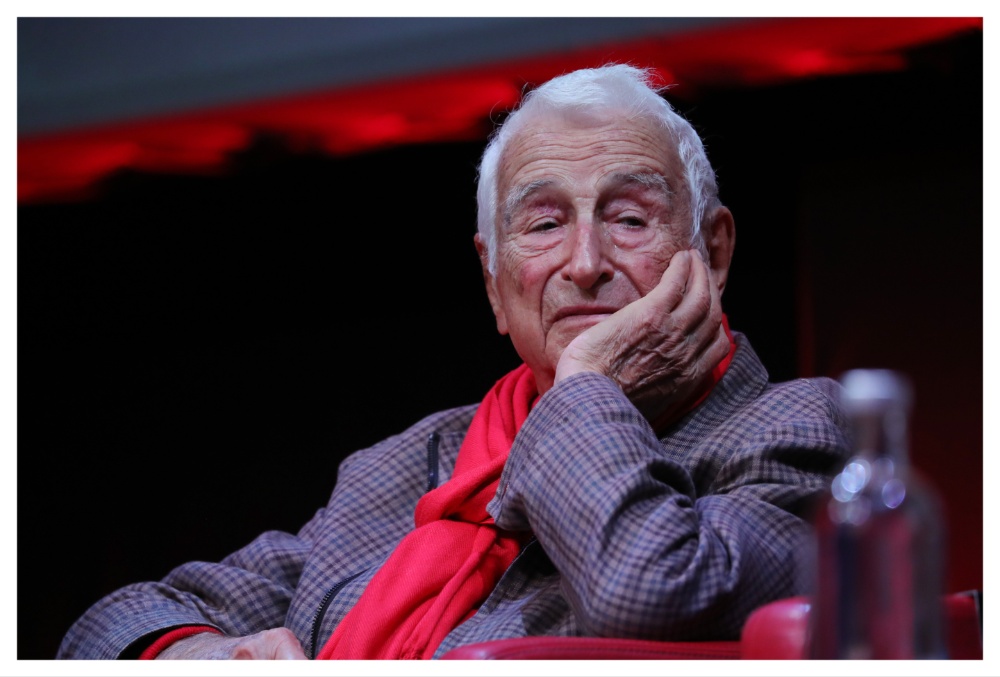
Yervant Gianikian, the Italian-born Armenian filmmaker who spent half a century scouring archives for the traces colonial powers preferred to forget, died on 6 July 2026 in Rome. He was 84. For much of that half-century he worked alongside his partner, the late Angela Ricci Lucchi, in a method they invented almost by accident: hand-tinting, slowing and re-photographing found footage until the camera's original meanings bent, cracked and re-formed themselves.
His films travelled unusually far for work this austere. According to ARTNEWS, Gianikian's work appeared in two editions of the Venice Biennale and one edition of Documenta. The 2015 edition of Venice — when the Armenian pavilion, curated by Adelina Cüberyan von Fürstenberg with Gianikian and Ricci Lucchi as artistic directors, took the Golden Lion for Best National Participation — put a small, patient body of work at the centre of the art world's loudest stage. The 2015 film at the heart of that pavilion, My Father's Unfinished Novel, was the most personal film the pair ever made, built from the materials of his own family.
What he built, and how
Gianikian and Ricci Lucchi developed what they called the "analytical film" — a form that treated archive footage not as evidence but as material. They would find reels in flea markets and institutional basements: colonial expeditions, ethnographic surveys, the amateur cinema of returned colonisers, the home movies of families who had ruled other people's land. They re-photographed each frame at variable speed; they tinted sequences by hand; they left the optical roughness visible so that the viewer could no longer mistake the image for innocent documentation.
The point, Gianikian said in interviews gathered over decades, was not to expose the camera but to slow the viewer. By the time a colonial officer's swagger had passed across a frame at one-fifth speed, the audience had to sit with it. The technique was austere, almost primitive — no digital effects, no colour grading software — which is partly why the work has aged more cleanly than almost any contemporary documentary mode.
A pavilion with a nation behind it
The 2015 Golden Lion was Armenia's, and that mattered in a way the art press sometimes underplayed. Yerevan does not have the national-pavilion infrastructure of Paris, Berlin or London; the country's appearance at Venice is a small diplomatic event, organised around a single artist or a single curatorial argument. The choice of Gianikian — born in Italy to Armenian parents, working in Rome, but answering in Armenian to a country that had suffered a genocide and a diaspora — was a deliberate offer to the Biennale jury. They accepted.
The pavilion's architecture, reported by ARTNEWS, turned a fraction of the world's archival memory inside out. My Father's Unfinished Novel wove the artist's own family correspondence — his father had begun a novel in Italy, in Armenian, and never finished it — with archive footage of Ottoman-era Anatolia and the early years of the first Armenian republic. The film arrived at the Genocide's centenary, a year when the world was expected to look away.
What the form refuses
For a generation of younger experimentalists — in Yerevan, in Berlin, in Beirut — the question now is whether the analytical film can be done without the two people who invented it. Ricci Lucchi died in 2011, and Gianikian kept working alone on fragments of their joint project, including parts of a planned cycle on the Armenian genocide that the two had discussed publicly. The films that have appeared since 2011 — sections of which were shown in later editions of Venice and in the broader European festival circuit — are recognisable descendants of the method. They are also a reminder that the architecture of the form is not portable.
Stakes
An art-world Golden Lion can do something the art-world press cannot: it puts a country on the map, briefly, in front of an audience that may not otherwise know it exists. Armenia's 2015 win did that — and did so with a film about memory, archive, and the materials empires leave behind. For an artist who had spent the previous four decades insisting that those materials should be looked at, very slowly, the timing was almost too neat.
Gianikian is survived by his daughter, Yasmine.
In its wire coverage, ARTNEWS framed Gianikian's death principally as a loss for Armenian national representation on the international art circuit. This publication notes instead the more durable structural fact: that his and Ricci Lucchi's analytical-film method reshaped, almost without institutional support, what archival footage could mean on a cinema screen — and that no one has credibly inherited it.