White House Report Accuses Smithsonian of 'Anti-White Activism' as Cultural Institutions Face New Political Pressure
A 162-page administration document alleges the Smithsonian has abandoned scholarship for 'extreme political activism,' reopening a long-running fight over who controls American cultural memory.
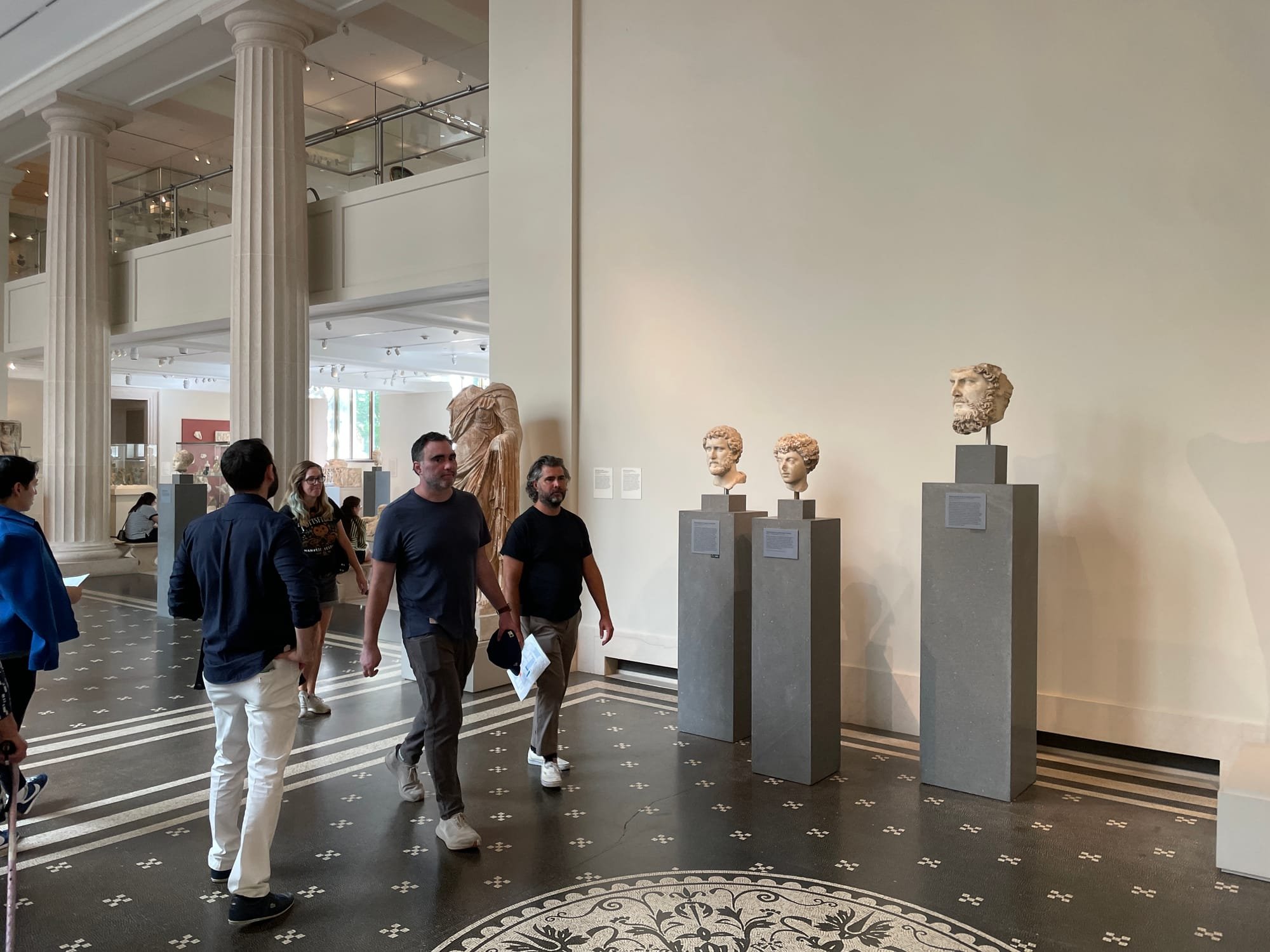
The White House on 6 July 2026 released a 162-page report accusing the Smithsonian Institution, the world's largest museum and research complex, of promoting "anti-white activism" and abandoning scholarly rigor for what it called "extreme political activism," escalating a months-long pressure campaign against federally connected cultural institutions.
The document, distributed to reporters in Washington, marks the most detailed public articulation yet of an administration posture toward cultural institutions that have historically operated with a measure of scholarly independence. It follows earlier reporting about funding reviews, board appointments, and rhetorical attacks on exhibitions dealing with race, gender, and American history.
The framing matters because the Smithsonian is not an ordinary cultural body. It is a federally chartered institution funded by a combination of congressional appropriations, private donations, and endowment income — a hybrid that has, for generations, allowed it to claim the legitimacy of a quasi-governmental arm while preserving the editorial latitude of a private museum. The report implicitly contests that arrangement, asking whether the institution's leadership has drifted from a neutral scholarly posture into activism, and whether the federal compact that sustains it tolerates that drift.
What the report alleges
According to coverage by Artnews and Hyperallergic on 6 July 2026, the document identifies specific exhibitions, programmes, and internal communications as evidence of an ideological tilt it characterises as hostile to white Americans. It claims that museum leadership has elevated certain narratives about American history while marginalising others, and that programming choices reflect an activist stance rather than scholarly neutrality.
The report's most charged phrase — "anti-white activism" — places the Smithsonian inside a longer-running political argument about how American institutions reckon with slavery, segregation, and the legacy of racial hierarchy. Critics of recent museum programming have argued for years that curators have moved away from celebratory national narratives toward more critical framings. The administration document adopts that critique and extends it, suggesting that the critical framing itself constitutes a form of discrimination against white visitors, donors, and history.
The 162-page length suggests an effort to give the assertion documentary weight. Reports on the document indicate it draws on internal Smithsonian materials, public programming records, and exhibits mounted at various museums across the institution's network, which includes the National Museum of African American History and Culture, the National Museum of the American Latino, and the National Museum of American History.
The Smithsonian's predicament
The institution has not, as of the publication of the two wire items above, issued a comprehensive public response to the report. Past institutional practice under political pressure has favoured measured statements from the Smithsonian's Office of Communications, with senior leadership occasionally testifying before congressional committees. The hybrid funding structure means the institution must navigate two distinct constituencies: members of Congress who control appropriations, and a private donor base and scholarly staff who expect editorial latitude.
This is not the first time the Smithsonian has faced political pressure. The "Enola Gay" controversy of the mid-1990s, in which a planned exhibition on the atomic bombing of Hiroshima drew congressional and veteran-group objections and was substantially scaled back, remains the canonical case study of political intervention in Smithsonian programming. That episode ended with the resignation of the museum's director. Whether the current report anticipates a similar managerial consequence, or whether it represents a pressure tactic designed to produce internal self-censorship, is one of the central questions hanging over the document.
The structural problem is straightforward: an institution that depends on federal appropriations for a substantial share of its operating budget cannot, in practice, treat criticism from the executive branch as it would treat an academic disagreement. The Smithsonian's charter, signed by James Smithson and accepted by Congress in 1836, frames the institution as one "for the increase and diffusion of knowledge." That language is generous enough to encompass almost any programming choice, which is precisely why it has been contested throughout the institution's history.
What the counter-narrative says
The report's framing is itself contested. Critics of the administration document — including many museum professionals, historians, and arts organisations named in adjacent coverage — argue that the critical re-examination of American history undertaken by Smithsonian museums over the past two decades reflects not activism but the gradual incorporation of scholarly consensus that had been excluded from mainstream narratives for generations.
The argument runs as follows: for most of the twentieth century, the Smithsonian's flagship exhibitions on American history largely omitted the experiences of enslaved people, Indigenous nations, immigrant communities, and other groups whose histories complicate the conventional national story. The recent expansion of those exhibitions is best understood as a correction to that omission, not as an inversion of it.
From this vantage point, the term "anti-white activism" is itself a political construction rather than a descriptive one. The exhibitions at issue typically do not claim that white Americans are uniquely or categorically oppressors; they document the historical role of slavery, segregation, and racial hierarchy in shaping American institutions. Conflating that scholarship with anti-white sentiment, the argument goes, conflates the study of racism with racism against a racial group — and in doing so, forecloses the very kind of historical inquiry the Smithsonian is chartered to support.
Stakes and forward view
The report lands inside a broader pattern of pressure on cultural institutions. Adjacent fights over university curricula, library collections, and public broadcasting funding have all, in different forms, asked the same underlying question: who decides what American institutions are for, and through what mechanism does the public hold them accountable?
If the administration treats the report as the opening of a formal review — one that could lead to funding conditions, board appointments, or programmatic mandates — the practical consequence is a chilling effect on curatorial discretion across the Smithsonian network. Directors and curators facing the possibility that their choices will be audited against a partisan test will, rationally, choose programming that minimises friction. That selection bias does not require a single explicit instruction to operate.
If the document is treated as a political signal rather than a programmatic blueprint, the consequence is more ambiguous: the Smithsonian may absorb the criticism, adjust some marginal programming, and continue its existing trajectory with cosmetic adjustments. The historical record suggests that large institutions under political pressure typically choose this second path, because the cost of open defiance is high and the benefit is diffuse.
The remaining uncertainty is what the report actually demands. The wire coverage identifies the document's broad allegations but does not enumerate specific remedial steps. Whether the White House will follow the report with formal funding conditions, congressional testimony, or board appointments is, at this stage, a matter of speculation rather than reporting.
What remains contested
The two wire items above agree on the document's existence, its length, and its central allegation. They diverge on emphasis: Artnews frames the report as a continuation of the administration's posture toward institutions perceived as ideologically hostile, while Hyperallergic foregrounds the term "anti-white activism" and the racial dimension of the accusation.
The wire items do not specify which Smithsonian exhibitions or programmes the report singles out by name, nor do they catalogue the internal communications the document reportedly cites. The full 162-page text was not made available at the time of the wire filings, and the Smithsonian's official response has not been published. Readers evaluating the report's claims will need to wait for the institution's reply and for any subsequent congressional or journalistic examination of the specific evidence the document assembles.
What the two sources do establish is that the document exists, that it is unusually long for a political communication about a cultural institution, and that its central charge — that the Smithsonian has traded scholarship for activism — is one the institution's leadership will now be obliged to answer in detail.
This publication reads the report as a pressure document whose principal effect, regardless of its specific policy follow-through, is to narrow the range of programming choices available to federally connected cultural institutions — and to do so without requiring the administration to formally prohibit any exhibition at all.