Two senior women quit India's top film body, accusing it of refusing to reform
Two of Malayalam cinema's most recognisable actors have walked out of the Association of Malayalam Movie Artists, saying the body is structurally unprepared to address its own conduct problems.
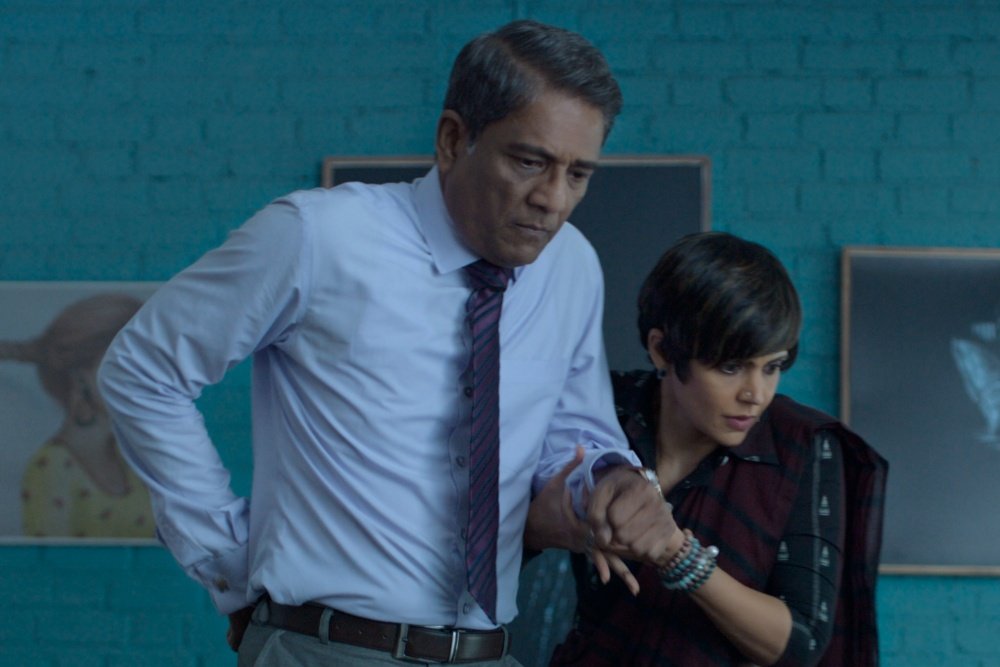
On 6 July 2026, two of Malayalam cinema's most prominent actors — Revathy and Padmapriya — announced their resignation from the Association of Malayalam Movie Artists (AMMA), the Kerala-based industry body that represents thousands of Malayalam-language film workers. Their joint statement, reported by The Indian Express, accused the organisation of being "not ready to change" and framed the walkout as a verdict on AMMA's internal processes rather than a personal falling-out.
The resignations land at a moment when Indian film industry bodies are under sustained public pressure to professionalise — to publish transparent codes of conduct, audit their elections, and give women a binding say in matters of workplace safety and grievance redressal. Revathy and Padmapriya's joint exit suggests that for two of the industry's most senior figures, the existing answer from AMMA was no longer tenable.
What the resignations actually say
The Indian Express report, published 6 July 2026, frames the pair's statement as a structural critique rather than a personal grievance. The actors say AMMA is "not ready to change," language that points at the institution's rules, its elected office-bearers, and the way it has handled complaints from within. The statement is read by the two actors as a closing of the door: rather than work for incremental reform from the inside, they have chosen to withdraw their membership and their public association with the body.
That reading is significant because both Revathy and Padmapriya are not fringe figures. Both are directors and actors with careers spanning multiple decades across Tamil, Malayalam and Hindi cinema. Their departure strips AMMA of a degree of moral and cultural capital it has long traded on: the idea that the body speaks for the working actor in the industry. By resigning in tandem, they turn a private complaint into a public verdict on the body's fitness to govern itself.
Why AMMA, and why now
Industry bodies in regional Indian cinema have faced repeated questions in recent years about elections, nepotism, and the handling of sexual-harassment complaints. AMMA has previously been at the centre of disputes over the way its general body is constituted, and over the relative weight given to senior stars versus working technicians and junior artists. The Indian Express report does not enumerate the specific reforms Revathy and Padmapriya sought, but the language of the resignation — that the body is "not ready to change" — is consistent with a long-running pattern in which internal reform campaigns meet procedural inertia.
Kerala's film industry has historically been more politically mobilised than several of its regional peers, and AMMA's leadership has not been insulated from that wider civic life. The state government in Thiruvananthapuram has, at various points, sought to position itself as a mediator in industry disputes. The Indian Express report does not specify any government role in the latest resignations, but the political backdrop is the climate in which the actors chose to publish their exit.
The structural read
The interesting question is not whether two actors should resign; that is a private decision. It is what their resignation reveals about how the institution responds to pressure from its own most credentialed members. Bodies like AMMA derive their authority from the willingness of recognised artists to attach their names to the organisation. When a Revathy or a Padmapriya — a name a lay reader in Thiruvananthapuram, Chennai or Mumbai would recognise — concludes that the institution is not worth the cost of association, the loss is reputational rather than financial.
Two readings are plausible. The first is that AMMA is, in the actors' framing, a closed shop that has treated reform as a public-relations exercise rather than a governance problem. The second is that AMMA is a body working through genuinely hard questions about representation and grievance handling, and that a small number of senior figures have chosen to step out before the institution has had a chance to deliver a slower, more deliberative answer. The first reading is the one the resignation letter is plainly written to support; the second remains available to anyone inclined to read the departure as an over-reaction.
On the available reporting, the first reading has the stronger evidentiary footing. A walkout by two of the body's most senior women, framed as a refusal to wait any longer for internal change, is the kind of signal that arrives only after quieter interventions have been exhausted.
What remains uncertain
The Indian Express report does not detail the full text of the resignation statement, does not name a successor or interim arrangement at AMMA, and does not list the specific procedural reforms the actors were seeking. Whether other senior members of the body follow them out — and whether AMMA's general council issues a public reply — will determine whether this is read, in a year's time, as the start of a wider rupture or as a contained protest by two voices the institution was always going to struggle to ignore.
What is already clear is that the two actors have chosen visibility over quiet membership. For an industry body whose standing depends on the willingness of its stars to stand behind it, that is a cost that does not require a number to measure.
Desk note: the wire covered the resignations as a personnel item. Monexus treats it as a governance story — the question is not who quit, but what their departure tells us about an institution's ability to reform itself under sustained internal pressure.
Wire provenance
This editorial synthesis draws on the following public wire/social posts:
- https://en.wikipedia.org/wiki/Association_of_Malayalam_Movie_Artists
- https://en.wikipedia.org/wiki/Revathi