Projectile strike on Hormuz tanker deepens uncertainty over Gulf shipping corridor
A commercial tanker was hit by an unidentified projectile in the Strait of Hormuz on 7 July 2026, the UK Maritime Trade Operations centre said, reviving fears of disruption to a corridor that carries a significant share of seaborne oil.
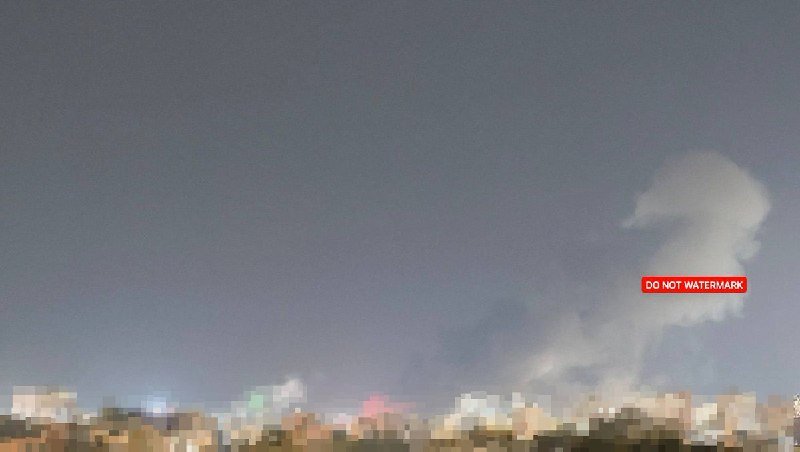
A commercial tanker transiting the Strait of Hormuz was struck by an unidentified projectile on the afternoon of 7 July 2026, according to a United Kingdom Maritime Trade Operations (UKMTO) advisory relayed through shipping alert channels. The notice, issued shortly after 13:26 UTC, said the vessel sustained structural damage but reported no casualties and no visible pollution.
The report places the incident inside a narrow waterway that handles a disproportionate share of global seaborne crude exports and liquefied natural gas shipments. Even single-vessel disruptions in the strait have historically moved freight rates and insurance premiums within hours, because the chokepoint is so concentrated that any sustained interference ripples outward to refineries in Asia, Europe and the Americas. This strike, on a route flanked by Iran to the north and Oman to the south, arrived without immediate claims of responsibility and with the operational details still developing.
The early advisory from UKMTO is unambiguous about three things and silent on a fourth. The vessel was transiting the strait. It was struck by a projectile. It now has structural damage. What remains unnamed is the type of weapon, the direction of fire, and the identity of the shooter. That gap is now the central question for shipowners, insurers and the naval forces that patrol the corridor.
The advisory in detail
UKMTO, the Royal Navy-run maritime security centre based in Dubai, told mariners at 13:30 UTC on 7 July 2026 that it had "received a report of an incident involving a tanker transiting the Strait of Hormuz." The advisory, carried verbatim by several shipping alert feeds, said the vessel had been "struck by an unidentified projectile" and was "believed to have sustained structural damage." UKMTO stressed that no casualties had been reported in the initial account and that no pollution had been observed at the time of the report.
The wording is consistent with how the centre handles incidents that have not yet been attributed. The phrase "unidentified projectile" is used precisely because investigators at this stage typically cannot confirm whether the object was a missile, a drone, a rifle-calibre round or a piece of debris driven into the hull by another vessel. UKMTO advisories typically follow up with supplementary notices once the vessel's operator confirms what the crew saw and what the hull imagery shows.
The geographical specificity matters. The Strait of Hormuz is roughly 33 nautical miles wide at its narrowest, with two shipping lanes of two miles each separated by a two-mile buffer. Tankers carrying crude from the Gulf to Asian and European buyers pass within sight of the Omani coast and the Iranian coast on virtually every transit. That concentration is what makes the corridor's security a global concern rather than a regional one.
What the framing of this incident typically misses
Western wire reporting on Hormuz incidents tends to default to a single narrative: Iran or Iran-aligned actors acting against shipping in retaliation for sanctions, Israeli operations in Lebanon, or broader regional pressure. That template is not baseless — Iranian seizure operations in 2019, 2021 and again in recent years have been documented, attributed and in some cases filmed. But the same template is routinely applied to incidents for which attribution is later disputed, or in which private maritime security firms, crew error, or mishandled explosives turn out to be the cause.
Tehran, for its part, has consistently framed the strait's security as a shared responsibility and accused external naval deployments of escalating risk rather than deterring attacks. Iranian state media have repeatedly argued that the presence of US and British naval assets in the Gulf raises the likelihood of miscalculation rather than lowering it — a position that deserves reporting on its own terms rather than dismissal. The Cradle and Middle East Eye have published detailed analyses advancing similar lines from outlets that are read in the Global South and the Arab world. Treating those analyses as reflexively hostile rather than as a competing account of the same evidence distorts the record.
There is also a less-discussed pattern. Maritime insurers priced the strait as high-risk through long stretches of 2024 and 2025 even when there were no kinetic incidents, citing the underlying threat picture. The result is that minor events can produce outsized insurance and charter-rate moves, which in turn amplify the political weight of an attack whose operational impact may be limited to a single vessel's plating.
The structural picture, in plain language
Hormuz is not one chokepoint but the chokepoint for two adjacent energy markets. Crude oil leaving the Gulf travels through it toward the Strait of Malacca and on to China, Japan, South Korea and India. Liquefied natural gas, increasingly important to European buyers as Russian pipeline imports contracted after 2022, follows the same route. When a single vessel is damaged, the immediate question is operational: how badly, and can she make port under her own power. The second question, which arrives within minutes in trading rooms, is whether this is a one-off.
The reason shipowners and commodity traders move so quickly on these advisories is that there is no redundancy at scale. Pipelines bypassing Hormuz exist — the UAE's Habshan–Fujairah route carries some crude, and Saudi Arabia's East–West pipeline terminates at Yanbu — but their combined capacity is a fraction of seaborne flows through the strait. There is no equivalent bypass for LNG. A sustained campaign of attacks would force the world to use the spare capacity it has, accept higher prices, or draw down strategic reserves, and the choice between those three is itself a political decision.
This is also why naval deployments in the Gulf have become a permanent feature. The US Fifth Fleet, the Royal Navy's regional forces and the European Maritime Awareness Mission in the Strait of Hormuz (EMASoH) all maintain a presence precisely because the concentration of risk invites exactly the kind of small-incident-with-large-second-order-effects scenario that played out on 7 July. The irony the Iranian government has pointed to — that foreign naval concentration itself raises the chance of a misfired munition hitting a tanker — has been acknowledged in Western naval after-action reviews, though usually in classified annexes rather than public briefings.
What remains uncertain
The UKMTO advisory at the centre of this story names an incident but does not assign blame. Several questions are open. The vessel's flag and operator were not in the initial notice. The nature of the projectile, its origin, and whether any group or state has claimed responsibility in the hours since the strike are not addressed. Shipping alert feeds referenced only the UKMTO wording and did not add operational detail.
What can be said now, on the evidence available, is narrower than what will likely be said about this incident by tomorrow morning. The tanker was hit. It is damaged. The crew is reported unhurt. Whether this becomes a single-vessel story or the opening beat of a wider incident is something only the next 48 hours of advisories — and the response from Tehran, Riyadh, Muscat, Abu Dhabi and the Western naval commands — will determine. The basic facts of the chokepoint itself do not change either way: a single, narrow corridor handles a flow that the global economy cannot replace on short notice, which is why a single projectile, on a single afternoon, draws this much attention.
This article was compiled from initial UKMTO advisories circulated via shipping alert channels on 7 July 2026. Attribution of the strike remains under investigation.
Wire provenance
This editorial synthesis draws on the following public wire/social posts:
- https://t.me/liveuamap/
- https://t.me/wfwitness/
- https://t.me/GeoPWatch/
- https://en.wikipedia.org/wiki/Strait_of_Hormuz
- https://en.wikipedia.org/wiki/United_Kingdom_Maritime_Trade_Operations
- https://en.wikipedia.org/wiki/European_Maritime_Awareness_Mission_in_the_Strait_of_Hormuz