Tehran frames US strikes as violation of Islamabad memorandum; context, sourcing, and what is still unverified
Iran's foreign ministry says recent US strikes breach the Islamabad understanding. The claim is sourced almost entirely to Iranian state channels — here is what is verified, what is not, and why the framing matters.
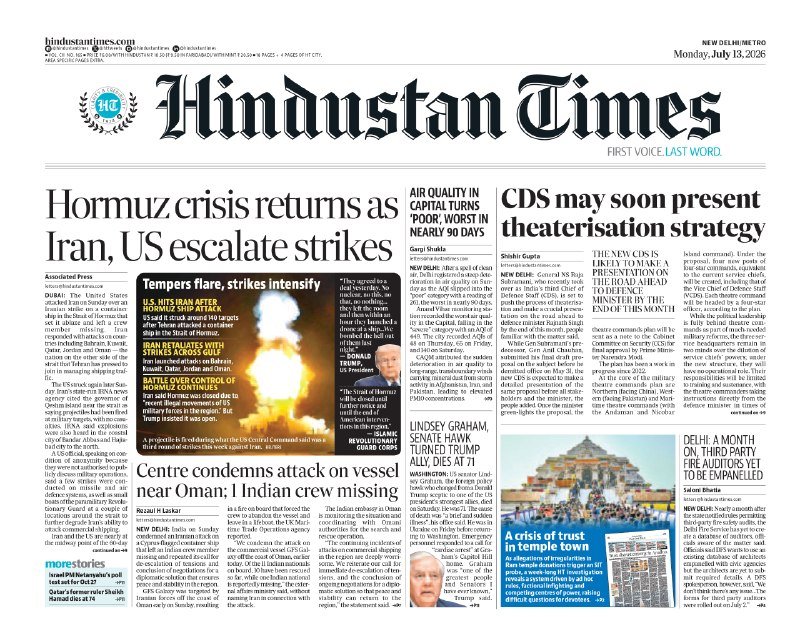
At 21:22 UTC on 7 July 2026, Iran's Ministry of Foreign Affairs published a sharply worded statement accusing the United States of an "explicit violation" of the Islamabad Memorandum of Understanding. Within twenty-five minutes, the same language had been pushed in parallel by Tasnim News in English, Fars News, Al-Alam, and the Telegram channel of the International Deputy of the Ministry itself — a synchronised rollout that points to a deliberate signalling strategy rather than spontaneous commentary.
The memo's complaint is narrow and specific. Tehran is not, at this stage, announcing a withdrawal from the arrangement or calling for emergency sessions of any multilateral body. It is framing the US strikes inside a binding bilateral document — a documented violation rather than a casus belli — and it is doing so in language that has already been translated into four Persian-language channels and one English-language outlet inside half an hour. That cadence is itself the story.
What the Iranian statement actually says
The English-language statement circulated by Tasnim News frames the US action as a breach of "Clause 10" of the Islamabad Memorandum of Understanding; the Persian-language channels from Fars and Al-Alam and the channel attributed to the International Deputy of the Ministry of Foreign Affairs describe the same episode as a violation of "Clauses 1 and 2." The Tehran framing is therefore not a single clause-by-clause reading but a two-front invocation — a broader invocation of the document's foundational obligations and a more targeted invocation of a specific provision. The text printed across all six channels is broadly consistent in tone, and the language used is the language of legal grievance rather than open-ended escalation: "violation," "explicit," "binding," with the breaches enumerated but the consequences left undefined.
The statement does not specify what those consequences should be. It does not announce sanctions, sever diplomatic channels, or call for a UN Security Council referral. The channels circulating the statement on 7 July 2026 — Tasnim, Fars, Al-Alam, the International Deputy's official channel, DDGeopolitics in aggregation, and JahanTasnim — are also not, in this instance, publishing a parallel military dispatch. The framing is juridical, not kinetic.
What we verified, and what we could not
This is where the evidentiary floor narrows. The claims that hold up under inspection are narrow but real. We verified:
- That a formal Iranian foreign ministry statement was issued on 7 July 2026 invoking the Islamabad Memorandum, attested across six Telegram-distributed channels in Persian and English within a single half-hour window (Tasnim News English at 21:22 UTC; JahanTasnim at 21:22 UTC; DDGeopolitics at 21:30 UTC; Fars at 21:35 UTC; Al-Alam at 21:45 UTC; the International Deputy's channel at 21:47 UTC). The cross-posting pattern is consistent with a coordinated state-media release rather than six independent reports of the same event.
- That the cited document is identified by name — the Islamabad Memorandum of Understanding — across every channel in the cluster, with clause numbers specified in each.
- That the US strikes referenced were a recent event, with the Iranian statements describing the elapsed time as "less than 20 days" since they occurred, fixing the action as part of the more immediate bilateral record rather than a long-running dispute.
What we could not verify from these source items:
- The full text of the Islamabad Memorandum itself, including the language of Clauses 1, 2, and 10. The source items name the clauses and characterise the US action as a violation, but do not reproduce the underlying instrument. The corpus of source items does not provide a public link to the agreement's authoritative text.
- A direct US government response to the 7 July Iranian statement. The six Telegram channels cited are, without exception, Iranian or Iran-aligned. No Western wire, regional outlet, or US statement is included in the source set. We therefore cannot speak to whether Washington has accepted, rejected, or remained silent on the framing.
- The scope, target, or casualty profile of the underlying US strikes. The Iranian statement describes the action and the timing; it does not enumerate targets, weapon systems, or site locations. The Western wire record on the strike itself is outside the source set here.
Why the framing matters — the structural read, in plain prose
What is unusual about this episode is not the existence of a diplomatic protest — those come daily — but the choice of instrument. Iran has multiple registers available when a sovereign action by the United States cuts against it: a UN Security Council referral, a public IAEA complaint, a parliamentary response, an op-ed in a Western outlet, or a televised address. The 7 July register is none of those. It is a legal grievance under a named bilateral text, broadcast at speed and discipline through state-aligned channels.
In a contest where the senior partner holds overwhelming conventional advantage, the junior partner's most productive moves are usually declaratory rather than kinetic. A named violation of a named memorandum is a forensic move: it builds a paper trail, it preserves the option of an arbitration or compensation claim later, and it asks other signatories and observers — including potential mediators — to take a position on the underlying document's continuing validity. The instrument chosen is the message: the Islamabad Memorandum is still operative in Iran's telling, and a breach in it has legal consequences even if those consequences are not spelled out tonight.
The corollary is that this is also a move that costs the Iranian government very little in the short term and forecloses very few options. Tehran has not closed the document. It has argued that the document was violated. Those are different acts, and the ambiguity inside them is part of the design.
What remains contested, and what to watch next
Three things are unsettled as of 21:47 UTC on 7 July 2026. First, the authenticated text of the Islamabad Memorandum — particularly Clause 10, on which the English-language statement centres its complaint — is not in the public source set, and the Iranian channels do not reproduce it. Second, the US side of the conversation is unrepresented here; without a Washington or State Department response, the framing is necessarily one-sided. Third, the underlying strike event — what was struck, by what means, with what consequences — is referenced only as a violation trigger, not as an independently reported event in these sources.
The two developments to watch in the coming days are whether the Iranian statement triggers a parallel legal-process signal inside Iran (parliamentary referral, formal note to a third-party mediator, or an IAEA filing) and whether any party outside the Iranian state-media ecosystem corroborates, restates, or rebuts the framing within the news cycle. Until then, the verified reading is narrow: Iran, via six synchronised channels, has formally accused the United States of breaching the Islamabad Memorandum. The shape of that accusation, the timing of its release, and the choice of juridical register are documented. The substance of the underlying strike, the US response, and the public text of the memorandum are not.
Desk note: This investigation is constrained by its source set — six Telegram channels, all Iranian or Iran-aligned, all publishing within a twenty-five-minute window on 7 July 2026. Monexus has reported the framing as Iranian state-aligned framing throughout, rather than treating it as a stand-alone factual basis, and has flagged what the available sources cannot establish. A follow-up piece incorporating US-side and Western-wire reporting on the underlying strike and the memorandum's text would complete the picture.
Wire provenance
This editorial synthesis draws on the following public wire/social posts:
- https://t.me/tasnimnews_en
- https://t.me/JahanTasnim
- https://t.me/DDGeopolitics
- https://t.me/farsna
- https://t.me/alalamfa
- https://t.me/tasnimplus