Iskander salvo pounds Kyiv as Russian ballistic strikes resume overnight
A wave of Russian Iskander-M ballistic missiles struck Kyiv shortly before 22:00 UTC on 7 July 2026, igniting fires across the capital and reviving questions about the air-defence burden Ukraine's defenders carry alone.
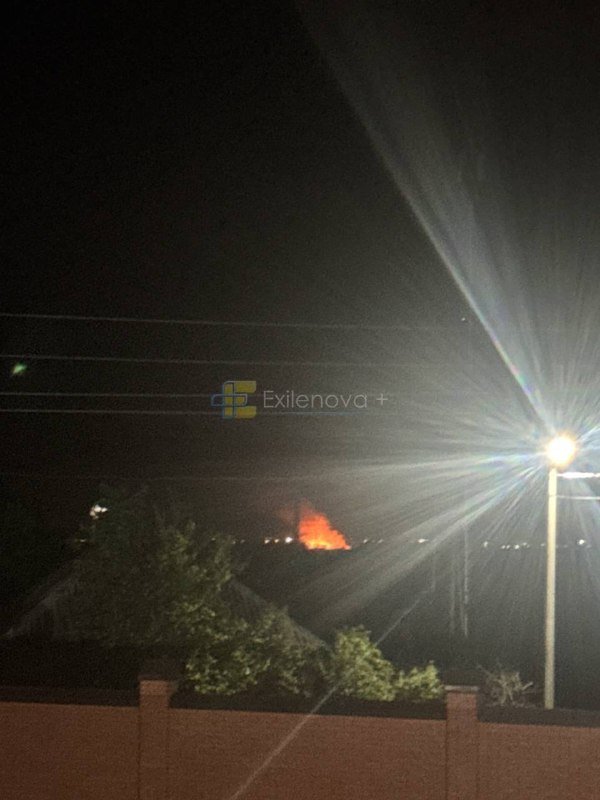
A barrage of Russian Iskander-M ballistic missiles slammed into Kyiv in the early evening of 7 July 2026, with multiple impacts recorded between 21:49 UTC and 22:11 UTC and large fires burning across at least parts of the capital. The wave, the third major salvo in roughly ninety minutes according to Telegram channels tracking the strikes in real time, is the heaviest single attack on the Ukrainian capital reported this month and lands as Kyiv's defenders continue to operate under tight Western-supplied interceptor inventories.
What happened on Tuesday is, in isolation, another data point in a four-year pattern of long-range strikes on Ukrainian population centres. Read in aggregate, however, it sharpens a question that has trailed Western policy since spring: how long can Ukraine absorb this tempo of ballistic-missile pressure, and what is the cost of asking it to?
What the night looked like
The first audible detonations were reported in Kyiv at 21:49 UTC on 7 July. Kyiv Post, posting to its official Telegram channel within minutes, said explosions were heard across the capital as air-defence units engaged incoming targets, with Ukraine's Air Force having warned of Russian ballistic missiles heading toward the city. By 22:01 UTC, wfwitness, a Telegram channel that has tracked strikes on Ukrainian cities since the early months of the invasion, was reporting renewed air-raid alerts and incoming Iskander-type missiles. Five minutes later, the same channel posted footage it said showed the moment a Russian Iskander-M struck the capital.
By 22:08 UTC, AMK_Mapping, a conflict-geolocation channel that has built a reputation for matching impact craters, radar returns and open-source video, reported that large fires were burning in Kyiv following a series of Iskander-M strikes, and that "2-3 more" missiles had come in shortly after the first wave. The salvo's tail — a third wave, again in the Iskander-M class — was logged at 22:11 UTC.
There were no immediate official casualty figures in the Telegram traffic reviewed by this publication. The strikes occurred at a time of day when central Kyiv is densely populated and many residents are still returning from work, raising the likelihood of civilian harm even before authoritative figures are released. Kyiv's municipal authorities, Ukraine's State Emergency Service and the office of President Volodymyr Zelenskyy had not posted verified aggregate casualty counts in the Telegram channels reviewed at the time of writing.
What the Western wire has not yet said
No major Western newsroom had published a confirmed story on the salvo at the time the latest Telegram posts were filed. The thread of reporting reviewed for this piece runs almost entirely through Kyiv Post's official channel and the open-source trackers wfwitness and AMK_Mapping — channels that move at the speed of the strikes themselves but offer no editorial vetting, no official sourcing, and no corroborating imagery beyond what their stringers can capture on a phone.
That is itself worth noting. Western wire desks in 2026 routinely pick up Ukrainian strike reports within twenty to forty minutes of impact, particularly when the strikes are against Kyiv or another major city. The slow appearance of confirmation in this case is consistent with two possibilities: either the wave had not yet produced the kind of single, visually dramatic impact that editors look for, or Western newsrooms were waiting for Ukrainian official figures before filing. Either way, the delay leaves the real-time picture in the hands of Ukrainian-language and Telegram-based sources, and the verification load sits with reporters rather than official spokespeople.
The structural frame: a city on a stockpile
Iskander-M is a road-mobile, solid-fuelled ballistic missile with a conventional warhead in the 480–700 kilogramme class and a range of roughly 500 kilometres. Russia has used it against Ukrainian cities throughout the war as part of a layered strike complex that pairs ballistic missiles with cheaper Shahed-type one-way attack drones and cruise missiles such as Kalibr and Kh-101. The pattern is well understood by now: drones exhaust Ukrainian interceptor stocks, then ballistic and cruise missiles arrive through a thinned defensive net.
That pattern matters because interceptor supply is the binding constraint on Ukrainian air defence, not launcher availability. Patriot PAC-3 and SAMP/T Aster-30 batteries can be repositioned, but the rounds they fire — and the modern medium-range missiles Ukraine depends on, including Iris-T and NASAMS — are produced abroad, drawn from a small pool of Western manufacturers, and rationed by political decision in Washington, Berlin, Paris and The Hague. Every salvo of the kind that hit Kyiv on Tuesday costs Ukraine interceptors it cannot replace at the same rate it spends them, and shifts the arithmetic of the war one more notch in Moscow's favour even when the immediate damage is contained.
What we verified / what we could not
What this publication was able to verify, against the channels reviewed:
- That audible detonations were reported in Kyiv starting at 21:49 UTC on 7 July 2026, with air-defence engagement observed in the same window. (Kyiv Post official Telegram channel, wfwitness Telegram channel.)
- That renewed air-raid alerts followed by Iskander-type launches were posted to wfwitness at 22:01 UTC, with explicit identification of the missile class. (wfwitness Telegram channel.)
- That at least two and possibly three additional Iskander-M impacts were logged between 22:07 UTC and 22:11 UTC, with fires visible in multiple Kyiv districts according to AMK_Mapping. (AMK_Mapping, wfwitness Telegram channels.)
What this publication could not verify, and which a reader should weight accordingly:
- The total number of missiles in the salvo. The Telegram traffic reviewed describes a "series" and a subsequent "2-3 more" impacts, which is consistent with a multi-missile wave but does not constitute a count. No Ukrainian Air Force or General Staff bulletin had been posted in the channels reviewed at the time of writing.
- Casualty figures. None of the reviewed channels carried official or unofficial aggregate counts. The Telegram traffic is timestamped to within minutes of the impacts, which is too early for casualty aggregation.
- The specific districts struck. AMK_Mapping reported fires visible across the city but did not name districts; wfwitness footage has not been independently geolocated by this publication.
- Whether all the impacting missiles were Iskander-M, or whether the salvo also contained Kh-101 cruise missiles or Kinzhal aeroballistic missiles, which are often fired in mixed packages. The Telegram traffic refers only to Iskander-M.
Stakes
If Tuesday's salvo is a single event, it is a familiar one: another night of destruction for a city that has endured them repeatedly since 2022. If it is part of a wider tempo, the implications are sharper. Ukrainian air-defence consumption has been a topic of quiet concern in European capitals since the spring, when several rounds of US Patriot interceptors were transferred from stocks held in Germany, Romania and Greece to Ukraine, leaving NATO's own coverage of the eastern flank thinner. The political ceiling on further transfers is real, and so is the industrial ceiling on production.
For Kyiv's residents, the calculus is more immediate. The capital has held out against Russian missile pressure for four years in part because it has been the most heavily defended city in the country, with multiple Patriot batteries, IRIS-T SL batteries and NASAMS batteries arrayed around it. That defence absorbs a disproportionate share of Ukraine's interceptor supply. Every salvo that lands — whether it does material damage or is shot down over the suburbs — is a draw on a stockpile that cannot easily be replenished. The question is not whether Kyiv can be defended tomorrow. It is whether the present defence architecture can absorb another year of this tempo without a structural change in Western supply. On Tuesday night, the data point on which that question will eventually turn added another row.
Wire provenance
This editorial synthesis draws on the following public wire/social posts:
- https://t.me/Kyivpost_official
- https://t.me/wfwitness
- https://t.me/wfwitness
- https://t.me/wfwitness
- https://t.me/AMK_Mapping
- https://t.me/AMK_Mapping