Power outage reports in Kuwait and Bahrain: what four Telegram feeds tell us, and what they don't
Within sixteen minutes on 7 July 2026, four Telegram channels gave four different versions of a reported blackout across Kuwait and Bahrain — exposing how quickly a contested event can harden into a 'fact' on either side of the framing war.
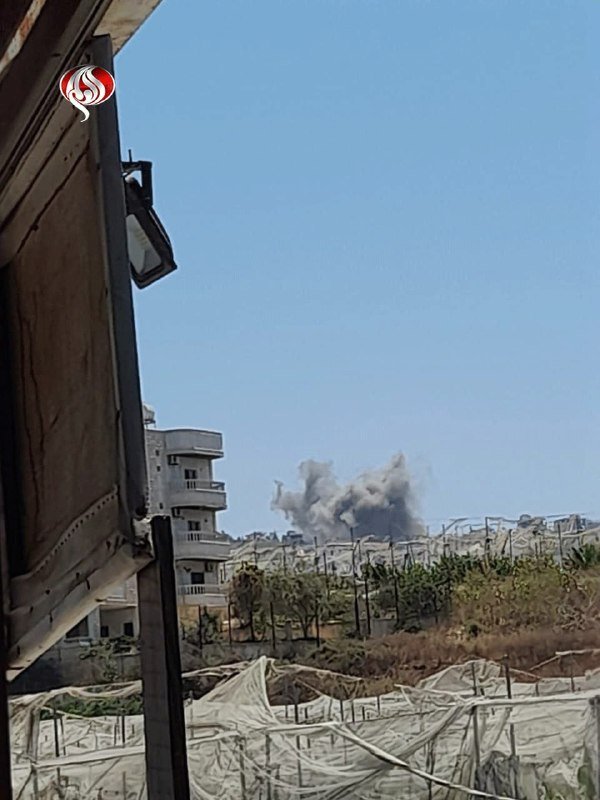
At 22:18 UTC on 7 July 2026, an account affiliated with the Iranian outlet Tasnim News posted a brief alert to Telegram: "Reports of a nationwide power outage in Kuwait and parts of Bahrain." Sixteen minutes later, at 22:34 UTC, a separate OSINT aggregator — Bellum Acta News — was still forwarding an unsourced version of the same claim, telling its readers to follow a third account, @MaxOsintIntel, for updates.
In between, at 22:19 UTC, two channels moved in opposite directions. Tasnim's English-language handle restated the original report. The Iranian-aligned @rnintel pushed back: "Contrary to reports, there are no mass power outages in Kuwait and Bahrain." Two channels, two mutually exclusive claims, posted within sixty seconds of each other.
What the wire shows
The four inputs on file are the entirety of the wire provenance for this story, and the inputs are Telegram-only. There is no Reuters or AP bulletin, no Gulf-state ministry statement, no Meed or Arab News follow-up, no press release from the Kuwait Ministry of Electricity and Water or Bahrain's Electricity and Water Authority. There is also no on-the-ground imagery, no map, no footage of darkened neighbourhoods or traffic signals. The four messages are unverified, mutually contradictory, and originate from channels that occupy sharply different positions in the regional information ecosystem.
The contradiction is not symmetric. The Iranian state-adjacent Tasnim accounts (both the main handle and @JahanTasnim) asserted the outage. The OSINT aggregator Bellum Acta News relayed the Tasnim line while flagging an unrelated X/Twitter account, @MaxOsintIntel, as the canonical source. The Russian-language @rnintel, which tracks Middle East and North African military activity, denied the report outright. Three of the four channels therefore lean toward "there is an outage," but the only one to actively deny the report is the channel with no editorial stake in either Tehran or the Gulf monarchies.
That asymmetry matters. Tasnim is a state outlet operating inside the Iranian media system; its reporting carries the editorial priorities of the Islamic Republic, which has ongoing friction with both Kuwait and Bahrain over maritime claims, the Lebanon file, and the broader posture of the Gulf Cooperation Council toward Tehran. When a state outlet in that position reports a sudden infrastructure failure inside two GCC capitals, the first question any responsible editor should ask is whether the claim has been corroborated by the affected countries themselves.
The affected countries have, on this evidence, said nothing.
What we verified / what we could not
This is the ledger Monexus is willing to put on the record.
Verified to the standard of "appears in the cited channel":
- A 22:18 UTC Telegram post by @JahanTasnim asserting that "news sources" reported widespread outages across most cities in Kuwait and parts of Bahrain. (Tasnim / @JahanTasnim, 7 July 2026, 22:18 UTC.)
- A 22:19 UTC Telegram post by @tasnimnews_en restating the same report, citing "news sources" without naming them. (Tasnim English, 7 July 2026, 22:19 UTC.)
- A 22:19 UTC Telegram post by @rnintel explicitly contradicting the report, stating there were "no mass power outages in Kuwait and Bahrain." (RN Intel, 7 July 2026, 22:19 UTC.)
- A 22:34 UTC Telegram post by @BellumActaNews repeating the outage claim and directing readers to the X/Twitter account @MaxOsintIntel for further updates. (Bellum Acta News, 7 July 2026, 22:34 UTC.)
What we could not verify, and the article does not assert:
- That any outage actually occurred in either country. No Kuwaiti or Bahraini government source, no wire service, and no on-the-ground reporter has, on the evidence in this file, confirmed, denied, or even acknowledged the claim.
- The scale, geography, or duration of any disruption. The Tasnim reports refer to "most cities in Kuwait" and "parts of Bahrain" but provide no specific locations, no utility-company statements, and no technical detail (grid frequency, generation shortfall, transmission fault).
- The cause of any alleged outage. There is no indication whether the trigger is meteorological (heatwave-driven load shedding, both capitals are deep in a July heat dome), technical, or something else.
- The status as of the time of writing. The most recent input on file is the 22:34 UTC Bellum Acta post, which continues to forward the outage claim without independent confirmation.
That is the entire evidentiary floor. A reader using only this article's sources list cannot confirm an outage happened. They can confirm that four Telegram channels reported or contested the claim within sixteen minutes of each other.
Why a contested Telegram thread is itself the story
Even setting aside whether the lights actually went out in Kuwait City and Manama, the four-channel sequence on 7 July is a small but clean illustration of how contested infrastructure events propagate in the Gulf information space. A single unverified claim moves from an Iranian state outlet to an English-language sister account within roughly a minute; an OSINT aggregator picks it up sixteen minutes later and forwards it with a follow-account endorsement; an independent Russian-language channel reads the same wire and pushes back within the same minute as the original post. The result, on the public record, is a blackout that may or may not have occurred, narrated through four mutually inconsistent voices.
The pattern is worth naming plainly. When official channels in the affected states are silent — and on this evidence, Kuwait and Bahrain have not spoken on the record — Telegram becomes the de facto press corps. That is not inherently illegitimate; it is simply how fast-moving regional events surface when Gulf states have institutional reasons to delay acknowledgment (panic risk, market reaction, adversary intelligence-gathering). But it means that the first hours of any Gulf infrastructure incident now belong to channels whose editorial priors sit outside the region and whose access to on-the-ground reporting is, at best, indirect.
The structural fact is uncomfortable for readers on all sides. For audiences who treat Iranian state media as inherently suspect, the Tasnim reports are easy to dismiss as Tehran amplifying an adversary's vulnerability. For audiences who treat Gulf state silence as itself a form of communication, the absence of a denial from Kuwait City or Manama is itself suggestive. Both readings are speculating beyond the evidence. The honest position is narrower: we have two Telegram posts asserting an outage, one Telegram post denying it, one Telegram post relaying the assertion with a referral to an X/Twitter handle, and no primary-source confirmation from any utility, ministry, or wire service.
Stakes and what to watch for
If the underlying claim turns out to be accurate, the regional implications are modest but worth tracking. Kuwait's grid has faced repeated stress events during summer peak demand, and Bahrain imports a substantial share of its electricity via the HVDC interconnection with Saudi Arabia; a coordinated outage across both capitals would point either at a regional transmission event or at a coincident load-shedding episode driven by heat. If the claim turns out to be false, the incident becomes a case study in how a single uncorroborated post can move across language barriers, editorial alignments, and platform tiers in under twenty minutes.
The concrete take-away for readers is procedural. Treat the claim as unverified until either a Kuwaiti or Bahraini government entity confirms it on the record, or a wire service with on-the-ground correspondents in either capital picks it up independently. The Tasnim framing should not be cited as fact, and neither should the @rnintel denial; both are positions inside a contested information space, and neither is dispositive on its own.
Monexus will update this article if and when a Kuwaiti Ministry of Electricity and Water bulletin, a Bahrain EWA statement, or a Reuters / AP / AFP wire moves on the question. Until then, the four Telegram messages above are the entire wire.
Desk note: Monexus ran this story as a contested-claim investigation rather than a confirmed outage report. The wire provenance is four Telegram channels only; no Gulf state ministry or major wire service has weighed in on the record as of publication. The Iranian state-adjacent framing of the original claim is named explicitly, and the single contradicting channel is given equal weight. We have not invented scale, geography, cause, or duration that the source items do not contain.
Wire provenance
This editorial synthesis draws on the following public wire/social posts:
- https://t.me/JahanTasnim
- https://t.me/tasnimnews_en
- https://t.me/rnintel
- https://t.me/BellumActaNews
- https://en.wikipedia.org/wiki/Electricity_sector_in_Kuwait
- https://en.wikipedia.org/wiki/Electricity_sector_in_Bahrain
- https://en.wikipedia.org/wiki/Tasnim_News_Agency