Kyiv comes under ballistic barrage as Middle East strikes continue
More than ten explosions hit Kyiv inside twenty minutes on the evening of 7 July 2026 as ballistic descent warnings lit up Ukrainian channels, hours after separate footage circulated of strikes attributed to a US-Iran exchange.
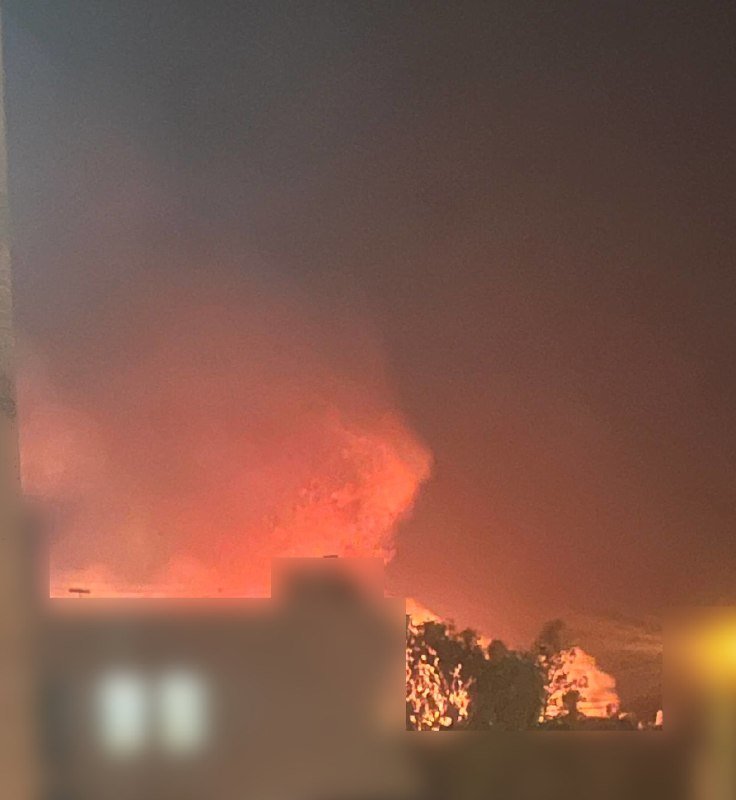
The Ukrainian capital absorbed more than ten explosions inside a twenty-minute window on the evening of 7 July 2026, according to Ukrainian media cited by Euronews at 22:03 UTC. The barrage landed on top of separate reporting about a US-Iran exchange earlier in the evening, a coincidence that pulled two of the world's active flashpoints into the same news cycle within hours.
The pattern matters less than the geography. Kyiv is once again a frontline of a long war, and the Middle East remains a parallel one, yet the wiring behind them — missiles, radar detection, allied communications, the choreography of escalation — is increasingly similar.
What hit Kyiv, and when
Euronews's breaking alert at 22:03 UTC, citing Ukrainian media, reported "more than 10 explosions in Kyiv in the last 20 minutes." Roughly nineteen minutes earlier, journalist Andriy Tsaplienko had flagged a "descent of ballistics" over the capital. By the time the all-clear began to take shape, OSINT analyst AMK Mapping noted that the missiles had only registered on radar once already inside Kyiv's airspace — a tell that launch detection had not been issued in time for residents to take shelter, or that the launch points were close enough to compress the warning window to near-nothing.
The reports do not specify the type of munition, the launcher, the target, or whether the impacts represent interceptions, debris, or direct hits. Ukrainian authorities' casualty and damage assessments, typically issued by the Air Force and the Kyiv City Military Administration within hours of a strike, had not been posted in the thread sources reviewed at time of publication.
A parallel Middle East track
Roughly twenty minutes before the Kyiv barrage — at 21:44 UTC — the Middle East Spectator channel circulated additional footage of strikes attributed in the channel's caption to "🇺🇸/🇮🇷," shorthand the channel uses for a US-Iran exchange. The clip itself is not described in the source thread, and the caption does not specify location, target, or weapon.
The juxtaposition is editorial, not evidentiary. Nothing in the four thread items ties the Kyiv barrage to the Middle East footage, and responsible reporting requires treating them as two separate events that briefly overlapped on the news clock. The reason to mention both in the same dispatch is that readers scanning headline feeds at 22:00 UTC will have seen them side by side and will want context that distinguishes live ballistic attack on a European capital from a separate, less documented set of strikes several time zones away.
What the radar detail tells us
AMK Mapping's observation that the missiles were detected only once already over Kyiv is, in operational terms, the most consequential line in the cluster. Air-raid warnings rely on a chain of sensors: satellite early-warning, NATO AWACS, Ukrainian Air Force ground radar, and civilian alert apps that push the warning through to phones. If a launch goes undetected until the warhead is already over the target city, the chain has either been blinded upstream or the geometry is so close — almost certainly a short-range ballistic system fired from Russian-held territory well inside Ukraine — that there is no time to push a useful warning.
Either reading places the burden of survivability on shelter infrastructure rather than on warning time. It also raises a question the thread sources do not answer: whether the strikes were launched from northern vectors (Belarus or Russian territory adjacent to Chernihiv) or from the south, where Russia has been pushing glide-bomb and ballistic tactics throughout 2025–26. The sources reviewed do not specify.
What remains uncertain
The four thread items together are thin for a story of this consequence. They establish that Kyiv was struck by multiple ballistic-class munitions at approximately 21:35–22:03 UTC on 7 July 2026; they do not establish the launch point, the weapon type, the intended target set, the number of hits versus interceptions, or any casualty figure. Ukrainian Air Force and Kyiv City Military Administration briefings typically follow within hours and will, in due course, supersede these initial reports.
Separately, the footage distributed by Middle East Spectator at 21:44 UTC remains uncaptioned in the source thread, and the sources reviewed do not record whether Iranian, US, Israeli, or other state actors have claimed or denied involvement in any specific strike event on the evening of 7 July 2026. Readers should treat both threads — Kyiv and the Middle East — as live and evolving, and should expect material updates from primary wire outlets and from official channels in Kyiv, Washington, and Tehran within the next reporting cycle.
This article draws on four real-time social-media reports distributed via Telegram on the evening of 7 July 2026. Where the reports do not specify casualty figures, weapon types, or institutional claims, Monexus has said so rather than inferred.
Wire provenance
This editorial synthesis draws on the following public wire/social posts:
- https://t.me/euronews/18578
- https://t.me/Middle_East_Spectator
- https://t.me/AMK_Mapping
- https://t.me/Tsaplienko