Strait of Hormuz under fire: what four attacks on commercial tankers reveal about Iran's escalation calculus
Iran's IRGC struck at least four commercial tankers in the Strait of Hormuz on 7 July 2026, mixing missiles and drones. Western wire reporting and Iranian state media tell overlapping but not identical stories.
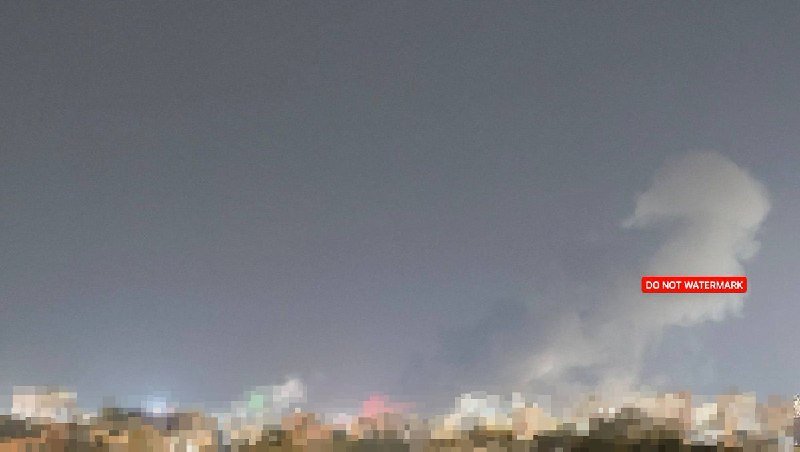
Commercial shipping through the Strait of Hormuz came under attack for the second time in roughly fifteen hours on 7 July 2026, when the United Kingdom Maritime Trade Operations (UKMTO) information cell reported that a vessel in transit had been struck by an unmanned aerial vehicle and sustained minor structural damage. The bulletin, posted to social channels at 15:54 UTC, came after Iran's Islamic Revolutionary Guard Corps had earlier fired on at least four commercial tankers in the same narrow corridor, according to separate reporting carried by Axios and amplified across X (formerly Twitter). Two strikes used missiles, two used drones, and the pattern — closely spaced, mixed weapons, deliberately public — is consistent with a calibrated message rather than a one-off accident at sea.
The arc of the day points at a deliberate widening of risk in the world's most consequential energy chokepoint. Roughly a fifth of globally traded oil passes through the strait; insurance rates, naval deployments and the cost of war-risk premia respond to even the rumour of an incident on this route. The question for shipping markets, regional militaries and policymakers is whether the trajectory of the past twenty-four hours is a negotiation tactic by Tehran, the early stage of a sustained campaign, or both — and how the United States and Gulf monarchies calibrate their response given a freshly reopened nuclear file.
What the bulletins actually say
The UKMTO advisory at 15:54 UTC is consistent with its standard operating procedure: a brief, declarative incident notice, a vessel location description, an offer to liaise with naval authorities, and a statement that the agency is continuing to investigate. The wording — "a second attack on a tanker transiting the Strait of Hormuz, the vessel was struck by an UAV, sustaining minor structural damage" — does not attribute the strike. UKMTO is a Royal Navy-hosted information cell operating out of Dubai; it logs incidents, not culprits.
The attribution language comes from the second-hand chain. Reporting cited by Axios via the social account @unusual_whales at 01:49 UTC stated that "Iran's military fired at least two missiles at commercial ships transiting the Strait of Hormuz." A separate post by @mintpressnews at 15:13 UTC attributed four strikes to the IRGC specifically, breaking them down as two missiles and two drones, and tied the escalation to "an American attempt to escort vessels" through the strait. The framing of that second post — pinning responsibility on the IRGC and treating the US escort effort as the proximate cause — sits at the editorial edge of the English-language Iran conversation and should be treated as one input among several, not as a neutral wire description.
What the available reporting agrees on is narrow and verifiable: multiple commercial tankers were struck on 7 July 2026; missiles and at least one drone were involved; UKMTO has confirmed at least one incident by name; and the action occurred in the context of a US naval escort operation that is, at minimum, plausibly related.
Why the timing matters
The Strait of Hormuz sits between Iran to the north and Oman and the United Arab Emirates to the south. It is roughly thirty-three kilometres wide at its narrowest shipping lane, with inbound and outbound traffic funnelled into two-mile-wide corridors. Iranian asymmetric doctrine, refined through decades of regular and irregular naval exercises, treats the strait as the strategic centre of gravity it cannot be denied: a place where relatively cheap anti-ship missiles, naval mines, fast attack craft and aerial drones can impose costs on a vastly more powerful adversary. The IRGC Navy, distinct from the regular Iranian Navy, owns much of this playbook.
The 7 July strikes arrive against a backdrop that is unusually sensitive. Nuclear talks between Tehran and Washington have produced renewed intermediaries' engagement in recent months; Gulf monarchies have been quietly recoupling diplomatic ties with the Islamic Republic; and the United States Central Command has been conducting regular maritime security patrols through the strait since at least the start of the year. A US-led tanker escort mission, if confirmed, would be the first formal coalition escort operation in the strait since the height of the tanker war in the late 1980s.
If Iran's objective is to influence that escort mission, the chosen method — attack shipping in proximity to coalition forces and publicise the result loudly — fits a coercive signalling pattern in which the loss of life and oil is deliberately limited but the reputational and insurance-market costs are not.
What we verified, and what we could not
Verified. UKMTO logged a second strike on a transiting tanker by UAV at 15:54 UTC, 7 July 2026, with the vessel sustaining minor structural damage. Multiple separate reporting chains agree that missiles and drones were used in attacks on commercial tankers in the strait on the same day.
Claimed but not independently corroborated by these sources. The precise count of vessels struck (the @mintpressnews post asserts four, including specific weapon mixes); the identity of the struck tankers and their flag states; the precise type and origin of the projectiles; the existence of a formal US-led escort mission; the motive Tehran is signalling with this round of attacks.
Not addressable from these source items. Casualty figures; oil-tanker tonnage affected; changes in war-risk insurance premia or freight rates; statements from the US Navy's Fifth Fleet, the Iranian Foreign Ministry, the IRGC's official channels, or any Gulf state foreign ministry. A serious picture of the day's events needs wire confirmation from at least one mainstream outlet (Reuters, Associated Press, BBC, Al Jazeera) and an Iranian state-source statement from either the Foreign Ministry or the IRGC before any of the specifics can be locked in.
The structural frame
Read across the day's bulletins, what is being tested is less the seaworthiness of individual tankers than the willingness of a coalition of maritime powers to underwrite commercial passage through the strait at scale. The economics of Hormuz are unusual: shipping companies, insurers, oil majors and Gulf port operators each have different tipping points, and a regime that wants to coerce without triggering overt war has an incentive to keep pressure just below the threshold at which the United States is forced to fire back in self-defence. The UK's UKMTO plays a particular role in this geometry, because its bulletins — even when they attribute nothing — translate ambiguity into premium hikes within hours.
Iranian state-aligned channels will frame the action as a defensive response to a hostile maritime presence in Tehran's declared neighbourhood. The US and Gulf monarchies will frame it as reckless endangerment of international commerce. The truth of who did what to whom is recoverable from shipping-tracking services and signals intelligence; the truth of why is recoverable only from Tehran, and Tehran's stated reason will reflect a calculation about the audience it most wants to move.
What is at stake
If the 7 July strikes are an isolated coercive gesture and the oil market treats them as such, the political consequence is a tighter, higher-premium insurance regime around Hormuz transit and a quiet US naval surge that nobody names in public. If they are the opening move of a sustained campaign — even one calibrated to avoid US casualties — the consequence is a hard winter for global energy markets, a multibillion-dollar naval deployment, and the further erosion of any near-term path back to a nuclear deal. The shipping companies routing crude through the strait today are pricing both possibilities at once.
The honest read at 16:00 UTC on 7 July 2026 is that the situation is genuinely uncertain. UKMTO is logging; Axios is reporting; Iranian-adjacent English-language channels are framing; and the chain of custody between a missile launch and an X post is, in this corner of the internet, easy to fake and hard to verify in real time. Treat the count, the weapon mix and the attribution chain that reaches the IRGC as probable but not settled. The structural fact — that the strait is a coercion-prone corridor in a year of redoubled great-power attention — is what the rest of the day's headlines will be arguing over.
Monexus treats this bulletin as a single-sitting incident report; attribution and casualty figures will be revisited when a tier-one wire and an Iranian official source land in parallel. Telegram and X threads are the wire-of-record here, with the caveat that English-language Iran coverage splits sharply between Western-wire caution and Iranian-aligned amplification.
Wire provenance
This editorial synthesis draws on the following public wire/social posts:
- https://t.me/wfwitness/