Tanker strike in the Strait of Hormuz tests the UK's maritime-security posture on 7 July 2026
A projectile strike on a tanker in the world's most sensitive chokepoint forces an immediate test of the United Kingdom Maritime Trade Operations reporting regime and the assumptions underwriters carry about passage through the Gulf.
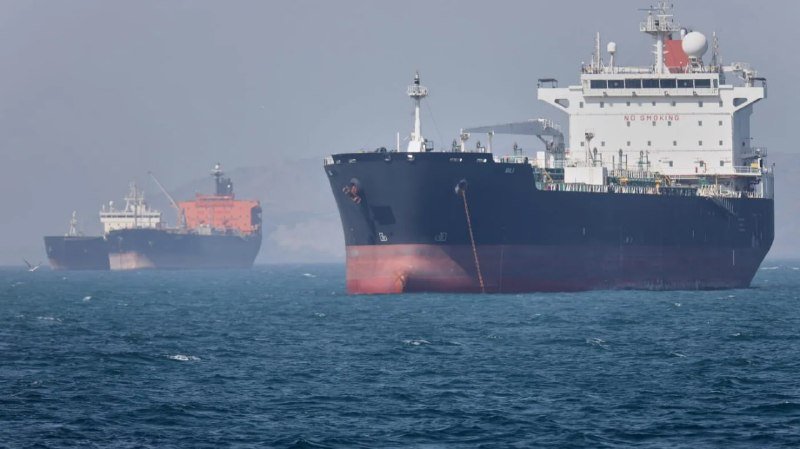
At 13:32 UTC on 7 July 2026, the United Kingdom Maritime Trade Operations centre — the Royal Navy–run reporting hub that brokers information between merchant vessels, warships and commercial underwriters across the Gulf — logged an incident report from a tanker transiting the Strait of Hormuz. According to the advisory reproduced by three independent Telegram feeds, the vessel was struck by an unidentified projectile, was believed to have sustained structural damage, and reported no casualties and no pollution. UKMTO's standing advice in such cases is for transiting ships to navigate with caution and to report any further contacts to coalition naval forces.
The bulletin lands on an oil market already sensitised to Gulf shipping risk. Roughly a fifth of the world's seaborne crude moves through the strait; war-risk premiums, insurance warranties and routing decisions for very large crude carriers respond within hours to confirmed strikes. The advisory does not name the flag state, owner or cargo of the affected vessel; it does not attribute the projectile; and it does not state whether the strike occurred inside Omani or Iranian territorial waters, or in the international corridor between them. Those gaps matter, because the legal regime the captain operates under — Iranian maritime law inside the twelve-nautical-mile band, Omani law off Musandam, international law in between — turns on the line the vessel was crossing when the hull was hit.
What UKMTO actually does
UKMTO is not a search-and-rescue outfit and it does not own ships. It is a Dubai-based information node funded by the British government and run by the Royal Navy's operational staff, which monitors merchant traffic across 7.6 million square miles of ocean from the Suez Canal to the Indian subcontinent. Its core function is to publish advisories — like the one circulated at 13:32 UTC — that give commercial vessels enough warning to reroute, slow down or shelter, and to give naval task forces enough notice to dispatch an investigating warship. In a region where attribution cycles through Iranian Revolutionary Guard Corps fast boats, Houthi anti-ship missiles, and unattributable drone swarms, the bulletin is often the first factual artefact an insurer sees before claims are filed.
The strike on 7 July is the kind of incident the centre was built for: a single projectile, no casualties, a vessel still floating. There is no public claim of responsibility at the time of writing. UKMTO's silence on attribution is not coyness — it is doctrine. The hub reports what mariners report to it; it does not adjudicate who fired.
What the sources do not — and cannot — say
The three Telegram threads carrying the advisory — channels run by independent conflict monitors known for fast verbatim retransmission of UKMTO and Combined Maritime Forces alerts — agree on the wording of the bulletin. They diverge, and must diverge, on everything else. None of the channels carries ship-tracking data showing the tanker's identity, course or last port of call. None carries imagery of the hull. None carries a statement from the vessel's master, owner or P&I club beyond the UKMTO relay. None of them can say whether the strike involved a missile, a drone, a limpet mine, or a stray round from a naval exercise.
This is the canonical reporting gap that follows a Hormuz projectile strike: the on-scene facts arrive slowly, in tonnage and dent charts rather than in headlines, and the geopolitical facts arrive faster, via Tehran, Washington and the Gulf ministries, each with a stake in how the strike is read. Until an insurer surveyor, a flag-state inquiry, or a naval boarding team releases a finding, the bulletin is the only verifiable artefact.
The pattern this sits inside
Even a single confirmed strike on a commercial hull moves four markets at once. War-risk underwriters reprice a passage across the strait within the trading session; oil benchmarks price in the tail risk of a sustained closure; shipping companies review their warranties — the clauses that void cover if a vessel strays into a flagged high-risk zone; and naval planners revisit the rules of engagement for the few frigates they keep in the area. Each of those responses has a multiplier effect on the others; that is why a one-paragraph UKMTO advisory can move the cost of moving oil more than a cabinet minister's press conference.
The structural question underneath the day's news is whether the long, patient deterrent posture the Western naval coalition has kept in the Gulf for four decades — presence, dialogue, deconfliction channels, hotlines to the Iranian Navy — still produces the calm that underwriters and ship operators are buying when they transit. A strike that produces no casualties and no claim of responsibility is, on the evidence so far, a probe rather than a campaign; the live question is whether the next probe costs a crew.
What we verified / what we could not
Verified from the source items: That UKMTO issued an advisory at 13:32 UTC on 7 July 2026 reporting a projectile strike on a tanker in the Strait of Hormuz with structural damage, no casualties and no pollution. That three independent Telegram channels reproduced the advisory in the same window.
Not verified from the source items: The identity, flag or ownership of the vessel. The type of projectile. The direction of fire. Whether the strike occurred in Omani, Iranian or international waters. The condition of cargo, crew or hull beyond the initial report. Any claim of responsibility. The market response in shipping, insurance or crude benchmarks.
Will require corroboration: A statement from the vessel's flag state or P&I club. A multinational maritime investigation. Trade-flow data from port authorities at either end of the corridor. Satellite imagery — AIS gap analysis would show whether the vessel went dark, slowed, or diverted to an anchorage.
Stakes over the next seventy-two hours
If no further strike follows and the vessel proceeds to its next port under her own power, the incident will probably be processed as a one-off and the advisory will close within days. A second strike, or a successful boarding, would convert the bulletin from a data point into a regime change for Gulf shipping: war-risk premiums would harden, some carriers would divert around the Cape of Good Hope, and the political pressure on the UK and its Gulf partners to expand naval tasking would become hard to resist. The bulletins themselves do not predict which path the next seventy-two hours will take. They merely put the next decision on the desk of every master approaching the strait.
Desk note: The wire copy on this story will run as soon as a flag state, insurer, or naval authority confirms the vessel's identity and the nature of the projectile. Until then, Monexus is holding to the UKMTO advisory wording, with attribution left open. A re-cut will publish if either Tehran, a Houthi-aligned channel, or a Combined Maritime Forces briefing enters the record.
Wire provenance
This editorial synthesis draws on the following public wire/social posts:
- https://t.me/rnintel
- https://t.me/Liveuamap
- https://t.me/wfwitness