US scales up strikes on Iran four- to five-fold in escalating post-ceasefire campaign
An Axios dataset, relayed through Intelslava and AMK Mapping, claims the US has scaled its post-ceasefire strike rate on Iran by a factor of four to five. The number is a measure of political will, and it is now the central strategic fact of the campaign.
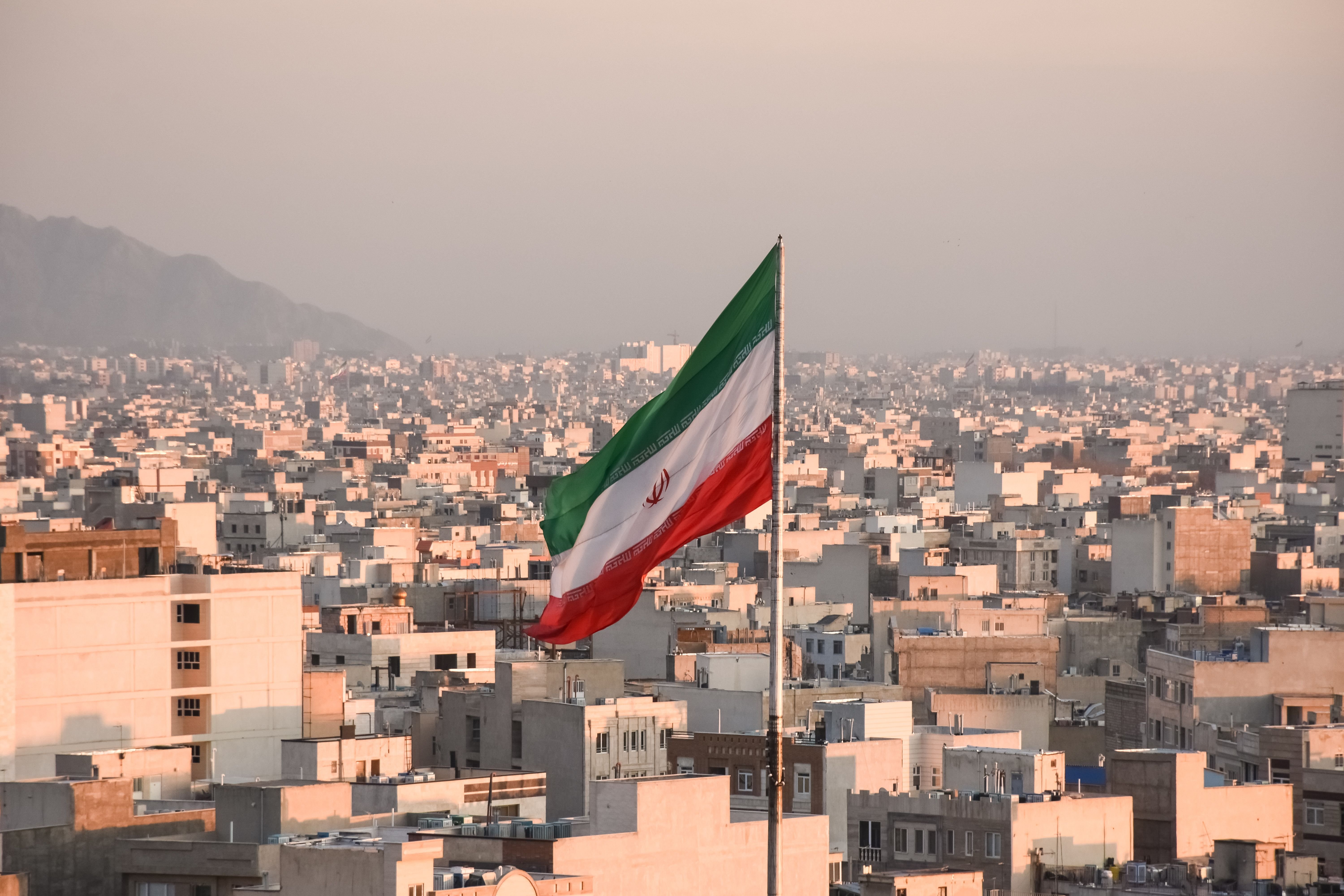
On Tuesday, July 7, 2026, Axios published a single chart that, if its figures hold, redraws the operational tempo of the United States air campaign against Iran. The accompanying reporting, relayed through the Telegram channels Intelslava and AMK Mapping and partially mirrored by Iranian state outlet Tasnim, claims the US has scaled up its post-ceasefire strike rate on Iranian territory by a factor of four to five compared with the opening phase of the operation. The numbers are not independently confirmed; the framing is. And the framing alone is consequential.
What the Axios scoop describes, in plain terms, is a shift from calibrated signalling to sustained punishment. The US is no longer rationing sorties and munitions to send a message. It is running a tempo consistent with degrading Iranian air defence, ballistic-missile production, and the cadre of commanders and technicians who keep those systems alive. If the cited strike counts are within an order of magnitude of the truth, the campaign has crossed a threshold from coercion to attrition, and the question of what Washington thinks it is buying with that tempo has become the central strategic question of the week.
What Axios actually says
The Axios dataset, as relayed by Intelslava and AMK Mapping, tracks daily strike counts inside Iran from the resumption of hostilities after the most recent ceasefire through to early July. The baseline phase of the post-ceasefire campaign, the chart argues, ran at a rate the wire characterises as limited: enough sorties to sustain pressure, not enough to break the Iranian system. The current phase, by contrast, runs at four to five times that baseline. The reporting does not enumerate individual targets, but the description in the relayed thread points to hardened air-defence sites, missile production facilities, and command-and-control nodes around Tehran, Isfahan, and the Gulf coast.
The structural claim is straightforward. The US has accepted a higher munitions burn rate, a higher operational tempo, and a higher political exposure in the region, in exchange for a faster degradation of Iran's ability to threaten the Gulf shipping lanes and Israeli airspace. That is a strategic decision dressed up as a tactical one. Tempo choices in air warfare are policy choices; they reflect what the political leadership believes the war is for.
The Iranian counter-read
Tasnim's mirror of the Axios numbers is, predictably, framed as confirmation of an aggressive American escalation rather than a tactical recalibration. Iranian state media treats the four-to-five multiplier as evidence of a campaign aimed at regime pressure, not at narrow military objectives. That framing should be discounted but not dismissed. Tehran's reading of US intent is informed by the same operational data the Axios team is using; the difference is that Tehran is reading forward, asking what tempo portends for the next phase, while the Axios chart is reading backward, asking what tempo we have just lived through.
Both readings can be true. The US may genuinely be running a tempo designed to degrade Iranian military capacity, and that tempo may simultaneously be designed to impose political cost on the Islamic Republic. Air campaigns in the 2020s have rarely been either purely military or purely coercive. The most honest framing is that the four-to-five multiplier reflects a decision to stop pretending the operation is something narrower than it has become.
What the tempo buys, and what it costs
Run a strike campaign at four to five times its opening tempo and three things happen at once. First, Iranian air defence degrades faster than it can be regenerated, because the system depends on a small number of trained operators and a finite stockpile of interceptor missiles and radar components that are difficult to source under sanctions. Second, ballistic-missile production takes real and visible damage, both to the machine tools used to manufacture solid-fuel motors and to the cadre of technicians who know how to run them. Third, the political cost inside Iran rises, because the population is forced to watch a sustained, televised demonstration that the country's defenders cannot keep the sky quiet.
The cost to the US is real and quantifiable. The munition most associated with the early phase of strikes on hardened targets is the GBU-57 Massive Ordnance Penetrator, a 30,000-pound bunker buster with a finite inventory and a finite production rate. The weapon most associated with the mobile and relocatable targets is smaller and more numerous, but the cumulative burn rate at a four-to-five multiplier is exactly the kind of consumption curve that the Pentagon's own munitions accountability reports have flagged as unsustainable over a multi-month horizon. A tempo that lasts six weeks is one thing. A tempo that lasts six months is a different procurement problem and a different conversation with Congress.
The ceasefire that wasn't a ceasefire
The post-ceasefire frame is itself a kind of editorial artefact. The most recent pause in open hostilities did not include a verified, monitored, mutual return to the pre-war status quo. It included a US decision to slow the rate of strikes, paired with an Iranian decision to slow the rate of proxy and direct attacks on Gulf shipping and on Israeli population centres. Both sides reserved the right to resume. When the US accelerated, it was operating inside a paused-but-not-resolved diplomatic state, not inside a hot war that had been re-declared.
That distinction matters for the legal and political framing. A ceasefire is not a peace treaty. A pause in active kinetic exchange is not a return to the status quo ante. The Trump administration's framing of the post-ceasefire phase as a continuation of an existing operation, rather than as a fresh war, is the legal scaffolding that allows the four-to-five multiplier to be presented as a tactical adjustment rather than a strategic escalation. The domestic political cover for that framing is the existence of a written pause, however thin. If that pause erodes, the framing erodes with it.
What to watch in the next two weeks
Three dates will clarify whether the Axios chart is documenting a sustained policy or a peak around which the campaign will settle. First, any new ceasefire negotiation, formal or back-channel, would test whether the tempo is designed to produce negotiating leverage or to render negotiation unnecessary. Second, the next quarterly munitions accountability report, when it lands, will show whether the burn rate implied by the four-to-five multiplier is being matched by replenishment, or whether the Pentagon is drawing down stockpiles faster than industry can refill them. Third, the next round of IAEA reporting on Iranian nuclear and missile facilities will indicate whether the operational tempo is producing visible degradation on the ground, or whether the strikes are buying political theatre at the cost of slower, less photogenic, technical attrition.
The honest version of the story is that the US has decided, in the post-ceasefire phase, that the cost of not finishing the degradation of Iranian air defence and missile infrastructure is higher than the cost of finishing it. That is a defensible strategic logic. It is also a logic with a clear terminal point, and a clear set of preconditions for failure. Four to five times the opening tempo, sustained, is the kind of campaign that ends in one of two ways: with a negotiating partner brought to the table by cumulative damage, or with a US decision that the campaign's objectives have been met short of full degradation. The middle option, an open-ended high-tempo campaign, is the one nobody in Washington wants to fund and nobody in Tehran wants to survive.
The structural read
The deeper story is about what a tempo of this magnitude does to a regional security architecture that has spent two decades rationing the use of force. A US air campaign running at four to five times its opening rate inside Iran forces every capital in the Gulf, every capital in the Levant, and every ministry in Europe to update its assumptions about American willingness to spend munitions and political capital in the Middle East. That update is the real product of the escalation, regardless of which Iranian targets are hit in any given 24-hour window. The strikes are the instrument. The instrument's purpose is to reset the regional expectation of what the US will and will not sustain.
That is why the four-to-five multiplier matters more than the target list. Target lists are a function of intelligence and weather. Multipliers are a function of political will. The Axios chart is, in effect, a measure of how much political will the Trump administration is willing to spend in this phase of the campaign. The number it produced, four to five, is large enough to be a signal to every external observer, and large enough to be a constraint on every future phase of the operation.
Sources
- https://t.me/intelslava/
- https://t.me/AMK_Mapping/
- https://t.me/tasnimplus/
Desk note
Monexus has relied on the Axios scoop, relayed through Intelslava, AMK Mapping and Tasnim, as the primary factual basis for this article, and has deliberately kept the casualty and target-count discussion narrower than the wire characterisation. The structural read is editorial inference, not wire reporting.