US launches strikes on Iran after Hormuz tanker attacks — escalation arrives faster than the diplomacy did
US Central Command says it has begun a 'series of powerful strikes' against Iran after Iranian attacks on commercial vessels in the Strait of Hormuz, ending any illusion that diplomacy and force were being run on parallel tracks.
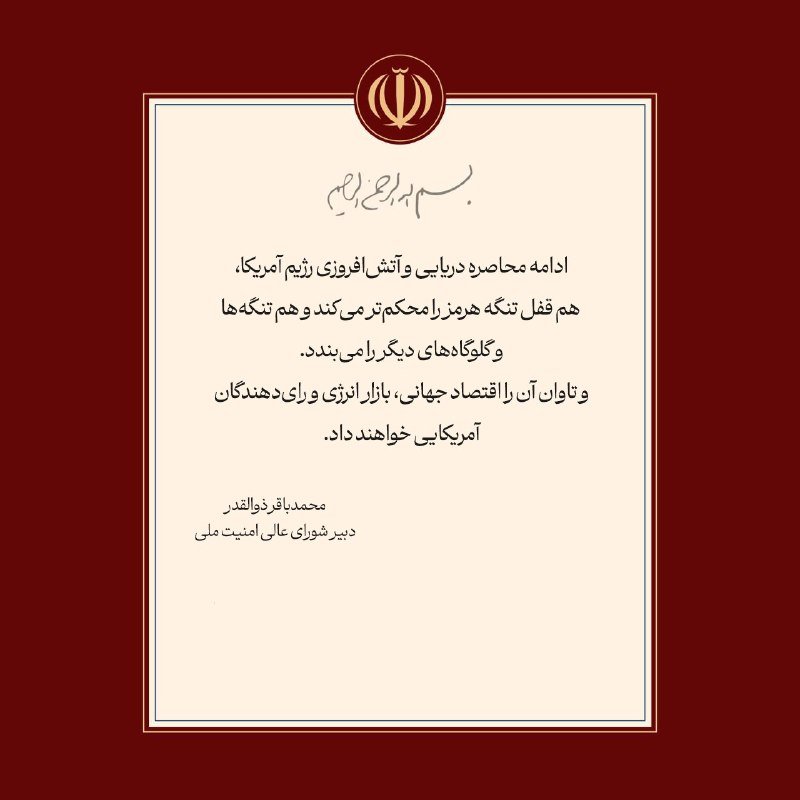
At 21:38 UTC on 7 July 2026, US Central Command announced that American forces had begun "a series of powerful strikes" against Iran, framed by the command as punishment for Iranian attacks on commercial vessels transiting the Strait of Hormuz. Within minutes, residents of Sirik, Qeshm and Bandar Abbas in southern Iran were reporting explosions to local and open-source channels, and the geometry of a week of tit-for-tat in the world's most consequential oil chokepoint had shifted.
That the strike announcement came from CENTCOM — and not from the State Department, the White House, or the Treasury — is itself the story. Maritime security in the Gulf is, on paper, a diplomatic file led by the Office of Naval Intelligence and the Fifth Fleet's Bahrain-based headquarters, with a diplomatic backstop in Muscat, Doha and, until recently, Vienna. The decision to lead the public explanation of the strikes from a combatant command signals that the military track has reasserted itself over the negotiating track faster than most Western capitals were prepared for. The news is not just that American weapons hit Iranian targets at 21:38 UTC; it is that the US government has chosen to narrate the moment in a uniform, not a suit.
The trigger — and what is actually known about it
CENTCOM's public statement, carried verbatim across wire and Telegram channels at 21:38 UTC, says the strikes are intended to "impose heavy costs" on Iran for attacks on commercial vessels in international waters. Reporting from the BBC at 21:56 UTC and from Deutsche Welle at 21:49 UTC describes the strikes as a direct response to "fresh Iranian attacks on vessels" in the Strait of Hormuz; France 24's 21:46 UTC bulletin frames the action as retaliation for "ships attacked in the Strait of Hormuz." A Telegram relay from gazaalanpa at 21:48 UTC specifies that three commercial vessels were the targets of the Iranian action cited as the proximate cause.
What the available reporting does not yet establish is the precise Iranian order of battle behind the tanker attacks — whether they were IRGC Navy fast-boat actions, naval-mining or anti-ship missile fire, or proxies acting under Iranian direction in the manner of earlier Houthi operations in the Bab el-Mandeb. Iranian state media reported explosions on Iranian soil around Qeshm Island and Sirik within minutes of the CENTCOM announcement, according to insiderpaper's 21:39 UTC relay of Iranian state broadcasting; osintlive at 21:38 UTC linked the southern Iranian explosions to the CENTCOM strike announcement. The structural inference — that those Iranian-side detonations are the impact sites of the US response — is consistent across the open-source channels but not yet confirmed by an Iranian or American authority on the record.
The counter-frame from Tehran — and why it matters for the next forty-eight hours
Iranian state-aligned channels, including those whose accounts were relayed at 21:39 UTC by insiderpaper, framed the southern Iranian blasts as a violation of Iranian sovereignty before any American confirmation arrived. That sequence matters: the first publicly available Iranian-language account was an assertion of victimhood, not an admission of authorship of the tanker attacks that triggered the US response. The communications logic is the same one Iran has used after previous incidents — claim the moral ground first, contest the chain of causation later.
Two readings of the exchange are plausible, and both deserve airtime. The first, dominant in Western wire coverage, is that Iran struck commercial shipping in a calibrated escalation designed to test American red lines, and that CENTCOM answered in kind with a calibrated counter-strike intended to restore deterrence without triggering an all-out war. The second, more sympathetic to Tehran's framing, is that the tanker incidents sit inside a longer pattern of US and Israeli operations against Iranian assets and proxies — and that Iranian action in Hormuz, whatever its tactical form, is read in Tehran as defensive pressure against a closing noose. The structural fact is that both readings can be true at once, which is precisely what makes escalation management so difficult in this corridor.
What the geography is telling us
Qeshm Island and Sirik sit on the Iranian side of the Strait of Hormuz, across from the Omani exclave of Musandam and within easy reach of the shipping lanes that carry roughly a fifth of globally traded oil. Bandar Abbas, the largest Iranian port in the area, hosts a major IRGC Navy and regular-navy presence. Strikes on or near this triad are not symbolic. They land on the infrastructure that an Iranian closure of the strait would itself depend on — coastal radar, anti-ship missile batteries, fast-boat pens, and the command nodes that coordinate IRGC operations against commercial shipping.
This is also the geography of the May 2024 IRGC seizure of the M/V Niovi and the 2023 episodes in which Iran boarded and released commercial tankers, both of which preceded periods of quiet diplomacy. The pattern in this corridor is that tactical escalation in the shipping lanes is followed, after a lag, by a step-change in the salience of the Iranian coastal infrastructure itself as a target. CENTCOM appears to have compressed that lag.
The structural frame — dollar politics, energy corridors and the cost of insurance
The news is being narrated as a kinetic event. The more durable story is the one written in the Lloyd's List and LSEG price tickers that insurance markets read in real time: every credible report of strikes in or near Hormuz adds basis points to war-risk premiums for tankers transiting the Gulf, and those premiums are passed through to diesel, jet fuel and petrochemical inputs within weeks. Even before the CENTCOM announcement, the cost of insuring a seven-day transit of the strait had drifted upward across recent reporting cycles; an explicit US strike campaign against Iranian coastal targets will push that figure further, and the pass-through will land hardest in the import-dependent economies of South and Southeast Asia.
The deeper structural point is that the United States is choosing to defend the freedom of navigation of a corridor whose throughput disproportionately finances the petrostates on the other side of the Gulf — including, by historical accident of geography, the very Iranian state whose assets it is now striking. That contradiction has been a feature of US Gulf policy for decades, and every administration has managed it differently. The current management style — kinetic, declarative, announced from a combatant command — reduces diplomatic flexibility. It also tells the world's shipping insurers, and the oil traders who watch them, that the next several days are not a time to underwrite long-dated Gulf transit.
Stakes — what happens next, and who carries the cost
If the strike package is one-shot and proportionate, the likeliest follow-on is an Iranian reciprocal in the shipping lanes within forty-eight to seventy-two hours, designed to demonstrate that the cost imposed on Iran has been matched. If the package is sustained, the calculus changes: Iranian retaliation is likelier to escalate vertically — through proxies in Iraq, Syria, Lebanon or Yemen, or through hybrid actions against US bases in the Gulf — rather than horizontally in the strait itself, because the strait is now the active scene of US fire. Either path narrows the diplomatic off-ramp.
The clearest losers in the immediate term are the importers who cannot substitute Gulf barrels at short notice — India, China, Japan, South Korea, the Philippines — and the smaller Gulf shipowners whose vessels cannot afford the new war-risk premium. The clearest winners, in the narrowest sense, are the defence primes whose order books respond to exactly this kind of announcement and the political constituencies in Washington for whom "heavy costs imposed" is the desired headline. The hardest case to call is Iran itself, whose coastal infrastructure has been degraded but whose ability to project power through proxies remains, for now, untouched.
What remains uncertain
The sources available at the time of writing do not specify the precise targets struck, the ordnance used, the number of Iranian casualties, or the operational status of Qeshm and Sirik installations. Iranian state media is reporting explosions but has not, in the relays available, admitted to or detailed prior Iranian action against commercial shipping in the strait — a gap that the next several hours of Iranian-language reporting will either close or widen. CENTCOM's public language ("series of powerful strikes") implies a sustained package rather than a single action, but the command has not specified duration, target set or end-state criteria. Until those are on the record, the world is reading kinetic events off Telegram channels and inferring causation from timing.
Desk note: Monexus is leading this story on CENTCOM's own framing — kinetic response to a maritime trigger — but is treating Iranian state-media claims and Iranian-state-channel relays with the same evidentiary care applied to Western wires. The structural argument in the piece centres on insurance markets and corridor politics, not on the diplomatic blame-game; that is a deliberate editorial choice consistent with how this desk handles escalation arcs.
Wire provenance
This editorial synthesis draws on the following public wire/social posts:
- https://x.com/sprinterpress/status/194266000000000000
- https://t.me/gazaalanpa/
- https://t.me/insiderpaper/
- https://t.me/osintlive/
- https://t.me/rnintel/
- https://t.me/DDGeopolitics/