Unconfirmed strikes on Abu Musa and Tabriz: what the fog of 8 July tells us
Iranian state media logged ten explosions on the disputed Gulf island of Abu Musa by mid-evening UTC on 8 July 2026, with parallel claims of US strikes on Tabriz still uncorroborated. The fog is itself the story.
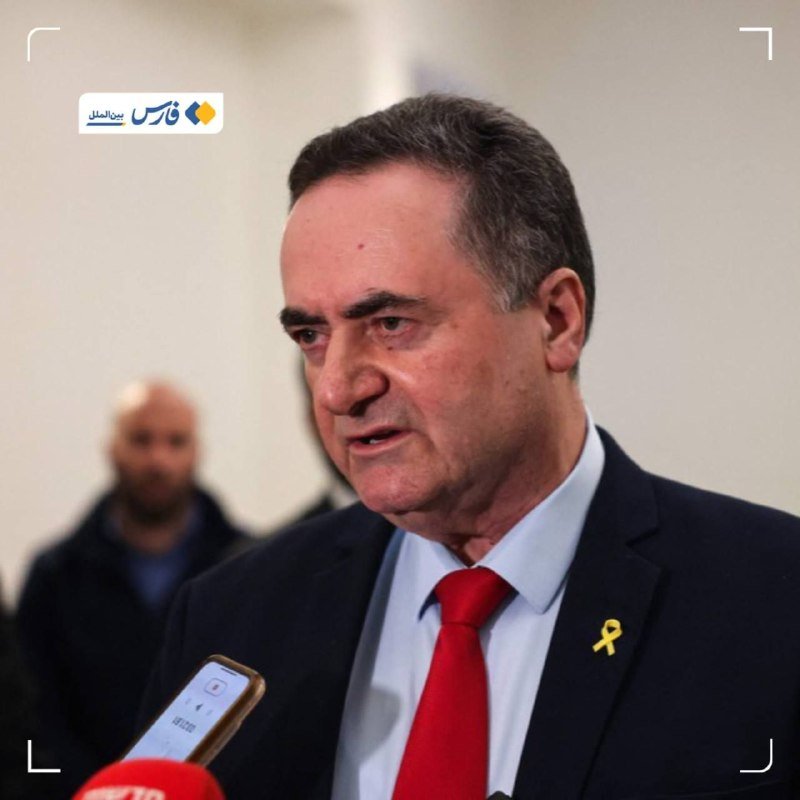
At 21:34 UTC on 8 July 2026, Iranian state broadcaster IRIB logged two further explosions on Abu Musa, bringing the running total to ten blasts reported on the island earlier in the evening. Forty minutes earlier, Telegram channels tracking the Persian Gulf had already circulated uncorroborated reports of strikes on Tabriz in northwestern Iran, with one outlet suggesting that, if confirmed, the operation pointed to Israeli involvement alongside any US role. As of the time of writing, none of the claims has been confirmed by an independent wire, a Western defence ministry, or Tehran's official channels beyond IRIB's own broadcast log.
This much is the story: a contested island at the mouth of the Strait of Hormuz has been hit by a sequence of explosions in a single evening, and the world's most-watched flashpoint is again without a confirmed narrative. The rest — who struck, with what, and at whose authorisation — remains a fog that the major outlets are, for the moment, declining to disperse.
What the reports actually say
IRIB's broadcast, aggregated by the open-source Telegram channel @wfwitness at 21:34 UTC, identified Abu Musa as the location of ten explosions during the evening of 8 July. The channel carries the broadcaster's reporting verbatim, including IRIB's own framing of the blasts, and does not attribute them to any actor. A separate Telegram channel, @intelslava, logged at 21:33 UTC a parallel claim that US strikes had targeted Tabriz, in East Azerbaijan province, and added the speculative rider that Israeli participation was likely if the strikes were confirmed. Neither claim has been picked up by Reuters, the BBC, Al Jazeera English, or the major Western wires as of publication.
The asymmetry of sourcing is itself revealing. Iranian state media is supplying the on-the-ground descriptions of explosions on a strategically vital island that Iran has administered since 1971. The claim of US authorship is travelling through a Telegram channel with a track record of real-time Gulf monitoring but no editorial accountability. Western and Israeli outlets, with the institutional capacity to confirm a strike in near-real time, are saying nothing. The information environment is therefore inverse to the underlying power balance: the side with the most to hide is producing the most descriptive content, while the side with the means to confirm is producing none.
What is known about Abu Musa
Abu Musa is one of three islands — Abu Musa, Greater Tunb, and Lesser Tunb — at the narrow entrance to the Persian Gulf whose sovereignty has been disputed between Iran and the UAE since British withdrawal in 1971. Iran has maintained effective administrative control since that year and stationgarrison forces on the island; the UAE continues to claim it. Control of Abu Musa is materially significant because the island sits within visual range of the shipping lanes through which roughly a fifth of the world's traded oil transits. Any military action there is, by definition, an action inside a chokepoint.
Ten explosions on a single evening is not, on its own, evidence of a particular operation. The island hosts Iranian military infrastructure; the sounds could plausibly reflect an Iranian drill, an accident at a fuel depot, or a kinetic strike by an outside actor. The reporting does not specify which. The framing supplied by Iranian state media — a sequence of blasts, no claimed perpetrator — is consistent with an effort to put the event on the international record without prejudging attribution.
The parallel claim on Tabriz
The Tabriz reports are weaker still. Tabriz is the capital of East Azerbaijan province, home to roughly two million people, and a major Iranian military-industrial and air defence hub. A strike there would be a qualitatively different event from activity on a tiny Gulf island: it would constitute an attack on a major Iranian city and almost certainly trigger Iranian retaliation under any reading of Tehran's declared deterrence doctrine. That the claim is being circulated alongside, rather than separately from, the Abu Musa reports suggests either a coordinated operation across two very different geographies, or — more likely given the absence of corroboration — an information environment in which competing narratives are being seeded before the facts have settled.
The @intelslava channel's own framing — "if confirmed, it mostly says Israelis are involved too" — is the kind of attribution-with-an-asterisk that proliferates in the first ninety minutes of any unattributed strike. It tells the audience what the channel thinks is plausible, not what it knows. A reader is entitled to treat it as a hypothesis attached to a Telegram post, not as a sourced claim.
What this moment is
There is a pattern here worth naming plainly. When unconfirmed strikes hit a country that the Western wire ecosystem covers only fitfully, the early information hours are populated almost entirely by the struck party's state media and by partisan channels on encrypted messaging apps. The major outlets arrive later, with confirmation, by which time the frame has often been set. This is not a conspiracy; it is a structural feature of how 24-hour reporting works in jurisdictions where reporters are not embedded. Iranian IRIB is, in this sense, the primary witness of record for what happened to Abu Musa on the evening of 8 July 2026, and the reader is being asked to weigh that witness against the silence of every other outlet with a stake in the answer.
The stakes, if the strikes are confirmed, are not abstract. A US or Israeli strike on Iranian soil inside a week of ongoing nuclear-file diplomacy would unwind months of back-channel work. A strike on Abu Musa specifically would put the world's most important oil transit corridor into the operational environment of an active shooting war. And a non-confirmation — if it turns out that the blasts were an Iranian drill, an accident, or a fabrication — would still have moved markets and shaped public framing for the forty-eight hours during which the fog held.
What remains contested
The sources do not agree on what happened, and that is the central fact a reader should hold. IRIB reports ten explosions on Abu Musa and attributes them to no one. @intelslava reports US strikes on Tabriz and speculates about Israeli participation. No Western wire, no Iranian foreign ministry statement, no Israeli or US military spokesperson, and no independent verification outfit has confirmed either cluster. The most defensible reading at 21:34 UTC is the unsatisfying one: there were explosions on Abu Musa, and there are claims of strikes on Tabriz, and the world is, for the moment, being asked to take both on trust from the parties most invested in how the story is told.
The honest posture is to wait, to note what each source claims and what each omits, and to refuse the temptation to choose a narrative before the wires have caught up. That posture is unfashionable in a news cycle that rewards the fastest plausible-sounding claim. It is, on the evidence available at 21:34 UTC on 8 July 2026, the only one a serious reader can defend.
This desk note accompanies a developing story. Monexus has declined to attribute the Abu Musa explosions or the Tabriz reports on the basis of single-source claims, and has not named a perpetrator. The piece will be updated as Western wire confirmation or refutation becomes available.
Wire provenance
This editorial synthesis draws on the following public wire/social posts:
- https://t.me/wfwitness
- https://t.me/intelslava
- https://en.wikipedia.org/wiki/Abu_Musa_Island