Ankara's Steel Dome and the New Geometry of NATO's Southern Flank
Erdogan used the Ankara summit to put Türkiye's $24bn Steel Dome, its 3.5% defence-spending pledge, and its drone-combat record on the alliance's table — and to remind NATO that the southern flank now has a vendor, not just a customer.
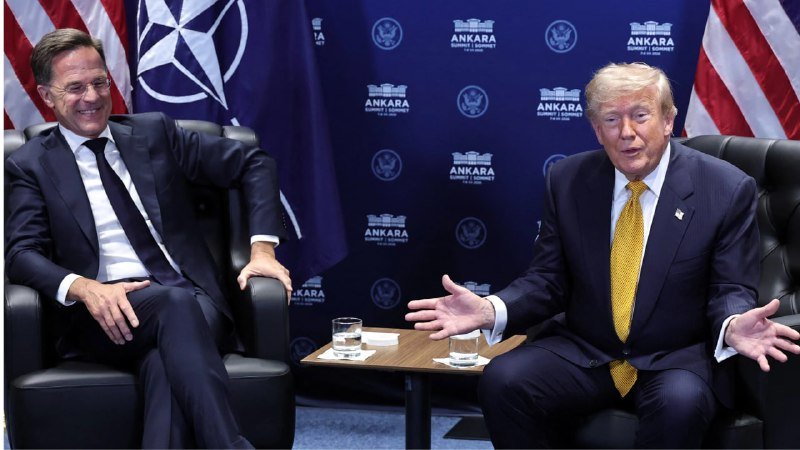
At 09:27 UTC on 8 July 2026, inside the Ankara summit hall, Turkish President Recep Tayyip Erdogan did something NATO summit hosts rarely manage. He used the platform not to ask for more of the alliance, but to offer it something — an accredited Turkish counter-unmanned aerial systems centre of excellence, built on a combat record the rest of NATO is still studying rather than matching.
The framing was deliberate. Speaking at a summit that the host country had spent months recasting around its own industrial strengths, Erdogan told assembled leaders that Türkiye had "successfully used UAVs and armed drones in real battlefields" — a reference to the Bayraktar TB2 and Akinci programmes, which have been exported to more than thirty countries and operated in Ukraine, Libya, the South Caucasus and the Sahel. The pitch was that NATO's southern flank now has a vendor, not just a customer, and that the alliance's air and missile defence gap — which Erdogan described as "the most felt shortfall in our alliance" — can be partially closed by Turkish steel rather than waiting indefinitely on European or American alternatives.
The $24bn line item
The single most concrete number Erdogan put on the table on 8 July was an additional $24 billion allocated to the Steel Dome project for air and missile defence capabilities. Steel Dome is the brand name Ankara has given to a layered, domestically produced air and missile defence architecture intended to close the country's vulnerabilities against ballistic, cruise and drone threats — the same threat spectrum that has defined the war in Ukraine and the daily tempo of the Red Sea since 2023.
That $24 billion figure is incremental on top of a baseline that is itself rising fast. Erdogan used the same platform to announce that Türkiye had "taken the necessary steps to increase our defence spending to 3.5% of GDP before 2030," and noted that, in the security-and-resilience-related subset of the budget, that figure had already been reached. The 3.5% number matters less for its arithmetic than for its signalling: it puts Ankara above the alliance's own current 2% floor, into the bracket that only Poland and the Baltic states have previously occupied with any credibility, and it does so from a member state that runs its own industrial policy.
The drone pitch, in plain English
Western commentary on Turkish drones has tended to oscillate between two registers — admiration for the hardware's price-to-performance ratio, and unease about an alliance member running an autonomous export channel that has occasionally complicated the foreign-policy coherence of NATO capitals. Erdogan's summit remarks sat firmly in the first register, and they were aimed at converting that admiration into institutional weight.
A counter-unmanned systems centre of excellence, accredited by NATO, would in practice mean Turkish doctrine, training curricula and intercept technologies becoming default reference material for the rest of the alliance on a threat category — small, cheap, mass-produced drones — that has rewritten the rules of air defence in the past three years. It would also mean Ankara gaining agenda-setting power over how the alliance spends the next round of counter-UAS procurement, a category currently dominated by American, Israeli and a handful of European suppliers.
What the host actually wanted
Summit hosts usually want three things: a flattering photograph, a budget commitment, and a decision that locks in their domestic political narrative. Erdogan got all three on 8 July. The family photo at 09:12 UTC placed him at the centre of the frame, flanked by US President Donald Trump and French President Emmanuel Macron in the welcomes at 09:06 and 09:08 UTC. The $24 billion Steel Dome line item is a domestic win ahead of Türkiye's next electoral cycle. And the accredited drone centre — if NATO's machinery ratifies it — locks Ankara into the alliance's doctrinal conversation on a permanent basis.
There is a structural read here that goes beyond ceremony. NATO has spent the better part of a decade treating its southern flank as a problem to be managed — migration, instability in the Sahel, the eastern Mediterranean, the Black Sea after 2022. Ankara's pitch inverts that framing: the southern flank, it argues, has solutions to sell. The summit's optics, and Erdogan's choice of talking points, suggest that this is now Turkish official policy, not freelance commentary.
Stakes and the remaining uncertainty
If Ankara's offer is taken up, the winners are clear: Turkish defence primes — Baykar, Aselsan, Roketsan, TUSAS — gain a NATO seal of approval that unlocks European procurement budgets they have until now reached only bilaterally. NATO gains a doctrine factory for the threat it most fears. The losers are the existing counter-UAS incumbents, who will face a new, state-subsidised competitor inside their own alliance's tendering.
What remains genuinely uncertain is whether the rest of the alliance will accept the accreditation on Ankara's terms. NATO consensus procedure allows any ally to slow-walk a centre of excellence designation, and several member states retain reservations about the political risk of treating a Turkish national-security brand as alliance doctrine. The $24 billion is Ankara's own money; the NATO stamp is a different currency entirely.
Desk note: the wire coverage of this summit has run heavily on the family photo and on Trump's bilateral with Erdogan. This publication is more interested in the industrial-policy pitch underneath the choreography — the moment NATO's southern flank stops being a recipient of alliance attention and starts offering its own.
Wire provenance
This editorial synthesis draws on the following public wire/social posts:
- https://t.me/ClashReport
- https://t.me/ClashReport
- https://t.me/ClashReport
- https://t.me/ClashReport
- https://t.me/ClashReport
- https://t.me/ClashReport
- https://t.me/ClashReport