Argentina's refereeing luck, Egypt's loss, and the question FIFA cannot keep ducking
A 2-0 Egyptian lead evaporated against the defending champions. The comeback is real. So are the questions about how it happened — and FIFA's instinct to wish them away.
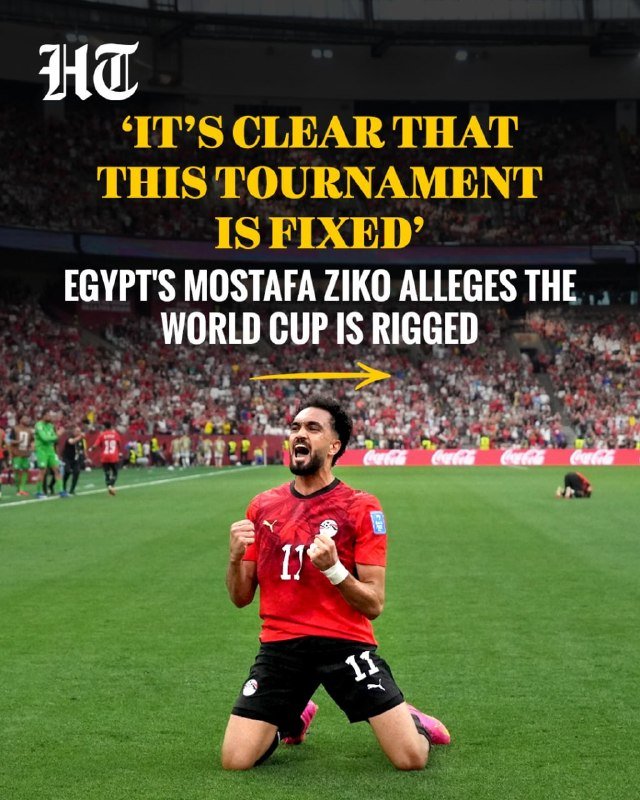
Argentina trailed Egypt by two goals in the first half-hour of their 2026 FIFA World Cup round-of-16 tie, then scored three unanswered goals to advance to the quarterfinals. The match ended 3-2. The result is now layered with a parallel controversy: a Video Assistant Referee intervention on a goal that would have given Egypt a 3-1 lead has reopened the question of how reliably the sport's replay system actually serves the game when the defending champions are involved.
Both storylines — the comeback, and the use of VAR to overturn what looked like a third Egyptian goal — are facts on 8 July 2026. The harder question is whether FIFA, which has spent five years selling referees on the broadcast and treating video review as a neutralising technology, is prepared to look honestly at an officiating pattern that is now visible on camera and on social feeds in real time.
What actually happened in Buenos Aires view
Egypt struck first through a counter that exposed Argentina's high line, then doubled the lead from a set-piece header. Argentina pulled one back before the break, equalised midway through the second half, and scored the winner in the 78th minute, per Al Jazeera English's match report on 8 July. The comeback is genuine — the scoreline is not in dispute.
What is in dispute is the goal that would have made it 3-1 to Egypt shortly after the hour mark. According to Al Jazeera English's coverage of the officiating controversy on the same day, the on-field referee had awarded the goal, the VAR booth intervened, and the decision was overturned after a review of a marginal offside phase in the build-up. Replays did not produce a smoking-gun frame. The substitution of interpretation is what produced the controversy.
That distinction matters. Referees miss calls; that is the sport's oldest problem. What the VAR system was sold as — to federations, to broadcasters, to fans who were told to trust the process — was an instrument that removed the human error rather than relocated it. When a marginal call goes against the trailing team in a knockout round involving the defending champions, the suspicion is not that the technology failed but that its application has been allowed to develop a political layer.
The contested read
The charitable interpretation, and the one VAR's proponents will lean on, is straightforward: the offside phase was correctly adjudicated, the line-drawing technology does what it was designed to do, and Egypt's complaint is the natural grievance of a side that is going home. Refereeing mistakes are inevitable; the absence of a knockout-stage independent review of refereeing decisions is a structural gap FIFA could close. There is no conspiracy; there is only the imperfect application of rules.
The uncharitable interpretation, which is gaining traction across African and Middle Eastern coverage of the match, holds that VAR is now being deployed more aggressively in matches involving European and South American heavyweights and more cautiously elsewhere — and that the threshold for "clear and obvious" error has quietly drifted in one direction across the tournament.
Both readings can be partly true at once. The technology was never going to remove discretion. The question is who benefits from the discretion that remains.
The political economy of refereeing
FIFA's incentives cut against transparency here. The 2026 tournament is the first World Cup staged across three countries — the United States, Canada and Mexico — and the governing body's commercial partners, including the rights holders paying for the broadcast, have a direct interest in the marquee teams staying in the tournament as long as possible. None of that makes the call wrong. It does make a review by an independent body less likely, and it makes the optics of a review more politically charged.
The deeper pattern is structural: international football's officiating has moved in twenty years from an amateur-scale system staffed by retired referees to a professionalised apparatus staffed by full-time match officials, with FIFA appointing referees to matches on the basis of performance metrics and political balancing. That centralisation has produced visible gains in consistency. It has also concentrated discretion in a small group, with limited external oversight, at precisely the moment when broadcast technology has made every call subject to instant, public, frame-by-frame review.
Stakes for the rest of the tournament
For Egypt, the loss is sporting but the grievance is reputational — a generation's chance to break into the World Cup's late rounds, gone in a contest that will be remembered principally for the call against them. For Argentina, the win keeps the defence alive but confirms a pattern that opponents will now sit down and study carefully.
For FIFA, the test is whether the governing body treats this as a one-off controversy to be weathered, or whether it opens an independent review of how the marginal offside threshold has been applied across the tournament. The first instinct, based on the institution's history, will be the former. The pressure for the second is now building from federation press conferences in Cairo, in Buenos Aires' opponent camp, and on broadcast panels across three continents.
The nuance the wire reports have not yet resolved: the offside phase in question involved a deflection off an Argentina defender, and the application of the "deliberate play" carve-out to deflections is one of the rule's longest-running interpretive ambiguities. Different federations' referee instructors teach it differently. Whether the VAR booth in this match applied a uniform interpretation, or a tournament-specific one, is not visible from the footage released so far and is the single question FIFA has an interest in not answering quickly.
This publication treats the result as final and the appeal process as exhausted on 8 July 2026; the structural question — whether video review at this World Cup is functioning as a neutralising technology or as a discretionary one — is the one worth keeping open as the quarterfinals begin.
Wire provenance
This editorial synthesis draws on the following public wire/social posts:
- https://t.me/aljazeeraglobal
- https://t.me/aljazeeraglobal