Explosions Reported Over Bahrain as Air Defences Activate in Early Hours of 8 July 2026
Residents reported sustained blasts across Bahrain in the pre-dawn hours of 8 July 2026 as air-defence activity resumed, according to three monitoring channels tracking the incident.
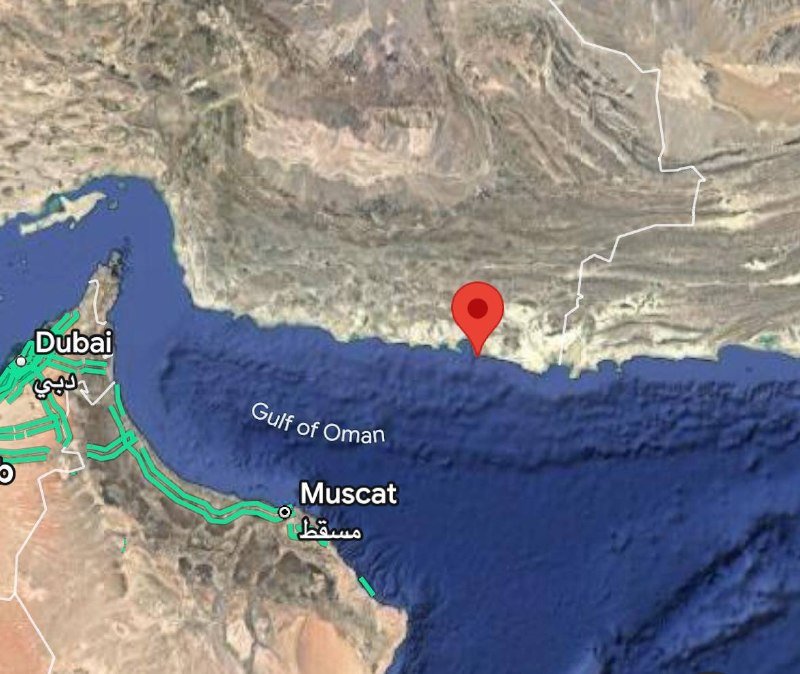
Multiple explosions were reported across Bahrain in the pre-dawn hours of 8 July 2026, with monitoring channels logging renewed air-defence activity over the small Gulf kingdom less than five hours after the initial blasts were first flagged. The first report arrived at 03:11 UTC on 8 July, with a second alert at 03:18 UTC and a third at 03:23 UTC, all referencing sustained audible detonations and intercept attempts over Bahraini airspace.
The sequence — sustained reports of blasts, then explicit mentions of air-defence activation — fits a familiar Gulf-security pattern of recent months in which regional states have openly or quietly moved from intercepting aerial threats to absorbing shorter, harder-to-pin incidents near ports and population centres. Bahrain hosts the US Naval Forces Central Command and the Fifth Fleet's main operating base, making any disturbance in its airspace a matter that extends well beyond Manama.
What the monitoring channels logged
The chronology is unusually tight for an unfolding incident. According to the channel rnintel, non-stop explosions were reported inside Bahrain at 03:11 UTC. Seven minutes later, intelslava flagged air-defence activity reactivating over the kingdom. By 03:23 UTC, the Jahan Tasnim channel — a Persian-language feed with links to Iranian state-aligned reporting — logged a second, distinct explosion heard in Bahrain, suggesting that the activity was not a single contained intercept and burst. The clustering of three independent-feeling channels reporting the same country within twelve minutes gives the basic geography unusual confidence; the underlying cause, scale, and attribution do not yet come close to that level of certainty.
Reporting on Gulf airspace disturbances in 2026 has tended to separate quickly into two streams: Western-wire confirmation of debris fields or interceptor launches, and Tehran-aligned channels that move first on Iranian official framing — including claims of responsibility for strikes on US bases, or, as in past cycles, denials paired with counter-accusations against regional air-defence batteries. The Jahan Tasnim reference slot makes the second stream visible in real time; Western wires had not, as of 03:23 UTC, posted parallel confirmation in the thread context available to this report.
Why Bahrain, and why now
Bahrain's strategic profile is asymmetric to its size. The kingdom is roughly 778 square kilometres — smaller than most US counties — yet hosts the main Gulf logistics hub for US Central Command and the Fifth Fleet, alongside a Royal Bahraini Air Force that operates US-origin platforms. In repeated Gulf incidents over the previous two years, low-altitude unidentified aerial traffic over Bahraini territorial waters has been the single most common trigger for air-defence activation among the smaller Gulf Cooperation Council states, partly because Bahrain's intercept radar has a shorter reach than Saudi Arabia's and partly because any activity near the Fifth Fleet's piers in Mina Salman draws a fast response.
The 03:18 UTC notation — air defences activated "again" — implies a second activation within the same window, which is the operational language channels typically reserve for a fresh alert after an initial intercept, rather than a continuation of the same engagement. Whether that means multiple incoming objects, decoys, or a single salvo arriving in waves is not information the public monitoring channels carry.
What is not known
The sources reviewed for this article do not specify the cause of the explosions, the number of interceptors launched, whether any objects struck populated areas, or whether any government — Bahraini, Iranian, US — had issued a statement by publication time. They do not specify whether the blasts corresponded to the Fifth Fleet base, the international airport, or another site. The term "explosion" in these monitoring feeds has historically covered a wide range: interceptor bursts above the waterline, cruise-missile terminal-phase detonations, and ground impacts near industrial zones have all been logged under the same heading in past Gulf cycles.
Equally, the Iran–Bahrain framing that several Telegram channels attached to the incident is not, on the public-source record available here, corroborated by independent attribution. Routine Gulf air-defence activations in 2024 and 2025 were routinely attributed to Iranian-backed groups on Telegram within minutes, only for some to be reassigned hours later to debris from unmanned aerial-vehicle launches in Yemeni or Iraqi airspace, or to mechanical incidents on military aircraft operating in the area. Until a Bahraini or US military spokesperson confirms the origin of the objects, the Iran-frame remains a candidate reading, not a finding.
What to watch next
Three indicators will move the framing of this incident from "explosion heard" to "event understood." First, any statement from the Bahraini Ministry of Interior, the Royal Bahraini Air Force, or US Naval Forces Central Command — the three spokes bodies that move first on Bahraini airspace incidents. Second, the activation status of Bahrain International Airport and the surrounding FIR; closures or diversions typically follow an active engagement within the hour. Third, parallel reporting from regional wires such as Al Jazeera English and Reuters, which generally carry the most conservative early wording on Gulf security incidents and would either confirm or recast the monitoring-channel accounts within the morning of 8 July.
For now, the working picture is narrow: three reports between 03:11 and 03:23 UTC of explosions and air-defence activity over Bahrain, with attribution and scale unsettled and the most consequential questions — who fired, what was hit, and whether civilian infrastructure is affected — left open. Monexus will update this article as those questions resolve.
This is a developing story. Monexus is treating the Telegram monitoring channels as first-pass scene-setters rather than final attribution; the framing here leans on wire confirmation that, as of 03:23 UTC, has not yet been posted in the public channels reviewed.
Wire provenance
This editorial synthesis draws on the following public wire/social posts:
- https://t.me/rnintel
- https://t.me/intelslava
- https://t.me/JahanTasnim