Bandar Abbas and Chabahar under bombardment: what we know about the strikes on Iran's port corridor
Two of Iran's principal Gulf of Oman ports were rocked by explosions within minutes of each other on 8 July 2026. The operating picture is still unverified — and so is the strategic one.
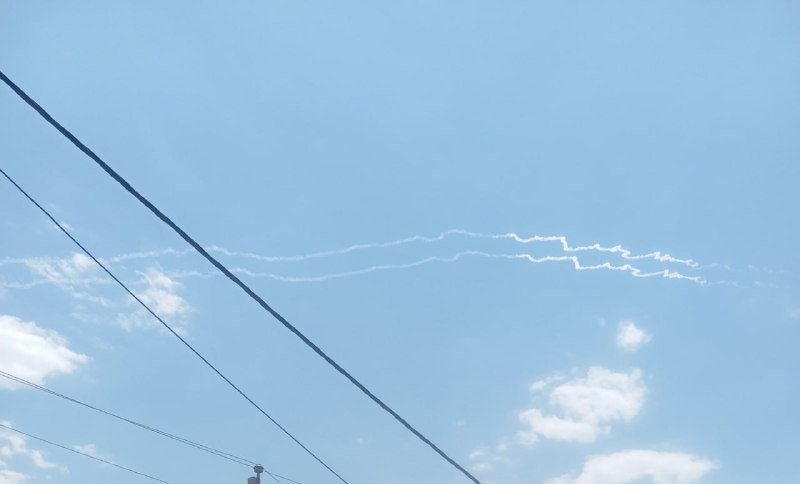
Just after 20:30 UTC on 8 July 2026, two of Iran's most strategically loaded pieces of coastline went dark. The southern port city of Bandar Abbas, home to the Shahid Rajaee complex that handles roughly half of Iran's container traffic, and Chabahar, the Indian-backed deep-water terminal on the Gulf of Oman, both lit up with successive blasts, power cuts, and (according to early chatter) at least one visible fire. By 20:49 UTC, the open-source channel GeoP Watch was relaying renewed explosions in Bandar Abbas; by 20:47 UTC it had logged power outages across both cities, while the imagery channel osintlive pushed its own "more explosions" alert at 20:35 UTC.
The working thesis inside two hours of the strikes is as ugly as it is unfinished. Two Iranian port cities were hit in apparent coordination — and the world's chokepoint energy map, with the Strait of Hormuz sitting twenty nautical miles off the same shoreline, just got a great deal harder to underwrite.
What the wires actually say
The early reporting is thin and almost entirely channel-sourced. GeoP Watch, a Telegram account that aggregates open-source intelligence from the Iran-Iraq-Syria theatre, flagged "renewed explosions in Bandar Abbas" at 20:49 UTC, roughly four minutes after logging power outages in Chabahar. Six minutes later it flagged power outages in Bandar Abbas as well. By 20:43 UTC it had walked back at least one visual claim, noting that the "circulating image of a fire in Chabahar's power plant is old and irrelevant" — a small but necessary correction that signals the channel is reading its own feed critically, not just amplifying. The separate channel osintlive corroborated the broader pattern at 20:35 UTC, reporting "more explosions in Bandar Abbas and the port city of Chabahar."
That is the universe of confirmed claims. No Western wire has been cited in the open thread by the time of writing; no Iranian state outlet — IRNA, PressTV, Mehr, Tasnim — has been quoted; no US Central Command or Pentagon statement is on the public record in these items. What the items establish is binary: explosions happened, power went out, and at least one widely circulated photograph does not match the night in question. What they do not establish is who is responsible, what was struck, or how much damage occurred.
The strategic geometry, in plain language
Bandar Abbas is not a generic target. It sits at the head of the Strait of Hormuz, where roughly a fifth of seaborne oil passes each day. The Shahid Rajaee terminal — repeatedly struck in earlier Israeli and US operations in this conflict cycle — is the principal box-handling facility on Iran's coast, and a near-irreplaceable node for the country's non-sanctions-burdened trade. Chabahar, further east, is the port Iran built partly to keep trading even when Hormuz is closed: Indian-financed, partly Indian-operated, and the one southern Iranian facility the United States has historically tolerated because it serves New Delhi's Central Asian outreach.
Hitting both in the same hour is overdetermined. It removes a back-up node at the moment the primary one is hit. It puts every Indian-flagged and Indian-financed asset on the coast on notice. And it implicitly raises the question every oil trader wakes up wondering about: are the next few hours about power plants and container yards, or about Kharg Island's export terminals?
What remains genuinely uncertain
Three things. First, attribution: the open channel trail does not name a shooter, a missile type, a launch azimuth, or a state. The kinetic signature on this coastline has, in the recent past, included Israeli airstrikes, US Navy cruise-missile volleys, and covert operations that neither capital has confirmed. Second, scale: a port power outage and a port terminal strike are not the same event, and the channels are running both into the same timeline without distinguishing them. Third, motive texture — whether the salvo is meant to degrade Iran's commercial logistics, to signal ahead of a diplomatic move, or to pre-position for an eventual move against Hormuz itself, is not yet in the public record. The readers who need this most — traders pricing the September Brent contract underlyer, planners in Tokyo and New Delhi watching the chokepoint — are looking at the same fog the rest of us are looking at.
The stakes, plainly stated
If the strike pattern holds across the next forty-eight hours, three things shift. The Indian bet on Chabahar — years of investment, a quiet US exemption regime — is functionally over as a commercial proposition until the air defence picture changes. Iran's external trade, already degraded by sanctions, loses its last high-throughput southern node. And the global energy market re-prices the Hormuz premium because the back-up system that has historically kept Hormuz from being the only southern chokepoint no longer exists in working order. The Indian Ocean insurance market, quiet for most of this conflict cycle, opens for the first time since 2024. None of that requires a single additional explosion; the price of the news is already in the curve.
Desk note: Monexus is publishing an opinion-framed early read on a still-unfolding kinetic event. We have restricted the body to what the open channels actually say, walked back at least one viral image ourselves, and resisted the urge to name a shooter the wires have not named. Future updates will move this to the news desk once attribution is on the record.
Wire provenance
This editorial synthesis draws on the following public wire/social posts:
- https://t.me/GeoPWatch
- https://t.me/GeoPWatch
- https://t.me/GeoPWatch
- https://t.me/osintlive