Strikes on Chabahar and the Fog of Verification
Reporting from 8 July 2026 points to US strikes on Chabahar and Bushehr. The harder question is what is actually being verified, and what is still circulating as rumour.
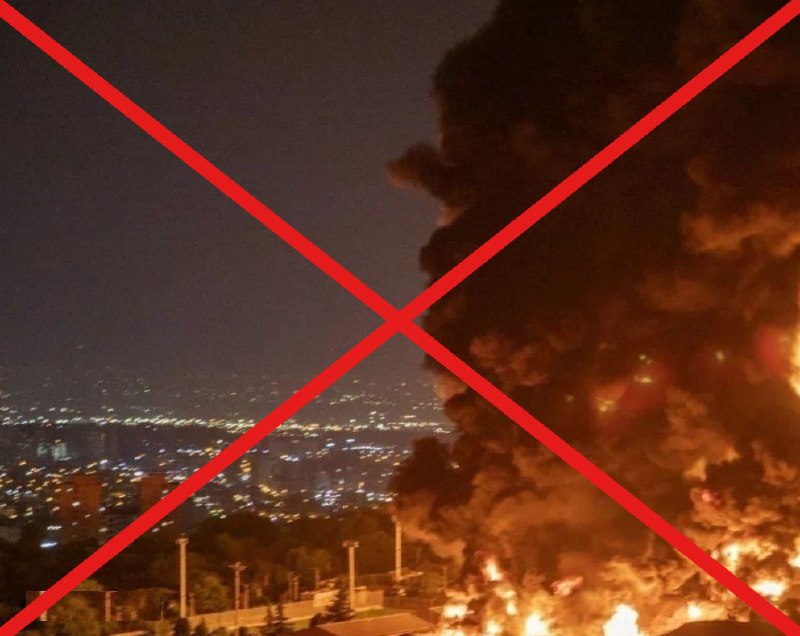
Power cuts hit parts of Chabahar on the evening of 8 July 2026, after a series of explosions in the Iranian port city, according to a Reuters wire report circulated on Telegram at 20:38 UTC. A second thread from the same source, timestamped 20:30 UTC, adds that NASA FIRMS — the US space agency's fire-data platform — detected fires at an airfield in Bushehr following US strikes. The reporting is thin on attribution, but the combination of a Reuters-sourced wire and a satellite thermal detection system is enough to take the underlying event seriously while keeping the wider claims in their proper place.
The temptation in the first 24 hours of any strike cycle is to treat every adjacent image as confirmation. On this story that temptation is being resisted unevenly. GeoPWatch, a geography-focused monitoring channel on Telegram, posted at 20:43 UTC that a widely shared photograph of a fire at a Chabahar power plant is old and unrelated to the current reporting. That kind of quiet, methodological correction matters more than the original rumour it is pushing back against. It is also the kind of correction that rarely travels as far as the rumour it is correcting.
What the wires are willing to say
Reuters has confirmed two things through these threads: power outages in parts of Chabahar, and explosions as the apparent cause. Reuters has not, in the material available to this publication, named the actor responsible, the targets struck, or the weapon system used. The Bushehr reference sits one step further out — it is a NASA FIRMS thermal detection being interpreted by the channel as a strike, not a Reuters-confirmed attack on a named installation. That is a meaningful distinction. Thermal anomalies at airfields can reflect a range of causes, including fuel-handling incidents, and the satellite pass is a single data point rather than a confirmed battle-damage assessment.
The dominant Western framing of any US strike inside Iran will lean on Washington's stated rationale: degrading capabilities that threaten US forces or partners, disrupting proxy supply lines, signalling resolve after a specific provocation. None of that framing is present in the source material currently in hand. What is present is the bare fact pattern — an event in Chabahar, an event in Bushehr, a denial in the first case about a misleading image, and a Reuters wire that confines itself to observable effects rather than attribution.
What the Iranian counter-frame would look like
If Iranian state-aligned outlets pick up the story in the coming hours, the framing will be predictable and worth taking seriously on its own terms rather than dismissing as boilerplate. Tehran's likely line is that strikes on civilian power infrastructure in a port city and on an airfield in Bushehr constitute an act of aggression against Iranian sovereignty, that the targets are dual-use or civilian in character, and that international silence — particularly from European capitals that have called for de-escalation in other theatres — will be read in Tehran as licence. The Bushehr nuclear power station sits in the same province as the reported airfield fire, and any conflation of the two locations, intentional or otherwise, carries serious escalatory risk. The sources available to this publication do not specify which facility in Bushehr is implicated, and that ambiguity is itself a story.
This publication has repeatedly noted that official communiques from Tehran, whether from the foreign ministry, the permanent mission to the UN, or state-aligned outlets such as PressTV, Tasnim and Mehr, deserve to be read as primary sources — as the Iranian state's own framing of events on its territory. They are not truth claims to be accepted or rejected in passing. They are the counter-frame, and a serious press record keeps them in the file.
The structural pattern: rapid-cycle strikes, slow-cycle verification
What the 8 July reporting illustrates, more than it tells us about Iran policy specifically, is the gap between the speed of kinetic action and the speed of verified reporting. Telegram channels carrying Reuters wires and NASA FIRMS screenshots are publishing within minutes. Independent geolocation of the footage — matching skylines, transformer geometries, coastal landmarks against open-source imagery of Chabahar — typically lags by hours. Forensic confirmation of weapon type, origin, and intended target lags by days. By the time the picture firms up, the policy conversation has often already moved on, shaped by the earliest, least verified version of events.
This is not a problem unique to Iran coverage. It is the structural condition of modern strike reporting. But it matters more when the targets include electrical infrastructure in a city of roughly 100,000 people on the Makran coast, and an airfield adjacent to a civilian nuclear facility. The room for catastrophic misreading, in either direction, is large.
Stakes and what remains uncertain
If the Bushehr reference is in fact to the nuclear power station rather than a nearby military airfield, the escalatory logic changes sharply. The sources do not specify. If the Chabahar strikes are aimed at IRGC-linked port infrastructure used for resupply to Iran's eastern neighbours, the framing is one of interdiction; if they are aimed at civilian power, it is another. The sources do not specify that either.
What is verifiable as of 20:43 UTC on 8 July 2026 is narrower than the conversation already underway on the platform: power cuts in Chabahar, an apparent explosive cause, a Reuters wire confirming those two facts, a NASA FIRMS detection at a Bushehr airfield, and an active correction by one monitoring channel of a misleading image circulating in the same information space. Everything beyond that — attribution, target identification, casualty counts, strategic intent — is presently inference rather than reporting, and should be treated as such.
This publication will update the source ledger as Reuters and other tier-one wires publish confirmed attribution, and as OSINT analysts publish geolocated verification of the circulating footage.
Wire provenance
This editorial synthesis draws on the following public wire/social posts:
- https://t.me/wfwitness
- https://t.me/wfwitness
- https://t.me/GeoPWatch