China Opens the Door to Nvidia H200, Even as It Lauds Home-Grown Chip Pioneers
Beijing is reportedly letting top AI firms buy Nvidia's H200 while state media celebrates Chinese lithium-battery and radar pioneers — a dual track that suggests Beijing wants compute now and chip autonomy later.
On 8 July 2026, a wave of dispatches pointed in two directions at once. Out of Beijing came word that China would allow its top artificial-intelligence firms to purchase Nvidia's H200 accelerators, according to a brief flagged by an X account tracking prediction-market and policy flows at 15:38 UTC. Hours later, the South China Morning Post detailed why two Chinese researchers — pioneers of lithium-battery and radar technology — had just been awarded the country's top science prize, with the Telegram channel @SCMPNews republishing the report at 17:42 UTC on the same day.
Read together, the two threads sketch a strategy Beijing has talked about openly for years but rarely executed so visibly in a single 24-hour window: import the compute it cannot yet build at scale, while pouring prestige and resources into the domestic supply chain that will eventually replace it. The H200 decision, if confirmed, is not a concession to Washington. It is procurement pragmatism — the kind of move a country makes when its frontier labs need working silicon now and its own foundries are still a generation behind.
What the H200 reports actually say
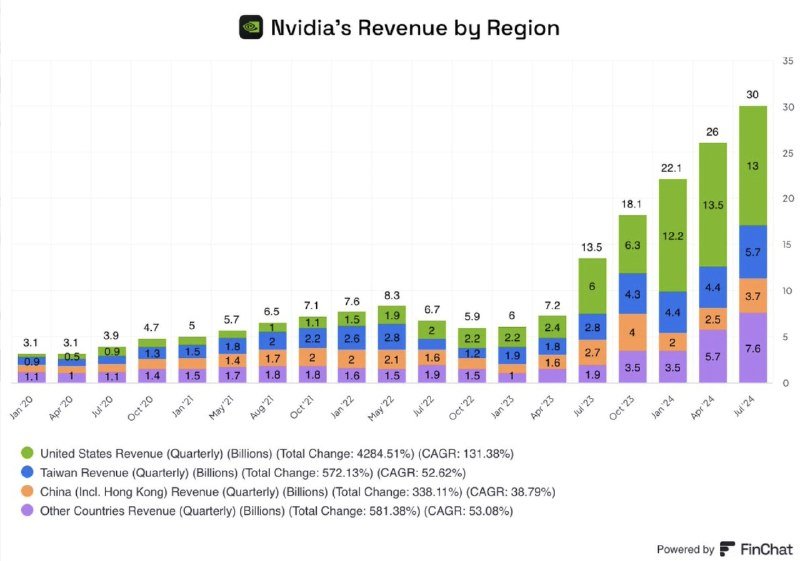
The X post attributed to the Polymarket-affiliated feed was brief: "China to reportedly allow top AI firms to buy Nvidia H200 chips." It carries no detail on which firms qualify, how many units are involved, or which export-licensing channel the US side has agreed to use. Its value is in marking the moment the constraint loosens. For most of 2024 and 2025, Chinese AI developers have been forced to stockpile Nvidia's downgraded H20 and to route top-end training through domestic accelerators — chips that are improving quickly but that, by the admission of Chinese engineers themselves, still trail the frontier in raw throughput and memory bandwidth.
A permissive H200 ruling would be the first structural reversal in that pattern since US export controls tightened. It would also tell Beijing's cloud and model labs that the country is willing to import leading-edge silicon when domestic alternatives are not yet competitive, even at the cost of dependency. The implicit bargain: buy time for SMIC, Huawei's HiSilicon, and the Cambricon-and-ensemble cohort of accelerator designers to close the gap.
This is not the framing one hears in Washington, where the dominant read treats every Nvidia chip sold into China as a strategic loss for US containment. There is a counter-reading worth weighing: if Chinese frontier labs continue to buy Nvidia at scale, US firms collect the rents today and Chinese chipmakers preserve the oxygen to build a parallel, sovereign stack tomorrow. Which outcome prevails depends on how long the window stays open — and whether Beijing treats the H200 purchase licences as a bridge or as a habit.
The science prize as industrial signal
The same day, the South China Morning Post explained the rationale behind China's State Technological Invention Award and State Natural Science Award, both given this week. The lithium-battery laureate represents the stack that put Chinese cell makers — CATL, BYD, EVE — at the front of the global EV and energy-storage market. The radar pioneer is a reminder that the country's defence electronics base has been quietly absorbing academic research for decades.
State honours in China are not merely ceremonial. They are signals to provincial governors, to the cadres who allocate科研经费 (research funding), and to the venture capitalists who follow the money. Awarding lithium-battery science tells the system: this sector still matters, even as the cell market moves toward sodium-ion and solid-state chemistries. Awarding radar science tells the system: the silicon-and-sensors base that powers military and civil applications remains a priority even as headline attention drifts toward AI foundation models.
For outside readers, the message is double-edged. It is a genuine acknowledgement of research depth: China is not just assembling batteries, it is producing the underlying physics that the rest of the industry relies on. It is also a reminder that the country's industrial-policy machinery is fully mobilised, with academic honours dovetailing into provincial subsidies into procurement preferences into export-credit support. Western commentary often treats Chinese industrial policy as one undirected blob; the science prizes suggest it is more granular, more sector-specific, and more willing to reward individual researchers whose work has paid off in factories and shipped product.
What this exposes about the chip war's logic
The conventional framing of the US–China semiconductor contest presents it as a contest of restrictions: Washington tightens, Beijing retaliates, both sides weaponise supply chains. The 8 July dispatches complicate that picture. If Beijing were playing a pure tit-for-tat game, it would not be opening the H200 door while celebrating domestic chip and battery pioneers — it would be boycotting Nvidia and doubling down on home-grown alternatives.
The decision to do both at once is consistent with a longer-run view: keep the frontier labs productive by importing whatever silicon is available, while using state prestige, procurement, and capital to compress the domestic learning curve. That is not a contradiction. It is sequencing. Chinese policymakers have signalled as much in their own commentary on "new-quality productive forces" — a phrase that has become a shorthand for selective openness to foreign technology coupled with aggressive domestic capacity-building in the sectors Beijing considers strategic.
The structural question is whether this sequencing can be sustained. Nvidia's H200 is not the H100's successor by a wide margin, and the Blackwell generation is already in volume production for US customers. By the time Chinese labs are operating H200 fleets at scale, the global frontier will have moved on. The window is real, but it is not wide.
Stakes — and what remains unresolved
If Beijing's dual-track approach works, the result is a Chinese AI sector that runs on imported silicon for three to five years and then transitions to domestic equivalents as SMIC and its peers climb the process-node ladder. Western chipmakers collect rents in the interim; Chinese chipmakers get protected runway. If the approach fails — if domestic accelerators never close the gap, or if a future US administration closes the H200 spigot — Beijing is left with a stranded frontier-lab ecosystem and an expensive, partially redundant domestic chip industry.
The immediate question for markets and policymakers is procedural rather than strategic. The X-flagged report does not specify which "top AI firms" qualify, what volume licences permit, or which export-control channel is being used. The South China Morning Post science-prize coverage is unambiguous but covers a different track entirely. Until the H200 details are confirmed on the record — by Nvidia, by the US Commerce Department, or by a named Chinese buyer — the practical implications remain latent. What is already clear is that Beijing is no longer treating chip policy as a single lever. It is running a portfolio, and the portfolio is being rebalanced in public.
Monexus framed this as a sequencing story — import now, build later — rather than the more familiar contest-of-restrictions read. The H200 reports remain thin on detail, and the science-prize signal is symbolic rather than transactional; both threads point in the same direction without yet resolving it.
Wire provenance
This editorial synthesis draws on the following public wire/social posts:
- https://x.com/polymarket/status/195197000000000
- https://t.me/SCMPNews/3359870
- https://x.com/unusual_whales/status/195197111111111