China's industrial resilience meets a tariff-shaped headwind
A death sentence for a $325 million bribe-taker, a flood-driven evacuation of 100,000 people, a Berlin think-tank's take on who actually wins from US port fees — and a 13% AI-race probability. The headline-grabbing items are a distraction from the structural story underneath.
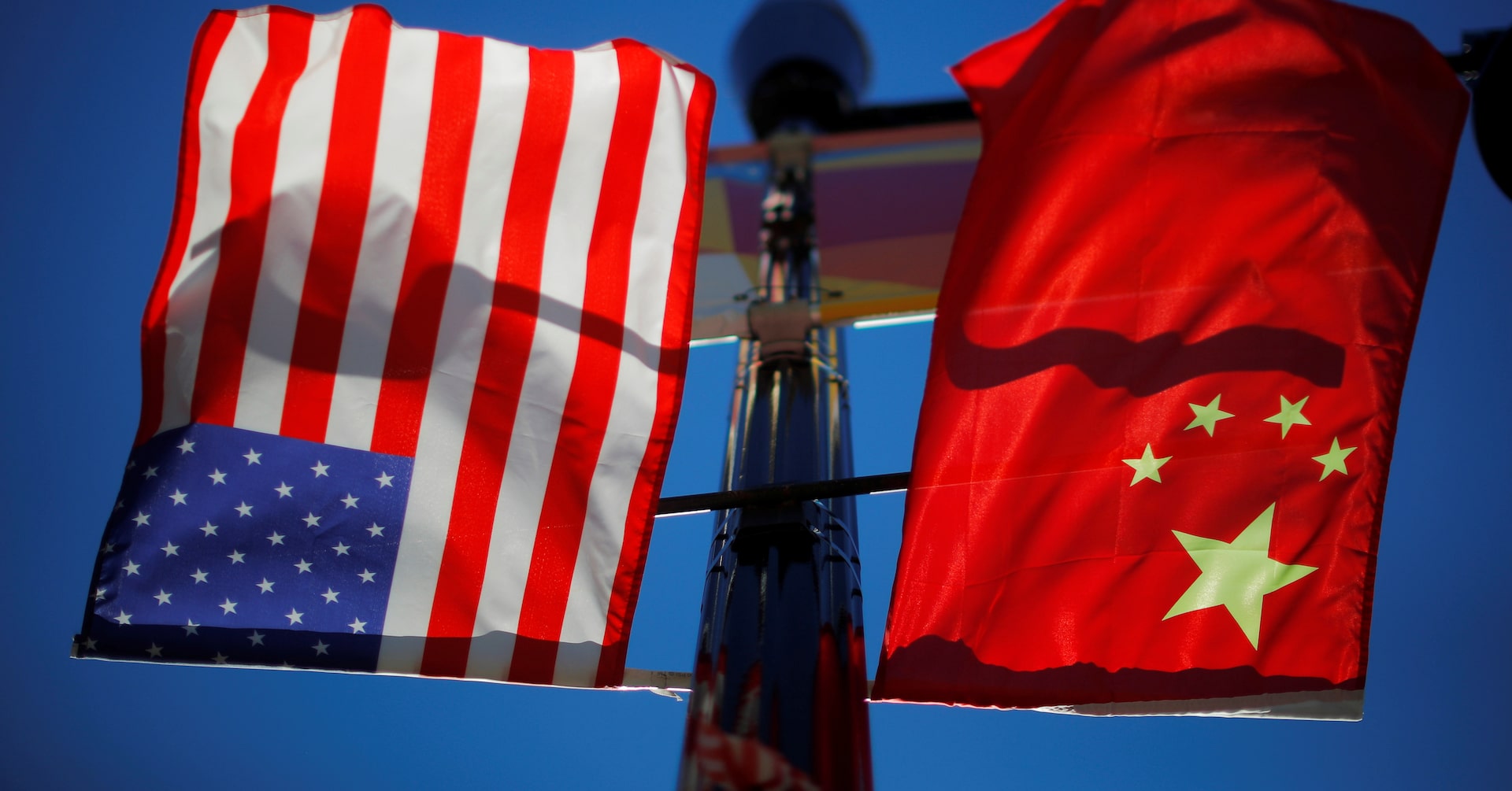
A senior Chinese official has been sentenced to death for taking $325 million in bribes, according to reporting circulated on 7 July 2026. The figure is large enough to read as a rounding error in some national budgets and small enough, in the context of China's anti-corruption campaign, to be a familiar kind of story. The drama is not the sentence. The drama is what gets tolerated, by whom, and on what scale.
Four news threads sat next to each other on Tuesday. Read individually, each is a small thing. Read together, they sketch the operating environment of a country that is simultaneously purging its own bureaucracy, absorbing climate shocks, being reshaped by American trade policy, and being priced against the United States in the global AI race. The temptation is to treat each as its own story. That temptation should be resisted.
The corruption story is a governance story
A death sentence for a single official is not, on its own, evidence of anything systemic. China has used the death penalty in corruption cases for decades, and the campaign launched under Xi Jinping has produced a steady drumbeat of such verdicts. What is interesting is the magnitude. $325 million is a sum that, in a smaller economy, would register as a sovereign-level scandal; in China, it is the take of one mid-level functionary.
The Western reading tends to focus on the punishment. The structural reading is about what the punishment signals upward: that the political centre retains the capacity and the willingness to remove insiders who overstep, and that the message is being delivered in units the bureaucracy can count. Whether that capacity is a feature of institutional health or a substitute for it is the question the sources do not answer. The verdict, as reported, leaves the answer open.
The flood story is a climate story
Rescuers were searching for missing people on 8 July 2026 after storms forced the evacuation of roughly 100,000 people in China, according to the Hong Kong Free Press wire. The numbers will move as the search continues; they always do. The point worth holding onto is the operational tempo. Mass evacuations at this scale require logistics, command structures, and a public that has been conditioned to move when told. That is not a small accomplishment, and it is not unique to any one political system — comparable evacuations happen in India, the Philippines, and the US Gulf coast — but it is part of the answer to the question of what effective governance looks like in a country of China's size.
The climate angle sits underneath. China's exposure to flood and storm damage is structural: long coastlines, dense river deltas, agricultural provinces that feed the interior. The industrial-policy machine that built the high-speed rail network also built the disaster-response machine. Whether the two are connected, and whether the second is sustainable without the first, is a question the evacuation reports do not address.
The shipping story is the dollar story
The most under-reported of the four threads is the German one. On 7 July 2026, Reuters reported that the German economic institute DIW believes Germany could gain from planned US port fees on China-built ships. The mechanism is straightforward enough. If American ports price Chinese tonnage out of certain routes, European ports — and German ones in particular — capture the redirected cargo. The story is being read in Berlin as a small windfall for northern European logistics hubs.
The deeper read is different. US port fees on Chinese-built vessels are not a free-trade policy. They are an instrument of industrial policy aimed at the shipbuilding sector, and they sit inside a wider tariff architecture that has been reshaped, repeatedly, since 2025. The fact that a respected German institute is publicly identifying a beneficiary does not make the policy wise or foolish. It does make the policy legible: this is a measure designed to reshape global supply chains, and the second-order effects will land in Rotterdam, Hamburg, and Antwerp before they land anywhere else.
The AI story is the one the markets are actually watching
A Polymarket contract circulating on 7 July 2026 priced a 13% probability on China leading the AI race by the end of the year. That is a market number, not a research note. Markets are bad at long-horizon forecasting and good at summarising the present consensus. Thirteen percent is not a flattery; it is also not a dismissal. It sits roughly where most informed observers have placed Chinese AI capabilities for the past eighteen months: real, advancing, constrained by access to leading-edge chips, and structurally significant without being decisive.
The Western wire framing tends to treat any non-zero Chinese AI probability as a surprise. That framing has been wrong for at least two years. The structural reality is that China holds a lead in applied deployment — payment systems, industrial robotics, EV software stacks, surveillance-grade computer vision — and the United States holds a lead in frontier model training. Both leads are real. Neither is permanent. The 13% figure is, in this reading, a snapshot of the consensus that the race is closer than the rhetoric suggests and further from a conclusion than the headlines imply.
What the four threads together suggest
Read in isolation, the news cycle on 7–8 July 2026 is a museum of small dramas: a corrupt official, a flooded province, a tariff loophole, a betting market. Read together, they describe a country managing four pressures at once — internal discipline, climate exposure, external trade friction, and technological competition. The Chinese development model is often criticised in Western coverage for its opacity and for the political constraints under which it operates. Those criticisms have weight. What the same coverage routinely understates is the operational capacity that the same model has built: evacuation logistics at hundred-thousand scale, shipbuilding capacity large enough to provoke a US port fee, AI capability large enough to merit a 13% probability from a sceptical market.
The honest framing is not that one system is winning. It is that the contest is closer than the rhetoric on either side allows, and that the next eighteen months will be decided less by declarations than by supply chains, fabrication capacity, and the patience of capital.
The Monexus desk treats the four Tuesday threads as a single structural story rather than four disconnected items. Western wires led with the death sentence and the storm; the Polymarket figure and the DIW shipping analysis carry more signal about where 2026 is actually heading.
Wire provenance
This editorial synthesis draws on the following public wire/social posts:
- http://reut.rs/4vibJM0
- https://t.me/unusual_whales