Drones over Manama: what the Bahrain incident tells us about the Iran crisis
Reports from the early hours of 8 July 2026 say Iranian drones were launched toward Bahrain, with explosions heard over Manama and no sirens activated. The incident widens the theatre of the Iran-US-Israel confrontation in ways neither Tehran nor Washington has so far chosen to acknowledge.
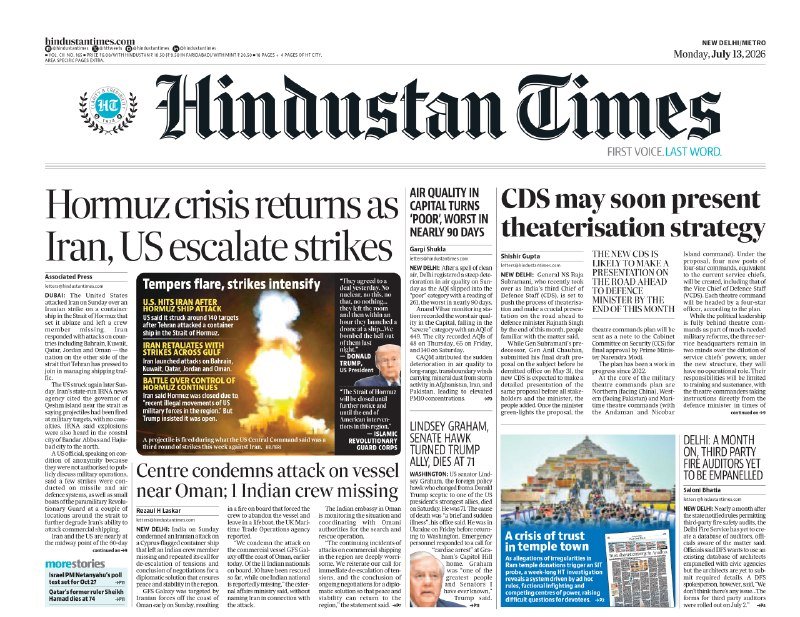
At roughly 01:28 UTC on 8 July 2026, residents of Bahrain began posting about explosions overhead. Within twenty-five minutes, four separate monitoring channels — @GeoPWatch, @Middle_East_Spectator, and @wfwitness — were carrying the same basic report: detonations audible over the archipelago, no civil-defence sirens, no immediate official statement on cause. By 01:52 UTC, the picture had hardened. One of the channels cited Axios, attributing to the outlet the claim that Iran had launched drones toward Bahrain. That reporting, if confirmed, would mark the first direct Iranian strike on a Gulf monarchy since the 2019 Aramco episode and would deepen a regional crisis already running hotter than at any point in the post-2015 era.
The facts on the ground remain thin. The early-hour reporting describes sound, not damage. Air defences were reported active. No Bahraini government statement has yet been cited in the live threads. What is significant is the direction of travel: from a single Telegram post about "explosions in Bahrain" at 01:28 UTC to an Axios-attributed drone-launch claim twenty-four minutes later. The escalation arc is being documented in near-real time, in fragments, by channels whose sourcing is uneven. That itself is part of the story.
The immediate picture
The reports cluster in a tight window. @Middle_East_Spectator posted at 01:34 UTC that explosions had been heard and that no sirens had sounded. @wfwitness at 01:43 UTC added that the cause was unclear. @GeoPWatch at 01:50 UTC reported a "renewed batch of explosions" and speculated — explicitly — that "air defences most likely" were active, meaning engagement was underway rather than impact on the ground. By 01:57 UTC the same channel was describing a sustained pattern: "more explosions rock Bahrain." The threads include no photographs of impact craters, no casualty figures, no Bahraini Interior Ministry readout.
The single named-source claim inside the thread set is the Axios attribution carried by @wfwitness at 01:52 UTC: that Iran launched drones toward Bahrain. Axios is a tier-1 scoop outlet for Iran reporting and the byline — its chief correspondent on Iran and national-security matters has repeatedly broken first on launch-attribution stories — gives the claim more weight than the typical Telegram rumour. But a single Telegram citation of an Axios report is not the same as the Axios report itself. Confirmation from the Bahraini authorities, the US Navy's Bahrain-headquartered Fifth Fleet, or Iranian state media is, as of the available sourcing, absent.
The Gulf context, plainly stated
Bahrain is small, US-aligned, and geographically exposed. It hosts the Fifth Fleet and the main naval component of US Central Command's maritime reach into the Gulf. It is also a Shia-majority population under a Sunni monarchy, and it has been an Iranian target before: in 2019, Iranian-aligned actors were widely judged responsible for strikes on Saudi Aramco infrastructure at Abqaiq and Khurais; in 1987, Iranian-backed Shia militants bombed a café in Manama, killing two. A direct Iranian-state launch of drones at Bahrain would close a long geopolitical gap — Tehran has generally reserved its kinetic reach for Israel, Iraqi Kurdish targets, and Saudi infrastructure rather than for the smallest and most exposed Gulf monarchy.
The reporting here, if accurate, suggests that restraint has been set aside. The same Iran file is already running hot: Israeli strikes on Iranian territory in recent weeks, US carrier deployments in the Gulf of Oman, and Iranian-aligned activity in Iraq and the Red Sea have collectively lowered the threshold for direct state-on-state action. The Bahrain incident, even at the level of a still-unconfirmed Axios report, sits inside that trajectory rather than outside it.
Why the framing matters
There is a temptation in early-hour reporting to flatten events into a single narrative — Iranian aggression, Western victimhood, a binary regional war. The picture on the ground in Bahrain does not yet support that flattening. Three frames are simultaneously live and should be named.
First, the Iranian-action frame: the Axios report and the pattern of explosions consistent with air-defence engagement are consistent with a deliberate Iranian launch. Iranian state media has not, as of the sourced threads, claimed or denied the action; Tehran has historically preferred deniability in such cases. Second, the false-flag-or-miscalculation frame: the lack of sirens in Manama, the absence of Bahraini official statements, and the timing — 01:28 UTC is a low-activity hour — could also be read as a test launch, an accident, or an action by a non-state actor misattributed to Iran. Third, the regional-escalation frame: even if the launch was Iranian, its purpose may have been to signal rather than to damage — to extend Iranian reach visibly across the Gulf without producing the casualties that would trigger a Bahraini or US request for major retaliation. Each of these frames has at least one piece of supporting evidence in the available threads and none has yet been ruled out.
What separates editorial coverage from wire amplification is naming the uncertainty explicitly rather than collapsing it.
Stakes and the hours ahead
If the Bahrain launch is confirmed by Bahraini, US, or Iranian official readouts, three things follow quickly. The Fifth Fleet's posture is likely to harden, with wider air-defence coverage across Gulf monarchies and probable disruption to commercial shipping through the Strait of Hormuz. The diplomatic file — already strained by indirect US-Iran talks mediated through Oman and Qatar — will become harder to sustain, since any talks predicated on de-escalation require Iran to act within limits. And the Gulf monarchies, which have spent the last decade building integrated air and missile defence with the US and increasingly with Israel, will be tested on whether that architecture works in real time rather than in exercises.
The countervailing reading is that this could be the kind of limited, demonstrative action that produces a phone call rather than a war. Iran has used drones and cruise missiles in this way before — against Israel in April 2024, in ways that the Israeli and US defence systems largely intercepted and that did not produce a regional conflagration. Bahrain could fit that pattern. But the Gulf is a more crowded theatre than Tel Aviv, with more US personnel, more critical oil infrastructure, and a smaller margin for misreading intent.
What remains uncertain
The sourced threads agree on sound over Manama and on the absence of civil-defence sirens. They diverge, or remain silent, on almost everything else. No casualty figure, no impact location, no confirmed launch origin, no Bahraini government statement, no Iranian state-media response, and no US Fifth Fleet statement appears in the available material. The Axios attribution rests, at this hour, on a single Telegram relay. Readers should treat the launch-attribution claim as the most serious available lead — and as unconfirmed until Bahraini, Iranian, or US official sources are on the record.
The pattern of escalation across the Gulf matters more than the specific detonation count. What is being documented in real time on Telegram is the moment a regional crisis either stays limited or starts widening. The next few hours will determine which.
This publication will update this piece as Bahraini, Iranian, and US official sources publish on the record. The desk is treating the Axios launch-attribution claim as a serious lead pending confirmation, not as established fact.
Wire provenance
This editorial synthesis draws on the following public wire/social posts:
- https://t.me/GeoPWatch/
- https://t.me/Middle_East_Spectator/
- https://t.me/wfwitness/
- https://t.me/wfwitness/
- https://t.me/GeoPWatch/
- https://en.wikipedia.org/wiki/United_States_Navy_Central_Command
- https://en.wikipedia.org/wiki/2024_Iranian_strike_against_Israel