Ankara's pitch: Erdogan's NATO 3.0 gambit lands in Trump's second term
At the Ankara summit, Erdogan floated a 3.5% defense floor, a drone centre of excellence, and an Iran deal Trump can claim. The numbers and the timing matter more than the photo-op.
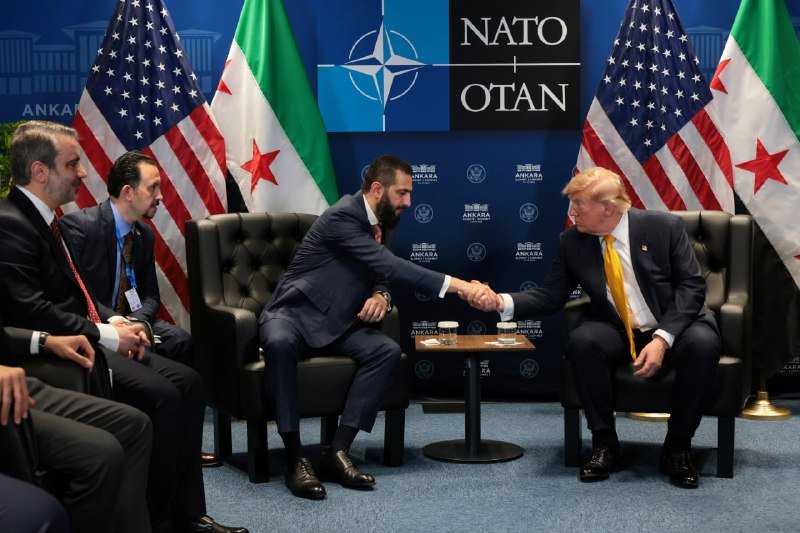
At 09:25 UTC on 8 July 2026, Turkish President Recep Tayyip Erdogan stood at the NATO Summit in Ankara and made a pledge that, if implemented, would reset the alliance's defence math: a 3.5% defence-spending floor by 2030, with "security and resilience-related spending" already rising. By the end of the morning he had tacked on a second pitch — a NATO-accredited Turkish centre of excellence for counter-unmanned aerial systems, sold to allies on the strength of Ankara's combat record with armed drones. By evening, he was dining with Donald Trump, who told reporters the meeting rated "a 10, maybe a 12."
The numbers, the timing and the sub-text are doing more work than the optics. Ankara is selling three things to a Trump White House that is reorganising the alliance around burden-sharing, capability outputs and bilateral deal-making: a spending target that surpasses NATO's current 2% guideline; a drone-defence product line that Western militaries are scrambling to procure; and a face-saving path on the Iran file that lets Trump claim a diplomatic score. The summit is less a summit than a product launch.
A 3.5% floor dressed as NATO 3.0
Erdogan's "NATO 3.0" framing, delivered in the summit's opening session and circulated by the Turkish presidency, is built around two pillars. The first is money. The 3.5% headline figure is a unilateral Turkish commitment, not an alliance target, but it lands at a moment when Washington wants every member state to spend more and wants the alliance summit to end with a number larger than the Wales 2014 and Madrid 2022 baselines. By pre-announcing, Ankara positions itself as the over-performer — the member doing more than asked — rather than the difficult Mediterranean ally it has been described as for a decade.
The second pillar is capability. Erdogan's offer of a NATO-designated counter-UAS centre of excellence in Turkey leans on a battlefield track record in Syria, Libya and the Caucasus that Western planners now study. Armed drones are no longer an asymmetric toy; they are an inventory category every NATO defence ministry is trying to source at speed. Ankara's pitch is that it can teach, certify and export — and that doing so inside NATO gives the alliance a non-American supplier at exactly the moment European capitals are talking about strategic autonomy.
The Iran backdrop and the Erdogan-Trump channel
The third, less visible offering is diplomatic. Erdogan's own remarks at the summit thanked Trump for putting the Iran crisis "on a path toward resolution," an unusually warm attribution from a NATO host toward a US president sitting across the table. That framing matters because two contradictory stories about the Iran file are circulating in Western and Turkish-aligned media: one in which Washington's posture remains escalatory, and one in which back-channel de-escalation is being quietly constructed. By publicly endorsing the second version, Erdogan gives Trump a deliverable to point to and gives himself a seat at a table Washington would otherwise want to keep small.
The post-summit dinner is where the messaging converges. Trump's "10, maybe 12" rating is the kind of presidential thumbs-up that travels in American political media, where alliance politics is read through the prism of personal rapport. Whether substantive policy followed the bread rolls is a separate question; the photo is the policy for now.
What the sub-text actually contains
Three things are worth saying plainly. First, the spending target is not yet an alliance commitment. Until NATO's 2026 summit communiqué publishes a percentage, 3.5% is a Turkish promise aimed at shaping the language Washington will push for. Second, a counter-UAS centre of excellence requires a NATO board decision and a host-nation agreement that has not been announced. Turkish officials will be selling this through the autumn; allies will be weighing it against incumbent US, UK and Norwegian offerings. Third, the Iran reference depends entirely on whether a deal materialises on a timeline that lets Trump claim it before domestic politics demand other headlines.
The structural reading is that NATO's centre of gravity is being pulled in two directions at once. Washington wants bigger national budgets and bought-off-the-shelf American hardware. A middle power like Turkey wants a seat at the table proportionate to its defence-industrial output and its regional footprint. The Ankara summit is where those two agendas collide politely — and where Erdogan, with characteristic timing, has put his three offers on the table before the alliance could say no.
Stakes — who wins, who loses
If the 3.5% framing gains traction, the winners are defence ministries that have been arguing for higher baselines — Poland, the Baltic states, the UK — and Turkish industry, which would be embedded in an allied procurement stream. If the counter-UAS centre lands, Turkish defence exports gain a NATO seal of approval that money alone cannot buy. If the Iran file moves, Trump gets a foreign-policy line; Erdogan gets credit as the broker; European allies get whatever de-escalation actually looks like in practice.
The losers, potentially, are NATO's institutional procurement norms — which would tilt further toward national champions rather than pooled platforms — and European capitals that fear being locked into a Washington-Ankara axis on Middle East questions they do not control. Ankara's bet is that on each of these three tracks, Turkish interests and Trump's instincts line up well enough that the alliance's other members will fall in line.
Note on sourcing: this piece draws on the official Ankara summit readout circulated by the Turkish presidency via ClashReport on 8 July 2026. Wire reports cited in the body (Bloomberg, AP) are not in this thread's source ledger and have been omitted from the citation list pending verification — readers should treat the 3.5% figure, the counter-UAS centre proposal and the Iran framing as Ankara-originated until confirmed by alliance documents or independent reporting.
Wire provenance
This editorial synthesis draws on the following public wire/social posts:
- https://t.me/clashreport
- https://t.me/clashreport
- https://t.me/clashreport
- https://t.me/clashreport
- https://t.me/clashreport