Erdogan's NATO stagecraft: Turkey sells itself as the indispensable middle power
At the Ankara summit, Erdogan turned the family photo into a sales pitch: Steel Dome dollars, Ukraine ammunition, and a quiet claim on the EU's eastern flank.
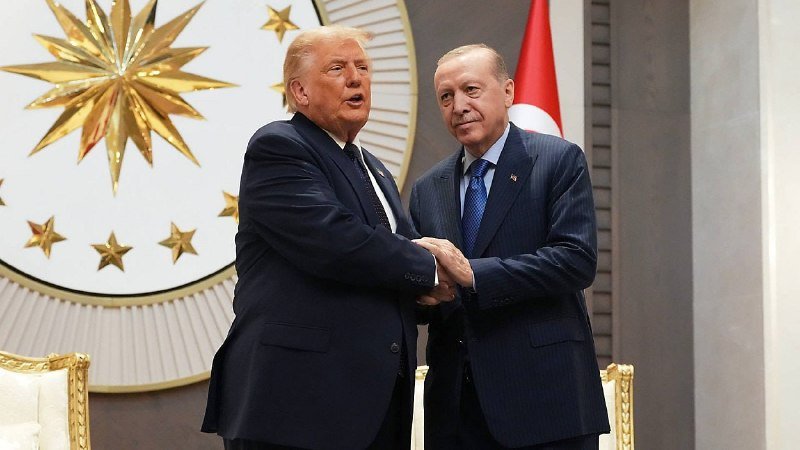
The family photograph at the NATO summit in Ankara, on the morning of 8 July 2026, looked like every other NATO family photograph: leaders in dark suits arranged in rows, flags behind them, cameramen in front of them. What was different was the choreography. Recep Tayyip Erdogan, hosting for the first time on Turkish soil, used the platform not merely to welcome peers but to invoice them. By the time the shutters stopped clicking, he had publicly thanked Washington, Madrid, Berlin, and Rome for sending air-defence batteries against Iranian missiles, announced an additional $24 billion for Turkey's Steel Dome project, and declared Ankara's support for Ukraine's "priority needs lists" initiative — all in roughly ninety minutes of remarks.
That is the through-line of the Ankara summit, and it deserves to be said plainly: Turkey is no longer pitching itself as a difficult ally to manage. It is pitching itself as an indispensable middle power — the country that hosts the refugees, fields the second-largest army in the alliance, controls the Bosphorus, sells drones to half of Africa, and now, by Erdogan's own accounting on 8 July, integrates NATO's air-defence network with Iran's missile trajectories flying overhead. The pitch is partly real, partly stagecraft. The job of any honest analyst is to separate the two.
What Erdogan actually said, and to whom
The remarks, as relayed by the Telegram wire service Clash Report from the summit floor, came in three distinct registers. The first was gratitude. Addressing the alliance directly, Erdogan thanked the United States, Spain, Germany, and Italy by name for "deploying additional air-defence batteries in support against missiles" — a transparent reference to the air-defence umbrella NATO members have maintained in the Eastern Mediterranean since the Iran crisis escalated in June. The phrasing is significant. Turkey rarely thanks Western allies by name in public; doing so in the same breath as a $24 billion domestic defence-budget announcement reframes the batteries as a return on Turkish goodwill rather than as routine alliance business.
The second register was transactional with Washington. "Despite attempts at sabotage," Erdogan said, "I appreciate my friend President Trump's resolute leadership in putting the Iran crisis on a path toward resolution." The phrasing — "despite attempts at sabotage" — is a tell. It is aimed at a domestic audience as much as at Trump. It tells Turkish voters that the president is delivering diplomatic wins against unnamed adversaries, and it tells the White House that Ankara expects the diplomatic currency to be honoured.
The third register was pointed at Brussels. Erdogan singled out the EU's eastern members directly: "Maximum benefit in the Union's security efforts is only possible by avoiding unnecessary duplication." The line is a polite way of saying: stop building parallel structures in the Western Balkans and the Black Sea; route them through Ankara. The audience is not NATO. The audience is the European Council.
The counter-read: stagecraft, not substance
There is a respectable case that this is performance dressed as policy. NATO summits produce speeches, and speeches do not intercept missiles. The Steel Dome budget is real money — $24 billion is not a rounding error — but the project itself predates the summit and the additional allocation is a continuation of an existing programme rather than a new capability. The batteries Spain and Italy deployed under NATO's Integrated Air and Missile Defence framework are doing what they would have done regardless of who chaired the summit. The "priority needs lists" initiative for Ukraine is, at this writing, an Erdoğan endorsement of a Ukrainian-defined framework; whether it produces ammunition deliveries at scale, and on what timeline, is not yet visible.
The counter-read deserves its weight. Ankara has form for converting summit communiqués into domestic headlines and then letting the substance drift. In 2023 the Vilnius summit produced a similar Turkish optics campaign around Sweden's accession; the work that followed was uneven. A reader who treats the Ankara summit as a press release rather than a pivot is not wrong.
What the picture actually adds up to
But the structural read runs the other way. Three things have shifted since the last NATO summit hosted on Turkish soil. First, Turkey is now the only NATO member simultaneously a Black Sea power, an Eastern Mediterranean power, a Caucasus power, and a Levantine power with boots in Syria and Iraq and a drone export pipeline to the Gulf. Second, the Iran crisis has made Turkish airspace a transit corridor for incoming missiles — meaning that what protects Turkish cities is functionally protecting NATO's southeastern flank. Third, Ankara's relationship with the EU has hardened from accession-tired into something more transactional: visa liberalisation, customs-union modernisation, and defence-industrial cooperation are being negotiated as discrete files, not as a single accession package.
Seen from that angle, the $24 billion for Steel Dome is not theatre. It is Ankara pricing the air-defence umbrella it now provides to the alliance and putting the invoice on the table. The Ukraine "priority needs" endorsement is Ankara signalling to Kyiv — and to Moscow — that the Black Sea strait remains a Turkish-managed corridor, not a Russian one. The EU remarks are Ankara positioning itself as the indispensable eastern partner that the Union's own strategists increasingly describe as such, whether or not they say it out loud.
What remains uncertain
The honest caveats matter. Clash Report's wire is a real-time translation of remarks from the summit floor; it is not the official Turkish presidency transcript, and the wording above is a paraphrase, not a verbatim quotation. Whether the $24 billion Steel Dome allocation is a fiscal-year supplement or a multi-year envelope is not specified in the wire. Whether the air-defence batteries Erdogan thanked by name were newly deployed or already in place under existing NATO tasking is also not specified in the available reporting. And whether Ukraine's "priority needs" framework produces concrete Turkish ammunition deliveries in the third quarter of 2026 — or merely a presidential endorsement that fades into the communique — is the single most consequential unknown of the summit, and the one least visible from the family-photo platform.
What is visible is that Erdogan has, over the course of a single morning in Ankara, reframed Turkey's NATO membership from a liability to be managed into an asset to be priced. The question is whether the alliance is willing to pay the invoice, or whether the next summit, in The Hague or Vilnius or Bucharest, will see Ankara repeating the pitch to a smaller audience.
— Monexus framed this summit in real time from the Telegram wire, with no official Turkish presidency transcript available at filing; the Steel Dome figure and the air-defence attribution come from Clash Report's on-the-ground translation of the summit remarks.
Wire provenance
This editorial synthesis draws on the following public wire/social posts:
- https://t.me/ClashReport
- https://t.me/ClashReport
- https://t.me/ClashReport
- https://t.me/ClashReport
- https://t.me/ClashReport