Explosions in Bandar Abbas: What Iran Is Reporting, and What Remains Unverified
Explosions were heard in Bandar Abbas, Sirik, Chabahar and Konarak on 8 July 2026. Iranian state outlets reported air-defence activity; independent confirmation of cause and casualties is not yet available.
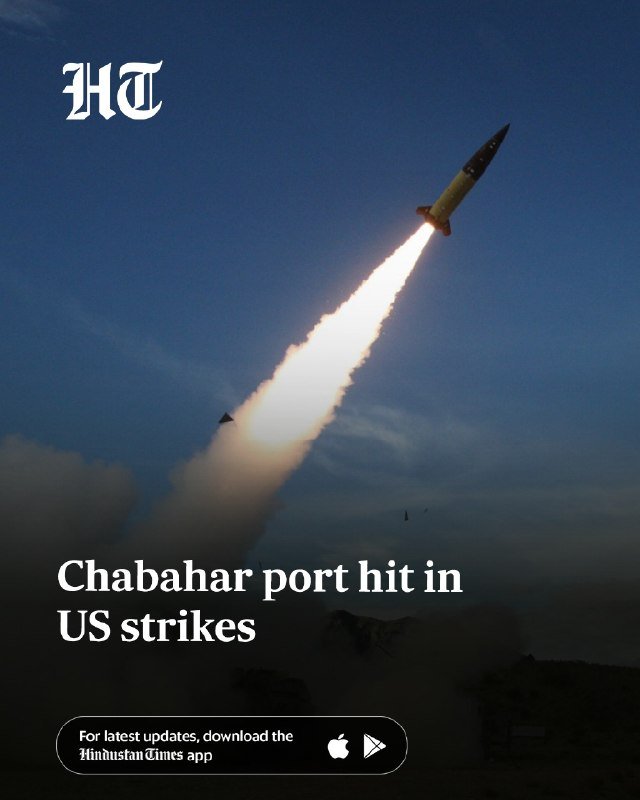
At 19:54 UTC on 8 July 2026, Iran's state-affiliated Mehr News Agency reported explosions in Bandar Abbas, the port city that anchors the country's side of the Strait of Hormuz. Within minutes, parallel reporting filtered through the war-monitoring channel @wfwitness on Telegram, identifying further blasts in Sirik, Konarak and Chabahar in Sistan and Baluchestan province — a roughly 400-kilometre arc along Iran's southeastern coast. By 20:13 UTC, the same channel relayed Mehr's claim that Iranian air-defence systems had engaged hostile targets near Bandar Abbas. As of the time of writing, Tehran has attributed the detonations to intercepted threats, but no independent confirmation of cause, origin or casualty count is available.
The cluster matters because it sits on the most consequential stretch of coastline in the global energy economy. Bandar Abbas handles a substantial share of Iran's seaborne crude exports; the nearby Strait of Hormuz carries a comparable share of seaborne oil trade to global refineries. Even a localised incident on the adjacent coast moves commodity desks in London and Singapore. What is being reported at this hour, however, is unusually thin for a story with this much potential weight — and that gap between scale and source quality is itself the story.
What Iran's outlets are saying
The reporting cascade began with Mehr at 19:54 UTC — "Explosions in Bandar Abbas" — followed six minutes later by Fars News Agency's account that "around 11:15 local time, several explosions were heard in Bandar Abbas and Sirik, with additional blasts reported from the direction of the sea off Sirik's western coast" (07:45 Iran time). Fars, formally affiliated with the Islamic Revolutionary Guard Corps, is not a neutral wire and is treated here as a primary statement of the Iranian state's framing rather than as independent verification.
A subsequent Mehr bulletin, forwarded by @wfwitness at 20:13 UTC, asserted that "air defense systems engaged in countering hostile targets near Bandar Abbas." At 20:19 UTC, Mehr and the same channel added that explosions had been heard near Konarak and Chabahar — deep into Sistan and Baluchestan, a province that borders Pakistan and Afghanistan and which has been the site of intermittent attacks on Iranian security forces. The cascade does not name an attacker, does not specify what was intercepted, and offers no casualty figure.
What the reporting chain actually looks like
Read together, the public signal looks like this: a Telegram war-monitoring feed is reposting Iranian state-media wire copy with the timing, words and editorial framing intact. @wfwitness has positioned itself as a clearing-house for fast-moving reports out of the Middle East, particularly Iran and Israel; in coverage this raw, its utility is speed and breadth, not verification. Nothing in the published cascade originates outside the Iranian press pool. Reuters, the Associated Press, the BBC, Al Jazeera English and Bloomberg have not, on the public wires reviewed at the time of writing, matched the Mehr and Fars accounts with their own on-the-ground correspondents. Independent analysts and OSINT researchers — Planet Labs imagery, commercial flight trackers, AIS vessel feeds out of Bandar Abbas — have not yet surfaced corroborating posts. The Tehran framing stands alone in the open record.
This is the part of the record that gets erased by the speed of a news cycle. A headline that begins "Iran says" reads very differently from "Iran says and Reuters confirms." Until the second sentence materialises, the first sentence is the Iranian government's account, in the Iranian government's words, and should be cited accordingly.
The plausible alternative reads
Three readings are defensible from the public signal, in declining order of probability.
The first, and the one the Iranian outlets are steering toward, is air-defence activity in response to one or more external threats — the language of hostile targets is the standard Mehr formulation for intercepted missiles, drones or low-flying aircraft. The geographic spread — Bandar Abbas, Sirik, Chabahar, Konarak — would be consistent with multiple launch vectors rather than a single projectile, and it would explain why an Iranian coastal air-defence system operating around the Strait of Hormuz lit up simultaneously with one further east.
The second is an internal accident. Sirik and Konarak host sensitive military and missile-related infrastructure; the latter is associated with the Islamic Revolutionary Guard Corps Navy's southeastern flank, and the broader province has had a history of unexplained blast events over the past two decades. None of the Iran-aligned reporting in the cascade acknowledges that possibility.
The third is that the detonations are the public surface of a much larger kinetic event — a strike, an attempted strike, or a retaliatory salvo — the full scope of which Tehran is releasing in pieces. The Through-the-Gulf reporting this hour has the texture of a drip-feed, not a one-shot news dump.
Why the framing lane matters
Coverage of any Iran-related kinetic event is shaped, within minutes, by two editorial reflexes — to defer to official spokespeople of whichever power is speaking, and to translate "Iran says" into assertion. Both reflexes punish accuracy. Iranian state media is not the equivalent of a Reuters byline; its accounts carry institutional weight in the Iranian domestic information environment but are designed, in part, to shape external perception as well. Western outlets running the Fars and Mehr copy without visible caveats are doing audience trust work they will not be thanked for when the picture clarifies.
The stakes are concrete. A confirmed attack on Iranian coastal infrastructure would move oil markets, complicate any unfinished diplomatic channel between Washington and Tehran, and raise the temperature in the Gulf in ways that intelligence agencies, not newsrooms, are equipped to cool. A misread accident, told as an attack, does the same. A staged incident, told only as air-defence heroism, forecloses a debate the public will eventually need to have. None of those outcomes is served by stripping the provenance off the Iranian wire copy.
Desk note: Monexus is publishing this account on the strength of Iranian state-affiliated reporting and one Telegram clearing-house; we will update as independent wire confirmation or visual evidence arrives, and we are flagging the current sourcing explicitly so readers do not infer that an unverified Iranian account has been corroborated elsewhere.
Wire provenance
This editorial synthesis draws on the following public wire/social posts:
- https://t.me/wfwitness
- https://en.wikipedia.org/wiki/Bandar_Abbas
- https://en.wikipedia.org/wiki/Strait_of_Hormuz