Genesis Scottish Open returns with a global field and a scheduling argument McIlroy wants the PGA Tour to hear
The Renaissance Club hosts a co-sanctioned event that doubles as a test case for whether national opens belong on the PGA Tour schedule, with McIlroy, Scheffler and Rahm all in the field.
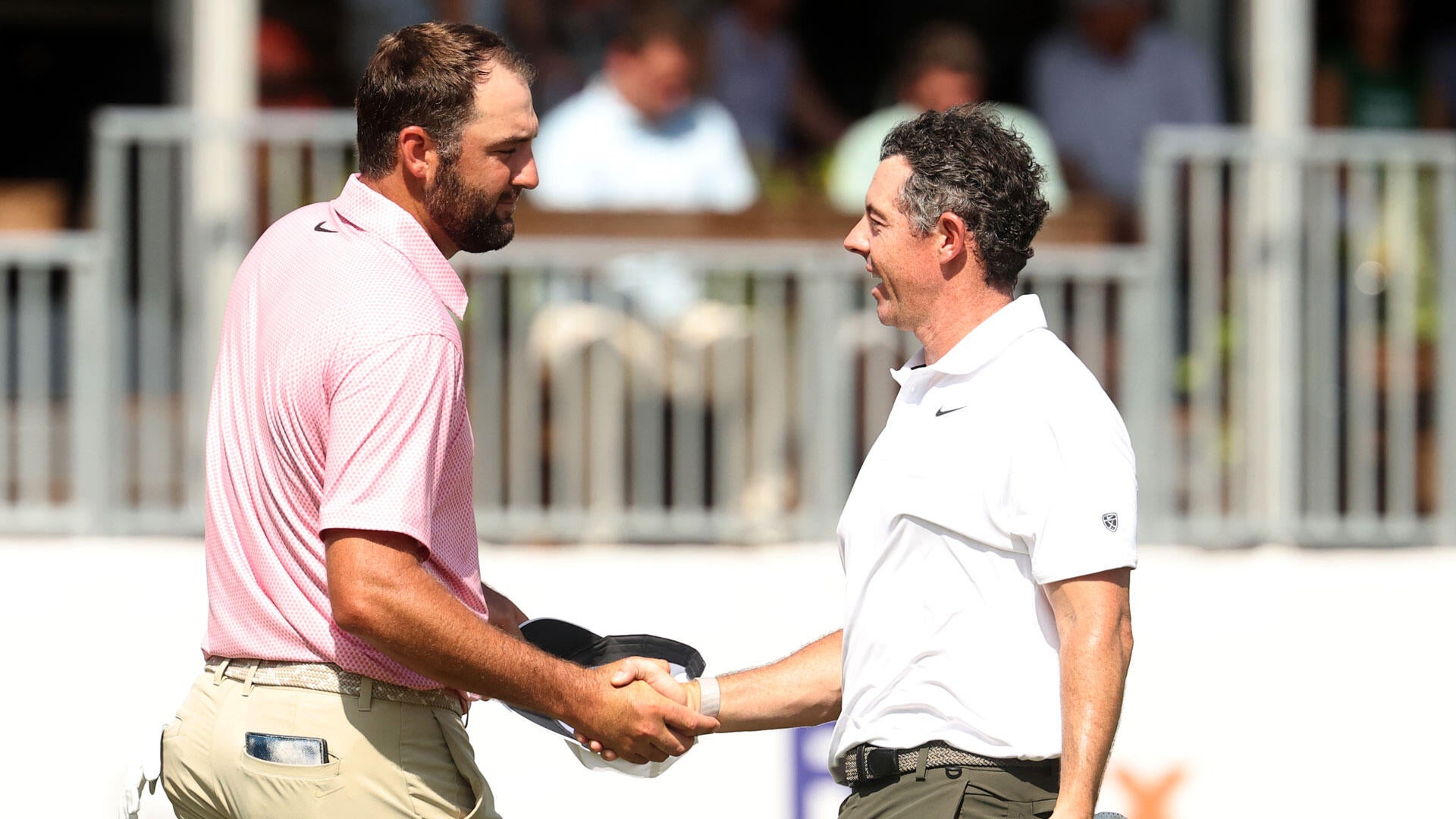
The Genesis Scottish Open tees off at the Renaissance Club in East Lothian on 9 July 2026 as one of the rare co-sanctioned events between the PGA Tour and the DP World Tour, and a 156-player field that includes Scottie Scheffler, Rory McIlroy and Jon Rahm gives the tournament a top-of-the-game feel that the calendar has rarely delivered at this time of year.
For all the marquee names, the story that has travelled furthest in the build-up has been McIlroy's argument that the tournament should be a template, not an exception. The Northern Irishman, speaking on 8 July 2026, called the week "the perfect" preparation for The Open and said the Genesis Scottish Open should be used as a "blueprint" for fitting national opens into the PGA Tour schedule. That is a pointed message for a circuit whose strategic alliance with the DP World Tour has been built, in part, on the premise that elite fields are assembled by signature events rather than by national heritage.
A field that does the talking
The draw is the strongest statement the tournament can make. CBS Sports' 7 July 2026 preview named Scheffler, McIlroy and Rahm as the headliners of a week that, in the pre-alliance era, would have been a quiet stop on the European schedule. ESPN's 8 July 2026 coverage guide confirmed the tournament would be carried on the ESPN App, with the co-sanctioned status guaranteeing playing spots for both PGA Tour and DP World Tour members rather than running parallel qualification tracks.
The practical effect is a field that looks like a major in everything but name. Scheffler arrives as the world number one and the player every rival is measured against; Rahm returns to links-style competition after a year spent toggling between LIV Golf events and the major championships; McIlroy plays the week as a home game at a venue he has called one of his favourites. For the casual viewer the question is whether any of them can be caught. For the tour office, the more interesting question is whether this is reproducible elsewhere on the calendar.
The scheduling argument, in plain terms
McIlroy's "blueprint" remark is not a complaint so much as a structural observation. The PGA Tour's signature-event model concentrates prize money in a small number of invitational weeks; national opens, by contrast, are staged by federations on their own soil and often on their own terms, with the Scottish Open, the Irish Open and the Spanish Open sitting closest to the Tour's footprint. Treating them as showcase weeks rather than developmental fixtures would, in McIlroy's framing, give the Tour a global feel that money alone cannot buy.
The counter-argument, rarely voiced on the record but audible in the calendar, is that signature events already deliver the deep fields sponsors pay for, and that adding national opens to that tier risks diluting both. A tour that stages too many marquee weeks ends up with no marquee weeks. McIlroy's position is that the trade-off is worth it because the Scottish Open has, in practice, delivered exactly the kind of field the Tour says it wants — without the contractual arm-twisting.
What is genuinely at stake
The short-term stakes are concrete. A win this week offers a final data point before The Open at Royal Portrush, the last major of the 2026 season; form at the Renaissance Club, with its links-adjacent conditions, is the closest available proxy for what Portrush will demand. Scheffler is chasing the kind of season-defining run that turns a top-ranked year into a generational one. Rahm is still rebuilding a résumé outside the LIV bubble, and a co-sanctioned title would carry weight the Saudi-funded circuit cannot match. McIlroy, already a major champion in 2026, is playing for fit and rhythm — and, in his own telling, for a calendar model that suits him.
The longer-term stakes are about who gets to define a "real" PGA Tour week. If the Renaissance Club model travels, the Tour inherits a more porous border with the DP World Tour and a softer set of obligations to its own signature-event architecture. If it does not, the Scottish Open remains a one-off — a sentimental favourite that occasionally produces a marquee field, rather than a fixture that the schedule can be built around.
What remains uncertain
The sources do not specify whether the PGA Tour has signalled any appetite to re-engineer its calendar around national opens; McIlroy's remarks are a public argument, not a confirmed policy shift, and CBS Sports' preview treats the field strength as a result of co-sanctioning rather than of any new tour-wide concession. Nor do the available reports indicate how DP World Tour members have received the blueprint idea, which matters: a calendar that elevates one national open implicitly deprioritises others, and the federation politics of European golf are not always visible from a U.S. broadcast booth.
What is clear is that the Renaissance Club will host a field no one would have predicted a decade ago, and that the winner will arrive at Portrush with a week's worth of links golf already banked. Whether the rest of the calendar bends to match is a question for 2027, not this week.
— Monexus framed this as a scheduling argument dressed up as a tournament preview, where the field strength is the evidence and McIlroy's "blueprint" remark is the headline the wires will keep quoting into the autumn.