Greenland, NATO, and the Danish line the alliance cannot afford to fudge
At the Ankara summit, Mette Frederiksen drew the only line that matters: NATO territory is not a menu. The harder question is what the alliance does when a member's own occupant says otherwise.
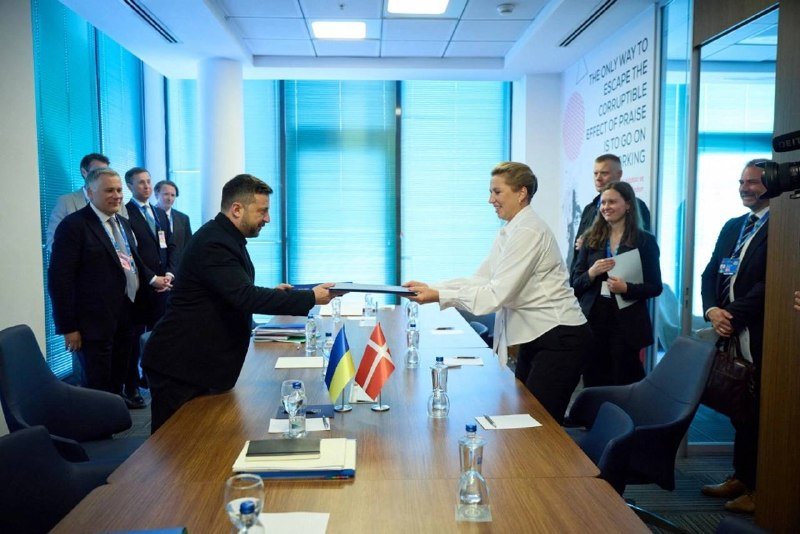
At 05:42 UTC on 8 July 2026, Denmark's Prime Minister Mette Frederiksen walked to the lectern in Ankara and did what NATO leaders have spent two years studiously avoiding: she named the boundaries of the alliance out loud. "I would not be able to secure my people without NATO," she said. "And I think the same goes for the United States." Two minutes earlier, on the same stage, she had been asked whether Denmark was ready to defend Greenland militarily. Her answer — that Denmark is prepared to defend "every inch of NATO, including our own territory" — was not a hypothetical. It was a rebuke delivered in real time to an ally that has spent eighteen months flirting with the idea that the Arctic is negotiable.
The Ankara summit was never going to be a quiet affair. Frederiksen used the platform to do three things at once: lock the alliance to its own Article 5 logic, remind Washington that the Greenlandic people have a right to self-determination and that the island is "not for sale," and re-anchor the Ukraine file at a moment when war-weariness rhetoric is once again bleeding into the communiqués. Each of those moves is unremarkable on its own. Read together, they amount to the most coherent set of boundaries a Nordic leader has drawn inside the alliance in this cycle.
The line on Greenland
The exchange on Greenland deserves to be quoted at length because it is, in effect, a small piece of constitutional law delivered as press conference. Asked directly whether Denmark would fight to keep Greenland, Frederiksen replied that the country is "ready to defend every inch of NATO, including our own territory. If anything happens…" — the sentence breaks off in the released clip, but the shape of it is unmistakable. She then added the diplomatic overlay: "Greenland is, of course, not for sale. We hope that all allies will respect the Greenlandic people's right to self-determination."
That is a carefully constructed trilogue. The first line tells Washington, in the only language an alliance understands, that the Article 5 commitment is symmetrical. The second tells Greenland that Copenhagen will not trade its sovereignty for a bilateral accommodation. The third tells every other NATO capital that Denmark expects the territorial integrity of its realm to be treated as a settled matter, not a transactional one. There is no third meaning. There does not need to be.
The reason this matters in July 2026 is that, for the better part of two years, the United States has treated the Arctic as a space where the normal rules of intra-alliance conduct are suspended. Frederiksen is now forcing the question back onto the agenda at a summit whose own communiqués are usually written in the kind of fog that conceals disagreement. She is not the first Nordic leader to do so, but she is the first to do it in front of the cameras, at an allied summit, with the question framed in military terms.
The Ukraine anchor
The other half of her remarks is the one that will probably get less coverage but matters more. "We need to help Ukraine even more, put more pressure on Russia, and ensure that the only right winner of this war, of course, will be Ukraine." That sentence, delivered at a NATO summit two months into the latest Russian aerial campaign against Ukrainian cities, is a refusal of the fatigue narrative that has been drifting through European chancelleries since spring. It is also a public counter to anyone in the alliance who wants to dress up a freeze as a settlement.
The framing is deliberately plain. There is no mention of timelines, no invitation to negotiate around the Ukrainian position, no euphemism for territorial occupation. The premise — that Ukraine is the invaded party and that the only legitimate endpoint is a Ukrainian-defined one — is the international-law baseline the alliance committed to in 2022 and has been quietly hedging on ever since. Frederiksen is pulling the baseline back to the centre of the room. That requires a certain amount of political nerve, because it puts distance between Copenhagen and the quieter members of the alliance who would prefer the summit to end with a paragraph everyone can sign.
It also has a logic that connects the two halves of her performance. If the alliance is willing to fudge the line on Greenland — to treat an allied territory as a bargaining chip — it will eventually fudge the line on Ukraine, where the cost of fudging is paid in blood by someone else. The argument is not that the two issues are identical. The argument is that an alliance that lets one boundary dissolve will let the next one dissolve too. Frederiksen is, in effect, asking her colleagues whether NATO is a system of rules or a system of exceptions.
What the counter-narrative looks like
The counter-narrative is not hard to construct. From Washington's perspective, the Arctic is a theatre in which the United States has security interests that predate the current administration and that no ally should be permitted to obstruct. From a transactional reading of the alliance, Greenland's strategic position — early-warning infrastructure, access to the GIUK gap, the long reach of Russian and Chinese interest in the polar seabed — gives Washington a legitimate claim to a privileged conversation about the island's future. From a realpolitik reading, smaller allies are entitled to draw lines, but they are not entitled to expect a great power to honour them in the absence of leverage.
That is a coherent position, and a serious analyst can hold it without embarrassment. It is also the position that, taken to its conclusion, turns NATO into a system in which the strongest member picks which boundaries count. Frederiksen's argument, made more in sorrow than in anger, is that an alliance designed to deter an autocratic neighbour cannot survive on that operating logic. The Soviet Union spent forty years probing for the seam between American power and European will. The current moment's probe is being run by an ally, and the response is being given in Ankara.
Stakes and what to watch
The trajectory from here is short and the options are narrow. Either the Ankara summit produces language that explicitly affirms the territorial integrity of every ally — including, by name, the overseas territories of allies — or it does not, and the Frederiksen line becomes a benchmark against which subsequent American conduct is measured. Either the Ukraine paragraph in the final communiqué reads in the language she used, or it is softened, and the alliance's centre of gravity shifts a measurable degree toward the transactional reading.
The next six weeks will tell. The Arctic Council meets in the autumn; the Ukraine contact group's autumn session is on the calendar; the American political cycle is now in a permanent posture in which every allied capital is being asked to demonstrate loyalty. Copenhagen has just raised the cost of a wrong answer.
What remains uncertain
The most important caveat is that none of this resolves the underlying tension. Frederiksen has drawn a line. She has not yet forced the other side to acknowledge it. American policy toward Greenland, as of 8 July 2026, has not visibly shifted; the alliance's Ukraine language, even if it improves, will not change the fact that the war is being decided on the ground, not in communiqués. And the broader question — whether NATO is a rules-based order or a great-power condominium — is one that the alliance has been quietly avoiding for the better part of a decade. One Danish prime minister, however sharply she speaks at one summit, cannot settle it alone.
— Monexus framed this against the wire's tendency to treat Frederiksen's remarks as a single-issue story about Greenland. The more durable read is that the Greenland line and the Ukraine line are the same line: an alliance is only as strong as the boundaries it refuses to renegotiate.
Wire provenance
This editorial synthesis draws on the following public wire/social posts:
- https://t.me/ClashReport
- https://t.me/ClashReport
- https://t.me/ClashReport
- https://t.me/ClashReport